THE ADVENTURE COLLECTIVE® · Independent discovery and booking for outdoor travel

Explore the British Museum’s headline collections on a focused 2.5‑hour private tour. See the Rosetta Stone, Elgin Marbles and Chinese and South Asian galleries with expert commentary and practical tips for navigating busy galleries.
Explore the British Museum’s headline collections on a focused 2.5‑hour private tour. See the Rosetta Stone, Elgin Marbles and Chinese and South Asian galleries with expert commentary and practical tips for navigating busy galleries.
Standing on Great Russell Street beneath the museum’s 19th‑century façade, the British Museum feels like a city within a city—stone halls that hush the chatter of Bloomsbury and invite close inspection.
Verified experiences and guided adventures in the surrounding area.
Operated by Raphael Tours & Events · London, England
Standing on Great Russell Street beneath the museum’s 19th‑century façade, the British Museum feels like a city within a city—stone halls that hush the chatter of Bloomsbury and invite close inspection.
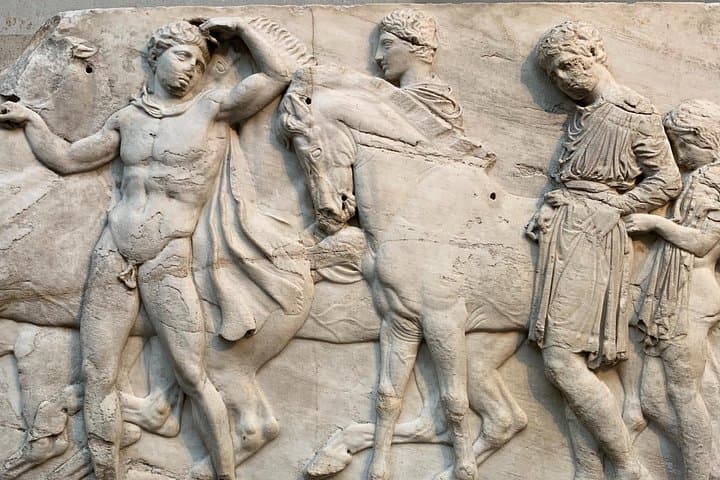
A private 2.5‑hour tour moves deliberately through galleries that have shaped how the world’s past is seen: the Rosetta Stone anchoring Egypt’s written past, the carved drama of the Elgin Marbles, the quiet precision of Chinese bronzes and millennia‑old South Asian sculptures. The building itself—largely rebuilt in Portland stone during Victorian expansion—documents a second story of imperial collecting and public education since 1753.
Beyond object‑level wonder, expect layers of context: ancient trade routes threaded through ceramics, sculptural styles tracing political power, and colonial-era collecting that still shapes display and debate today. Your guide will connect material culture to lived histories and point out conservation decisions—where light, humidity and crowds meet fragile surfaces.
Practical guidance: comfortable walking shoes matter more than formal attire; the tour covers roughly 1–2 km of indoor walking with intermittent standing and close‑viewing. Galleries can be bright and cool—dress in layers. Photography is generally allowed without flash, but some rooms restrict images. Peak visitation is late morning and early afternoon; early or late tours avoid the largest groups.
Whether you’re a first‑time visitor or returning for a closer reading of a favorite object, a private route turns familiar highlights into a focused narrative—efficient, evidence‑driven and paced to let the artifacts speak.
moderate.
2.5 hours.
Able to stand and walk for 2–3 hours with occasional stairs; mobility devices are accommodated but check in advance
General admission to the permanent collection is free, but this private tour includes any required entry handling and covers reserved access for the guide.
Yes—the British Museum offers step‑free access, lifts, and accessible facilities; notify the operator ahead of booking to confirm arrangements.
Photography is usually permitted without flash in most permanent galleries, but some objects and temporary displays restrict images—adhere to posted signs and guide instructions.
Galleries may close for conservation or events; a private guide will adapt the route to cover available highlights and provide contextual alternatives.
Founded by an act of Parliament in 1753 from Sir Hans Sloane’s collection, the British Museum expanded through 19th‑century acquisitions and now houses over 8 million objects.
The museum maintains strict climate control and rotation policies to protect sensitive artifacts; visitors are asked to respect barriers, avoid flash photography and minimize touching.
Raphael Tours & Events operates guided outdoor trips and adventures with an emphasis on safety, stewardship, and memorable experiences.
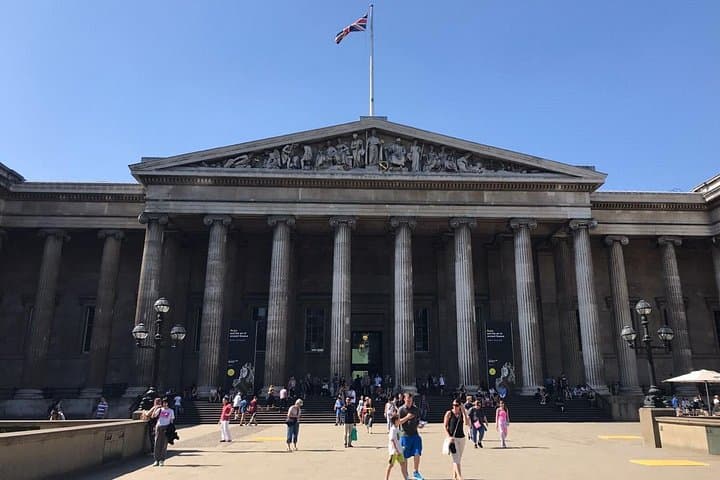
Standing on Great Russell Street beneath the museum’s 19th‑century façade, the British Museum feels like a city within a city—stone halls that hush the chatter of Bloomsbury and invite close inspection.
Standing on Great Russell Street beneath the museum’s 19th‑century façade, the British Museum feels like a city within a city—stone halls that hush the chatter of Bloomsbury and invite close inspection.
A private 2.5‑hour tour moves deliberately through galleries that have shaped how the world’s past is seen: the Rosetta Stone anchoring Egypt’s written past, the carved drama of the Elgin Marbles, the quiet precision of Chinese bronzes and millennia‑old South Asian sculptures. The building itself—largely rebuilt in Portland stone during Victorian expansion—documents a second story of imperial collecting and public education since 1753.
Beyond object‑level wonder, expect layers of context: ancient trade routes threaded through ceramics, sculptural styles tracing political power, and colonial-era collecting that still shapes display and debate today. Your guide will connect material culture to lived histories and point out conservation decisions—where light, humidity and crowds meet fragile surfaces.
Practical guidance: comfortable walking shoes matter more than formal attire; the tour covers roughly 1–2 km of indoor walking with intermittent standing and close‑viewing. Galleries can be bright and cool—dress in layers. Photography is generally allowed without flash, but some rooms restrict images. Peak visitation is late morning and early afternoon; early or late tours avoid the largest groups.
Whether you’re a first‑time visitor or returning for a closer reading of a favorite object, a private route turns familiar highlights into a focused narrative—efficient, evidence‑driven and paced to let the artifacts speak.