THE ADVENTURE COLLECTIVE® · Independent discovery and booking for outdoor travel

Spend two hours guided through the British Museum’s greatest hits—Rosetta Stone, Greek sculpture and rarely-discussed galleries—while learning the historical and ethical stories behind the objects. This private tour balances paced interpretation with clear, practical tips for visiting.
Spend two hours guided through the British Museum’s greatest hits—Rosetta Stone, Greek sculpture and rarely-discussed galleries—while learning the historical and ethical stories behind the objects. This private tour balances paced interpretation with clear, practical tips for visiting.
The Great Court opens like a quiet plaza of stone and glass, sunlight pooling on the tiled floor while a small group gathers around an expert guide. Voices lower as the guide places a weathered fragment—Rosetta Stone, Hellenic marble, or an Anglo-Saxon helmet—into living context, and the building’s bones seem to breathe history back at you.
Verified experiences and guided adventures in the surrounding area.
Operated by London With Guide · London, England
The Great Court opens like a quiet plaza of stone and glass, sunlight pooling on the tiled floor while a small group gathers around an expert guide. Voices lower as the guide places a weathered fragment—Rosetta Stone, Hellenic marble, or an Anglo-Saxon helmet—into living context, and the building’s bones seem to breathe history back at you.
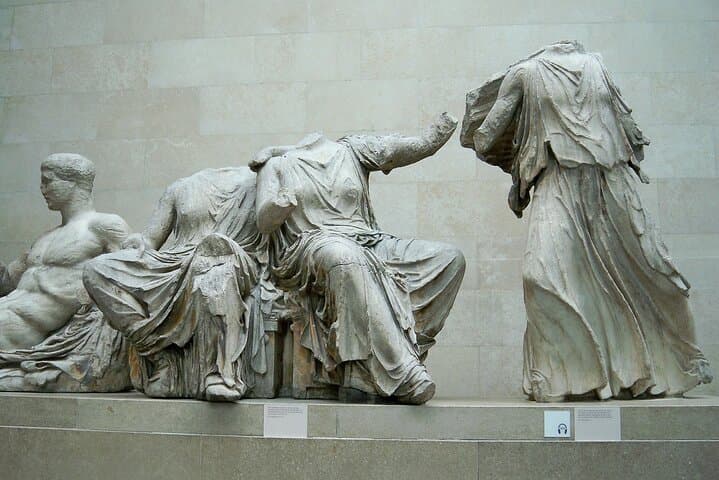
Founded in 1753 from Sir Hans Sloane’s collection, the British Museum charts human stories across continents: Egyptian granodiorite with hieroglyphs, Greek marble friezes carved from Pentelic marble, and metalwork from medieval Britain. The collection reflects centuries of collecting and empire; the guide will likely touch on provenance, repatriation debates, and the museum’s conservation efforts while moving through focused highlights like the Enlightenment Gallery and the Egyptian galleries.
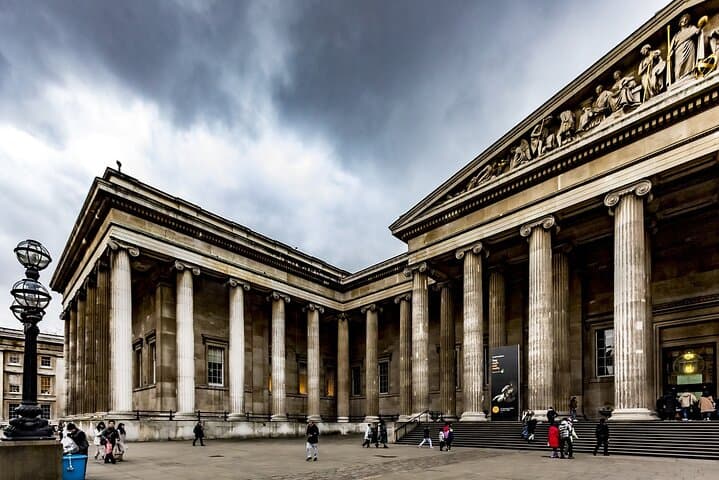
Practical guidance is straightforward. This private tour runs about two hours and concentrates on the collection highlights—ideal for first-time visitors or returners who want depth without fatigue. The museum is free to enter, but special exhibitions may require timed tickets; book the private tour in advance, arrive 10–15 minutes early at the main entrance, and bring a charged phone for photos (no flash or tripod in galleries). The site is wheelchair accessible and suitable for all fitness levels; pace is gentle but expect standing and short walks across stone floors.
Local logistics: Russell Square and Bloomsbury provide cafes for a post-tour debrief. For sustainable visiting, avoid touching cases and follow staff guidance—artifact preservation depends on visitor care. This is a compact, expert-led way to translate objects into stories in just two hours.
easy.
2 hours.
Accessible to most visitors; minimal mobility required but expect standing and walking on hard floors.
The museum’s permanent collection is free; the private guide fee covers the guided tour rather than entry. Special exhibitions may require separate paid tickets.
Yes—this tour and the museum have wheelchair-accessible routes and surfaces; notify the operator in booking if you require assistance.
Photography is allowed in many galleries without flash, but follow posted restrictions and do not use tripods or flash near sensitive artifacts.
For a full refund cancel at least 24 hours before the scheduled start time, per the booking policy.
Opened to the public in the mid-18th century from Sir Hans Sloane’s collection, the museum grew rapidly through acquisitions linked to global exploration and empire.
The museum uses strict environmental controls and conservation labs to preserve objects; visitors are asked to avoid touching displays and to follow photography rules to limit light exposure.
London With Guide operates guided outdoor trips and adventures with an emphasis on safety, stewardship, and memorable experiences.
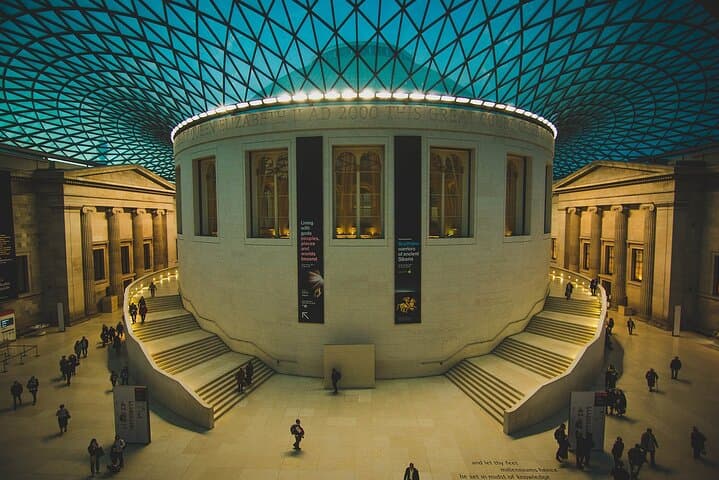
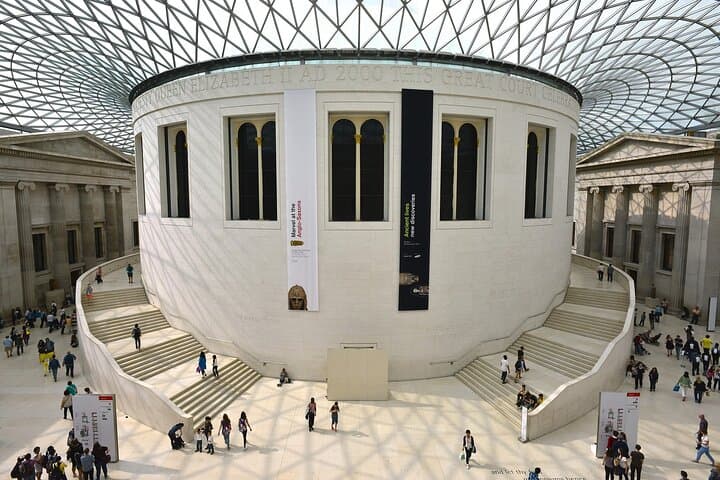
The Great Court opens like a quiet plaza of stone and glass, sunlight pooling on the tiled floor while a small group gathers around an expert guide. Voices lower as the guide places a weathered fragment—Rosetta Stone, Hellenic marble, or an Anglo-Saxon helmet—into living context, and the building’s bones seem to breathe history back at you.
The Great Court opens like a quiet plaza of stone and glass, sunlight pooling on the tiled floor while a small group gathers around an expert guide. Voices lower as the guide places a weathered fragment—Rosetta Stone, Hellenic marble, or an Anglo-Saxon helmet—into living context, and the building’s bones seem to breathe history back at you.
Founded in 1753 from Sir Hans Sloane’s collection, the British Museum charts human stories across continents: Egyptian granodiorite with hieroglyphs, Greek marble friezes carved from Pentelic marble, and metalwork from medieval Britain. The collection reflects centuries of collecting and empire; the guide will likely touch on provenance, repatriation debates, and the museum’s conservation efforts while moving through focused highlights like the Enlightenment Gallery and the Egyptian galleries.
Practical guidance is straightforward. This private tour runs about two hours and concentrates on the collection highlights—ideal for first-time visitors or returners who want depth without fatigue. The museum is free to enter, but special exhibitions may require timed tickets; book the private tour in advance, arrive 10–15 minutes early at the main entrance, and bring a charged phone for photos (no flash or tripod in galleries). The site is wheelchair accessible and suitable for all fitness levels; pace is gentle but expect standing and short walks across stone floors.
Local logistics: Russell Square and Bloomsbury provide cafes for a post-tour debrief. For sustainable visiting, avoid touching cases and follow staff guidance—artifact preservation depends on visitor care. This is a compact, expert-led way to translate objects into stories in just two hours.