THE ADVENTURE COLLECTIVE® · Independent discovery and booking for outdoor travel

Spend 5.5 hours with a knowledgeable guide exploring two of London’s most visited institutions—the British Museum’s ancient artifacts and the National Gallery’s master paintings—on a small-group (max 8) combo tour. Practical tips cover transit, bag rules and how to make the most of each gallery visit.
Spend 5.5 hours with a knowledgeable guide exploring two of London’s most visited institutions—the British Museum’s ancient artifacts and the National Gallery’s master paintings—on a small-group (max 8) combo tour. Practical tips cover transit, bag rules and how to make the most of each gallery visit.
Morning light cuts across Bloomsbury’s stone façades as a small group gathers beneath the British Museum’s Ionic columns—expect polite chatter, shoe soles on marble floors and a guide who moves with purpose through crowded galleries.
Verified experiences and guided adventures in the surrounding area.
Operated by Babylon Tours London · London, England
Morning light cuts across Bloomsbury’s stone façades as a small group gathers beneath the British Museum’s Ionic columns—expect polite chatter, shoe soles on marble floors and a guide who moves with purpose through crowded galleries.
The tour spends the first half at the British Museum, a collection born from Sir Hans Sloane’s 1753 bequest and expanded over centuries to include the Rosetta Stone, Egyptian coffins and Assyrian reliefs. The second half moves to Trafalgar Square’s National Gallery, founded in 1824, where paintings from the 1300s through the 1900s—van Eyck to Van Gogh—offer a different kind of close-up study: oil layers, brushwork and curated narratives about Europe’s artistic shifts.
Those two institutions contrast: one built from stone and antiquity, one framed in light and pigment. Expect security checks, quiet rooms where conversation is limited, and galleries that reward focused attention more than casual browsing. The itinerary includes a lunch break between venues—use it to reset and charge devices.
Practical guidance: this is a walking and standing-heavy 5.5-hour combo best for visitors who can manage multiple staircase sections and up to 2–3 hours of standing per museum. Bring a small bag, wear comfortable shoes, and carry a fully charged phone (organizer requires a mobile number). Public transit (Holborn/Tottenham Court Road to British Museum; Charing Cross/Leicester Square to the National Gallery) is the fastest way between sites. Expect occasional room closures and strict bag rules—pack light and allow extra time for museum security.
moderate.
5–6 hours.
Moderate fitness: participants should be comfortable walking city streets and standing for extended gallery talks.
Admission to these public museums is typically free; this tour covers the guided commentary and coordination but not special exhibition tickets—confirm with the operator in advance.
Both museums have accessibility options, but some rooms and historic staircases can restrict movement—notify the operator of accessibility needs when booking.
Groups are limited to eight guests; the tour requires a minimum of two participants and offers a full refund if canceled at least 24 hours before departure.
Infants and small children can use prams or strollers, but be prepared to fold them during busy galleries and adhere to quiet-room rules.
The British Museum opened in 1759 from Sir Hans Sloane’s collection; the National Gallery was established in 1824 to create a public national collection of European paintings.
Both institutions balance public access with conservation: expect restricted access to fragile objects, strict no-flash-photo rules, and efforts to limit visitor impact on delicate works.
Babylon Tours London operates guided outdoor trips and adventures with an emphasis on safety, stewardship, and memorable experiences.


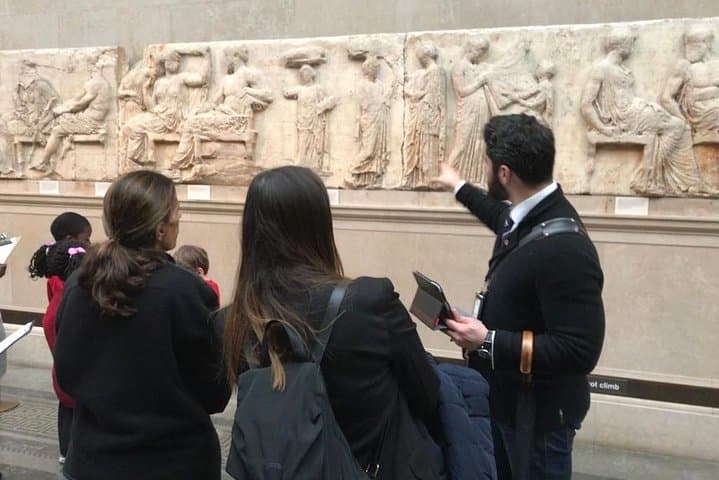
Morning light cuts across Bloomsbury’s stone façades as a small group gathers beneath the British Museum’s Ionic columns—expect polite chatter, shoe soles on marble floors and a guide who moves with purpose through crowded galleries.
Morning light cuts across Bloomsbury’s stone façades as a small group gathers beneath the British Museum’s Ionic columns—expect polite chatter, shoe soles on marble floors and a guide who moves with purpose through crowded galleries.
The tour spends the first half at the British Museum, a collection born from Sir Hans Sloane’s 1753 bequest and expanded over centuries to include the Rosetta Stone, Egyptian coffins and Assyrian reliefs. The second half moves to Trafalgar Square’s National Gallery, founded in 1824, where paintings from the 1300s through the 1900s—van Eyck to Van Gogh—offer a different kind of close-up study: oil layers, brushwork and curated narratives about Europe’s artistic shifts.
Those two institutions contrast: one built from stone and antiquity, one framed in light and pigment. Expect security checks, quiet rooms where conversation is limited, and galleries that reward focused attention more than casual browsing. The itinerary includes a lunch break between venues—use it to reset and charge devices.
Practical guidance: this is a walking and standing-heavy 5.5-hour combo best for visitors who can manage multiple staircase sections and up to 2–3 hours of standing per museum. Bring a small bag, wear comfortable shoes, and carry a fully charged phone (organizer requires a mobile number). Public transit (Holborn/Tottenham Court Road to British Museum; Charing Cross/Leicester Square to the National Gallery) is the fastest way between sites. Expect occasional room closures and strict bag rules—pack light and allow extra time for museum security.