THE ADVENTURE COLLECTIVE® · Independent discovery and booking for outdoor travel

Avoid the queues and get context: this 2.5-hour skip-the-line tour guides you through the British Museum’s key galleries with expert commentary on art, empire and contested collections. Ideal for first-time visitors who want history and practical context in one visit.
Avoid the queues and get context: this 2.5-hour skip-the-line tour guides you through the British Museum’s key galleries with expert commentary on art, empire and contested collections. Ideal for first-time visitors who want history and practical context in one visit.
You step through the museum doors and the air cools; stone and glass modulate the bustle outside into a focused hush. Light angles across cases, catching the edges of inscribed reliefs and a chipped ceramic that has outlived empires. This guided highlights tour moves deliberately through the rooms most visitors race past, giving you context for objects that shaped trade, conflict and belief across continents.
Verified experiences and guided adventures in the surrounding area.
Operated by How to do History · London, England
You step through the museum doors and the air cools; stone and glass modulate the bustle outside into a focused hush. Light angles across cases, catching the edges of inscribed reliefs and a chipped ceramic that has outlived empires. This guided highlights tour moves deliberately through the rooms most visitors race past, giving you context for objects that shaped trade, conflict and belief across continents.
Founded in the mid-18th century from Sir Hans Sloane’s collections, the British Museum houses millions of objects spanning Egypt, Mesopotamia, South Asia, China and Europe. The building itself is a palimpsest — Georgian foundations below the 19th-century reading room and the modern Great Court roof — where Portland stone and glass meet in layered history. Expect discussion of provenance, the ethics of collecting, and the lives that intersected with the museum’s formation.
Local insight: the Enlightenment Gallery reframes collecting practices; small plaques often point to contested acquisitions. Nearby Bloomsbury offers cafés and bookshops for post-tour reading.
Practical guidance: the tour lasts about 2.5 hours and covers several floors with long exhibits and seated stops; comfortable shoes and a charged phone for photography are useful. Use the line-skip ticket to avoid the main queue but arrive at your scheduled time to pass security smoothly. Wheelchair access is available, though some conservation rooms require narrow circulation. Bring water and plan 30–60 minutes afterward if you want to revisit a favorite gallery — the tour is a curated doorway, not the whole museum.
easy.
2–3 hours.
Suitable for most fitness levels; expect extended standing and walking on flat and slightly ramped surfaces.
The skip-the-line ticket grants priority entry at your scheduled start time but you must arrive on time; security checks still apply.
Yes—most areas and the Great Court are wheelchair accessible, and the operator notes the tour is suitable for mobility needs; inform the guide of requirements when booking.
Photography without flash is generally permitted in many galleries, including the Egyptian rooms, but some objects may have restrictions; follow on-site signage and your guide’s instructions.
Shared tours are capped at small group sizes (usually up to eight travelers), allowing close commentary and manageable movement through galleries.
Established from Sir Hans Sloane’s 18th-century collection and formally opened in 1759, the museum expanded through 19th-century imperial acquisitions into a global holding.
The museum balances conservation-controlled environments with public access; visitors are encouraged to use public transit and follow handling and photography rules to reduce wear on displays.
How to do History operates guided outdoor trips and adventures with an emphasis on safety, stewardship, and memorable experiences.
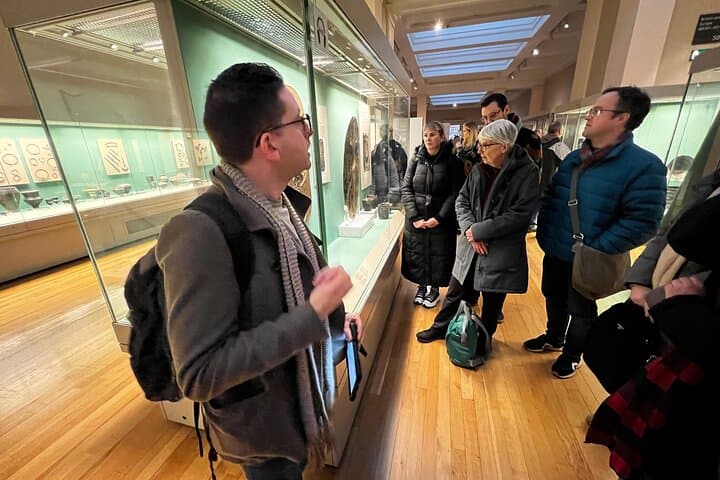
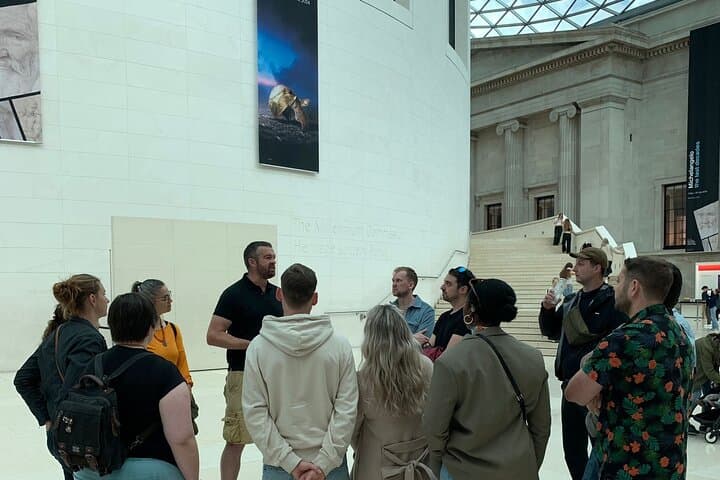
You step through the museum doors and the air cools; stone and glass modulate the bustle outside into a focused hush. Light angles across cases, catching the edges of inscribed reliefs and a chipped ceramic that has outlived empires. This guided highlights tour moves deliberately through the rooms most visitors race past, giving you context for objects that shaped trade, conflict and belief across continents.
You step through the museum doors and the air cools; stone and glass modulate the bustle outside into a focused hush. Light angles across cases, catching the edges of inscribed reliefs and a chipped ceramic that has outlived empires. This guided highlights tour moves deliberately through the rooms most visitors race past, giving you context for objects that shaped trade, conflict and belief across continents.
Founded in the mid-18th century from Sir Hans Sloane’s collections, the British Museum houses millions of objects spanning Egypt, Mesopotamia, South Asia, China and Europe. The building itself is a palimpsest — Georgian foundations below the 19th-century reading room and the modern Great Court roof — where Portland stone and glass meet in layered history. Expect discussion of provenance, the ethics of collecting, and the lives that intersected with the museum’s formation.
Local insight: the Enlightenment Gallery reframes collecting practices; small plaques often point to contested acquisitions. Nearby Bloomsbury offers cafés and bookshops for post-tour reading.
Practical guidance: the tour lasts about 2.5 hours and covers several floors with long exhibits and seated stops; comfortable shoes and a charged phone for photography are useful. Use the line-skip ticket to avoid the main queue but arrive at your scheduled time to pass security smoothly. Wheelchair access is available, though some conservation rooms require narrow circulation. Bring water and plan 30–60 minutes afterward if you want to revisit a favorite gallery — the tour is a curated doorway, not the whole museum.