THE ADVENTURE COLLECTIVE® · Independent discovery and booking for outdoor travel

See the British Museum’s headline objects with an expert guide in two concentrated hours. Priority entry and a small-group format make this a practical introduction to the Parthenon sculptures, Rosetta Stone and Egyptian galleries.
See the British Museum’s headline objects with an expert guide in two concentrated hours. Priority entry and a small-group format make this a practical introduction to the Parthenon sculptures, Rosetta Stone and Egyptian galleries.
Step into the British Museum’s Great Court and feel the light shift under Foster’s glass roof—an architectural canopy that turns midday into a soft wash across stone and casework. In two focused hours an expert guide moves you from the carved drama of the Parthenon sculptures to the quiet, timeworn surface of the Rosetta Stone, tracing the lines that connect ancient civic life, religion and empire.
Verified experiences and guided adventures in the surrounding area.
Operated by Best Tours London · London, England
Step into the British Museum’s Great Court and feel the light shift under Foster’s glass roof—an architectural canopy that turns midday into a soft wash across stone and casework. In two focused hours an expert guide moves you from the carved drama of the Parthenon sculptures to the quiet, timeworn surface of the Rosetta Stone, tracing the lines that connect ancient civic life, religion and empire.
The Museum opened in 1753 and holds objects spanning human history; its galleries reveal human ingenuity in materials from carved Egyptian granites to classical Pentelic marble and Bronze Age metalwork. Cultural narratives converge here—Sutton Hoo’s ship burial tells Anglo-Saxon royal ritual, while the Egyptian galleries preserve funerary texts and mummified remains that shaped modern Egyptology.
Visitors should expect a compact, story-driven route: highlight stops, focused interpretation, and the option to continue independently after the tour. Priority timeslots reduce entry queues but don’t eliminate interior crowding at signature objects. The route is low-elevation and accessible—paved floors, occasional stairs and elevators available.
Practical advice: arrive 10–15 minutes early with your mobile ticket, bring a small bag for security screening, and use the audio headset if offered to hear clearly in busy rooms. Peak times are late morning and early afternoon; early slots offer calmer galleries and better photos. Photography is usually allowed without flash but follow signage. Combine the visit with a coffee on Bloomsbury’s quieter side streets or a stroll to Russell Square to decompress.
This tour suits first-time visitors who want context-rich highlights and travelers short on time who prefer interpretation to wandering solo.
easy.
2 hours.
Suitable for all fitness levels; mostly standing and short walks on paved floors
No; entry tickets for the British Museum main entrance are included with this guided tour and the priority timeslot covers admission.
Yes. The route uses paved floors and elevators where needed—state accessibility needs when booking to ensure accommodations.
Generally yes without flash, but some objects or special exhibitions restrict photography—observe posted signs and guide instructions.
You are free to continue exploring the museum independently; guides usually point out nearby thematic galleries to visit next.
Founded from Sir Hans Sloane’s collection in 1753, the British Museum expanded through donations and acquisitions during the British Empire and now houses over 8 million objects.
The museum follows strict conservation protocols and visitor rules (no flash, controlled humidity); respect signage and avoid contact with displays to minimize impact.
Best Tours London operates guided outdoor trips and adventures with an emphasis on safety, stewardship, and memorable experiences.
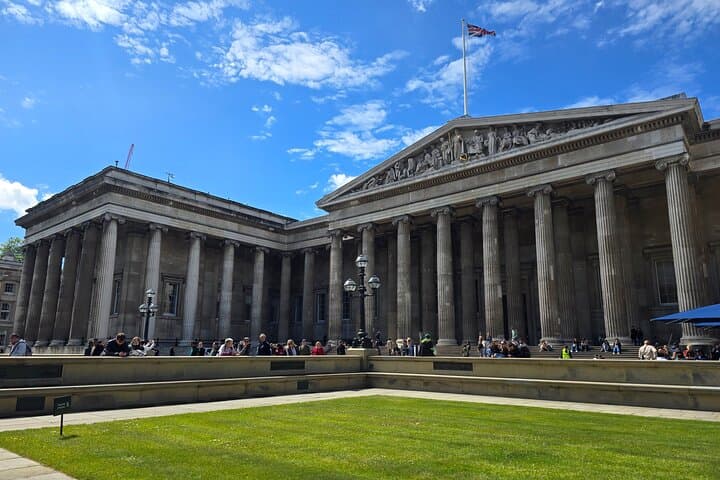
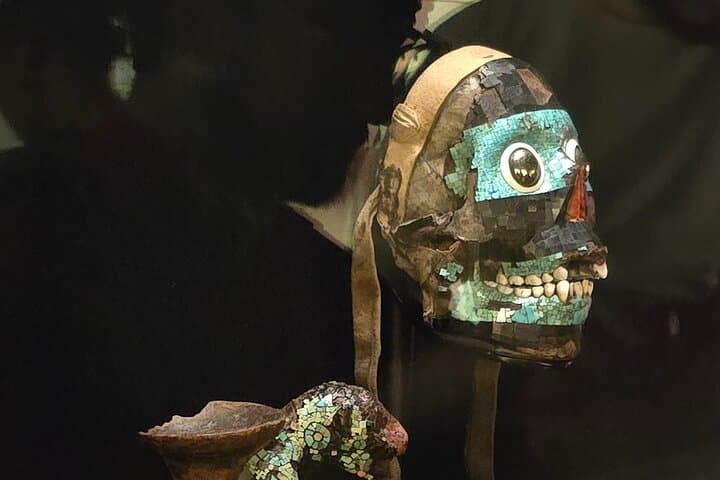
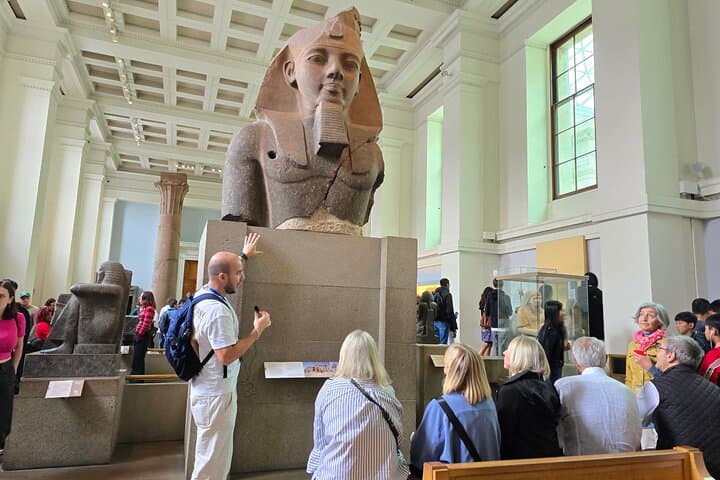
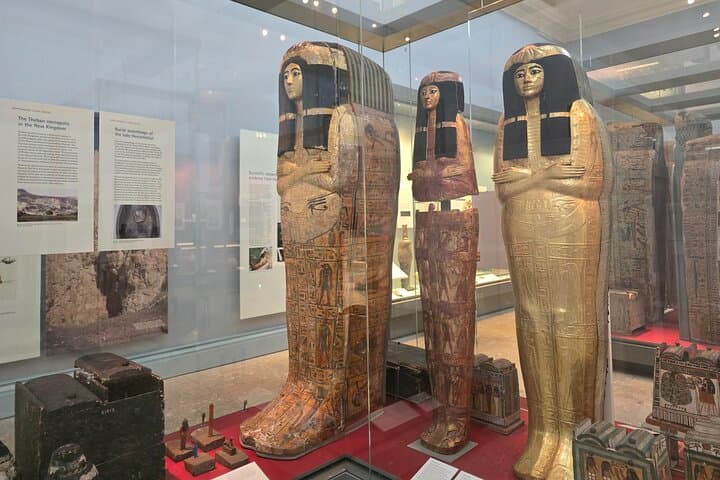
Step into the British Museum’s Great Court and feel the light shift under Foster’s glass roof—an architectural canopy that turns midday into a soft wash across stone and casework. In two focused hours an expert guide moves you from the carved drama of the Parthenon sculptures to the quiet, timeworn surface of the Rosetta Stone, tracing the lines that connect ancient civic life, religion and empire.
Step into the British Museum’s Great Court and feel the light shift under Foster’s glass roof—an architectural canopy that turns midday into a soft wash across stone and casework. In two focused hours an expert guide moves you from the carved drama of the Parthenon sculptures to the quiet, timeworn surface of the Rosetta Stone, tracing the lines that connect ancient civic life, religion and empire.
The Museum opened in 1753 and holds objects spanning human history; its galleries reveal human ingenuity in materials from carved Egyptian granites to classical Pentelic marble and Bronze Age metalwork. Cultural narratives converge here—Sutton Hoo’s ship burial tells Anglo-Saxon royal ritual, while the Egyptian galleries preserve funerary texts and mummified remains that shaped modern Egyptology.
Visitors should expect a compact, story-driven route: highlight stops, focused interpretation, and the option to continue independently after the tour. Priority timeslots reduce entry queues but don’t eliminate interior crowding at signature objects. The route is low-elevation and accessible—paved floors, occasional stairs and elevators available.
Practical advice: arrive 10–15 minutes early with your mobile ticket, bring a small bag for security screening, and use the audio headset if offered to hear clearly in busy rooms. Peak times are late morning and early afternoon; early slots offer calmer galleries and better photos. Photography is usually allowed without flash but follow signage. Combine the visit with a coffee on Bloomsbury’s quieter side streets or a stroll to Russell Square to decompress.
This tour suits first-time visitors who want context-rich highlights and travelers short on time who prefer interpretation to wandering solo.