THE ADVENTURE COLLECTIVE® · Independent discovery and booking for outdoor travel

Glide around Brindisi’s harbor on a one‑hour boat tour that puts the Timone Grande, Swabian Castle, Roman Columns and Castello Alfonsino within easy camera range. Skippers provide historical briefings while the Adriatic frames the city’s maritime past.
Glide around Brindisi’s harbor on a one‑hour boat tour that puts the Timone Grande, Swabian Castle, Roman Columns and Castello Alfonsino within easy camera range. Skippers provide historical briefings while the Adriatic frames the city’s maritime past.
The bow parts the Adriatic and the sun lays a flat gold on Brindisi’s low stone facades. From the water the port’s monuments resolve into simple, monumental forms — the 54‑meter Timone Grande rising like a ship’s mast of ochre carparo, the squat geometry of the Swabian Castle, and the lone Roman column that once flanked the end of the Appian Way. A one‑hour run around the bay gives you this shoreline theater in compact, readable scenes.
Verified experiences and guided adventures in the surrounding area.
Operated by Apulia Multiadventure · Brindisi, Apulia
The bow parts the Adriatic and the sun lays a flat gold on Brindisi’s low stone facades. From the water the port’s monuments resolve into simple, monumental forms — the 54‑meter Timone Grande rising like a ship’s mast of ochre carparo, the squat geometry of the Swabian Castle, and the lone Roman column that once flanked the end of the Appian Way. A one‑hour run around the bay gives you this shoreline theater in compact, readable scenes.
This stretch of Puglia has been a crossroads since antiquity: Brindisi was a Roman gateway to the east and the columns at the harbor mark that memory. The Castello Alfonsino on Sant’Andrea island and the Castello Svevo‑Aragonese speak to Renaissance and medieval coastal defenses built from local carparo limestone and Trani stone. Geologically, the shallow Adriatic here favors sheltered coves and human harbors rather than steep cliffs, which is why forts and ports cluster along the shore.
Expect a skipper‑led briefing on monuments, steady sightseeing at slow boat speed, and passages close enough for clear photos but not disembarkation — the itinerary is a pass‑by tour. Practical notes: the cruise lasts 60 minutes, accommodates small groups (around 20), and is suitable for all fitness levels; infants must sit on laps. Bring sun protection, a wind layer, and a camera strap. Check the local wind and sea forecast before booking — operators cancel in rough weather and recommend arriving 15 minutes early. The experience is compact, scenic, and historically rich — ideal for travelers who want a coastal vantage point on Brindisi’s past without a long commitment.
easy.
1 hour.
No special fitness required; participants should be able to step on/off a small boat and stand or sit for an hour.
The experience is a fixed 60‑minute sightseeing cruise around Brindisi Bay.
No — this is a pass‑by boat tour designed for viewing and photo stops from the water; there is no disembarkation at monuments.
Yes; infants are allowed but must sit on an adult’s lap as per operator policy. The trip is suitable for all fitness levels.
The operator may cancel for unsafe sea conditions; if canceled due to weather you are typically offered a full refund or the option to reschedule per the booking policy.
Brindisi served as a strategic Roman port and terminal of the Via Appia; its harbor monuments mark centuries of maritime traffic and coastal defense.
The harbor sees regular boat traffic so follow skipper guidance to minimize wake in shallow areas; avoid littering and use on‑board bins to protect marine life.
Apulia Multiadventure operates guided outdoor trips and adventures with an emphasis on safety, stewardship, and memorable experiences.
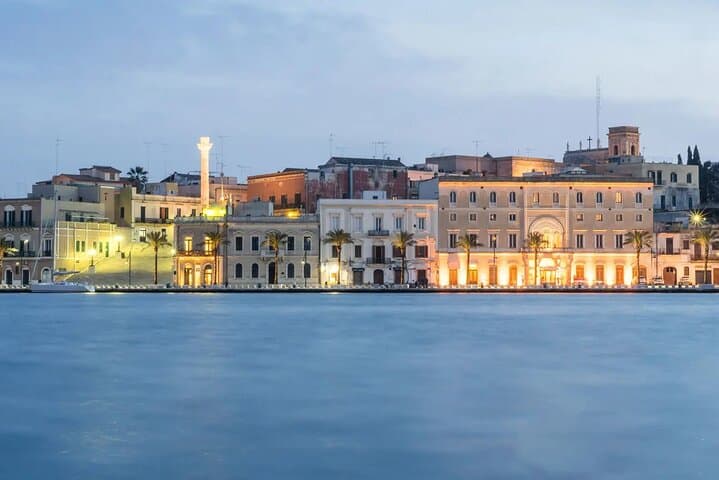
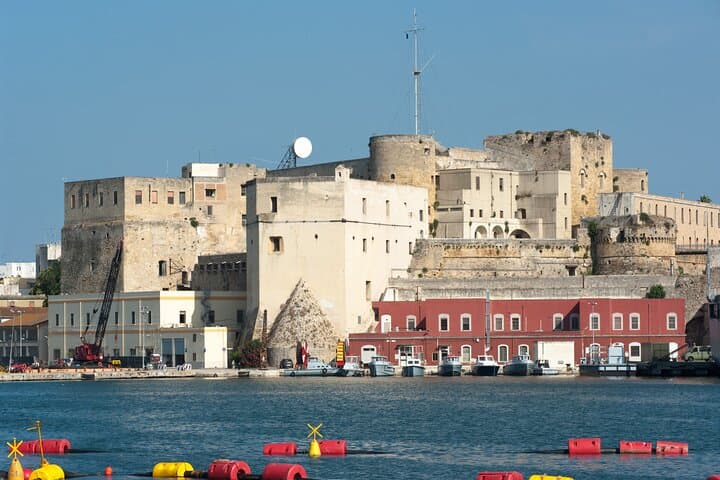
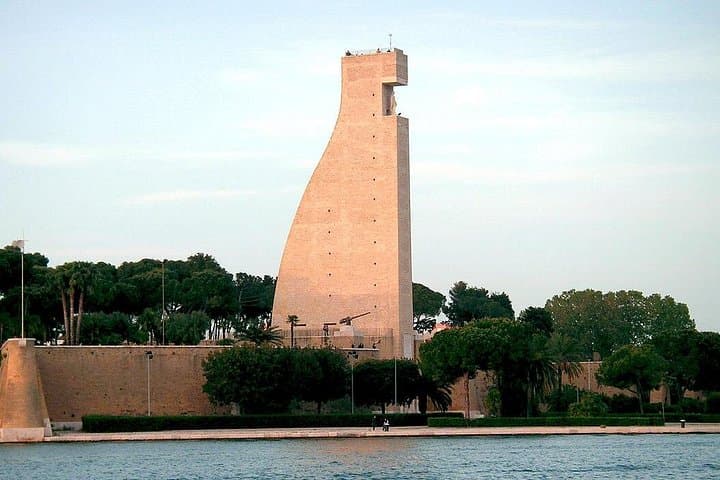
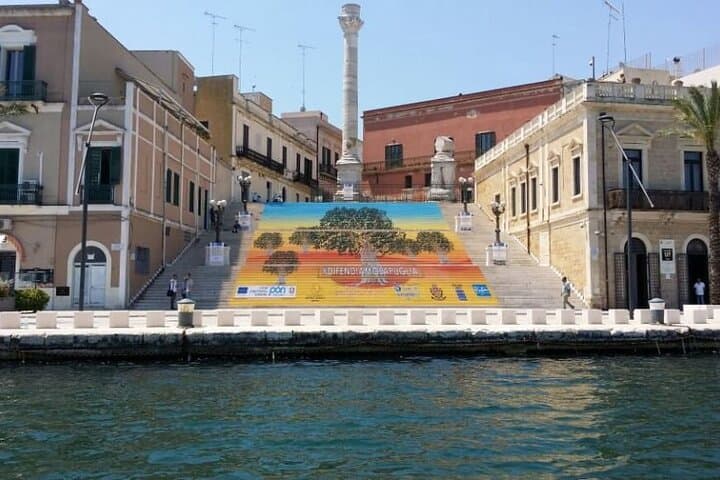
The bow parts the Adriatic and the sun lays a flat gold on Brindisi’s low stone facades. From the water the port’s monuments resolve into simple, monumental forms — the 54‑meter Timone Grande rising like a ship’s mast of ochre carparo, the squat geometry of the Swabian Castle, and the lone Roman column that once flanked the end of the Appian Way. A one‑hour run around the bay gives you this shoreline theater in compact, readable scenes.
The bow parts the Adriatic and the sun lays a flat gold on Brindisi’s low stone facades. From the water the port’s monuments resolve into simple, monumental forms — the 54‑meter Timone Grande rising like a ship’s mast of ochre carparo, the squat geometry of the Swabian Castle, and the lone Roman column that once flanked the end of the Appian Way. A one‑hour run around the bay gives you this shoreline theater in compact, readable scenes.
This stretch of Puglia has been a crossroads since antiquity: Brindisi was a Roman gateway to the east and the columns at the harbor mark that memory. The Castello Alfonsino on Sant’Andrea island and the Castello Svevo‑Aragonese speak to Renaissance and medieval coastal defenses built from local carparo limestone and Trani stone. Geologically, the shallow Adriatic here favors sheltered coves and human harbors rather than steep cliffs, which is why forts and ports cluster along the shore.
Expect a skipper‑led briefing on monuments, steady sightseeing at slow boat speed, and passages close enough for clear photos but not disembarkation — the itinerary is a pass‑by tour. Practical notes: the cruise lasts 60 minutes, accommodates small groups (around 20), and is suitable for all fitness levels; infants must sit on laps. Bring sun protection, a wind layer, and a camera strap. Check the local wind and sea forecast before booking — operators cancel in rough weather and recommend arriving 15 minutes early. The experience is compact, scenic, and historically rich — ideal for travelers who want a coastal vantage point on Brindisi’s past without a long commitment.