THE ADVENTURE COLLECTIVE® · Independent discovery and booking for outdoor travel

Walk Brighton’s seafront and old town with a Blue Badge guide who traces over 200 years of queer history—from Regency figures to 20th‑century activism. This 90‑minute semi‑private tour mixes archive-backed stories with street-level observations.
Walk Brighton’s seafront and old town with a Blue Badge guide who traces over 200 years of queer history—from Regency figures to 20th‑century activism. This 90‑minute semi‑private tour mixes archive-backed stories with street-level observations.
A brisk sea breeze carries salted spray and conversation as the small group sets off along Brighton’s pebbled seafront. The tour moves at a steady city-pace — along the promenade, past the hotel-lined esplanade, then inland through narrow lanes where Georgian and Victorian facades lean toward each other like witnesses.
Verified experiences and guided adventures in the surrounding area.
Operated by Only in Brighton · Brighton, East Sussex
A brisk sea breeze carries salted spray and conversation as the small group sets off along Brighton’s pebbled seafront. The tour moves at a steady city-pace — along the promenade, past the hotel-lined esplanade, then inland through narrow lanes where Georgian and Victorian facades lean toward each other like witnesses.
Brighton’s queer history spans Regency dandies and scandal-prone poets through 20th-century activism. The walk highlights household names—Lord Byron, Oscar Wilde—and local stories such as Anne Lister’s documented Brighton visit, Edwardian performers who blurred gender lines, and a 1923 same-sex ceremony that slipped through official notice. Underlying this cultural arc are the town’s geology and urban form: a chalk downland meeting the English Channel, a resort shaped by seaside tourism and 18th–19th century speculative building that created the compact old town you explore.
Expect three clear sections: seafront and pier culture, the old town’s alleys and civic buildings, and Brighton’s concentrated queer district. The guide is a Blue Badge professional who blends archival detail with street-level observation; this semi-private format keeps the group small for questions and photos.
Practical notes: the route is wheelchair-accessible with some firm pebbled and paved surfaces, takes about 90 minutes, and suits anyone with moderate mobility. Bring windproof layers, comfortable shoes for uneven paving, and a charged phone for mapping and images. Tours run year-round—book in advance for summer and Pride weekends. Arrive 10 minutes early to meet the guide and get the best position for seaside views.
easy.
1.5 hours.
Suitable for most people with moderate mobility; involves standing and walking on mixed urban surfaces for 90 minutes.
Yes—the route is described as wheelchair accessible with mostly paved surfaces; contact the operator in advance to confirm mobility needs.
Meeting is typically along the seafront near a central landmark; the booking confirmation provides the exact pickup point and time—arrive 10 minutes early.
Children are welcome but must be accompanied by an adult; content covers historical social topics appropriate for older children and teens.
Tours run in light rain with the guide adapting stops; for severe weather the operator may cancel with full refund if within the stated cancellation window.
Brighton grew as a seaside resort in the 18th–19th centuries, attracting Regency figures and later becoming a focal point for LGBTQ communities and activism through the 20th century.
Respect the fragile coastal environment—avoid trampling shingle habitats, take litter home, and support local heritage groups that maintain historic buildings.
Only in Brighton operates guided outdoor trips and adventures with an emphasis on safety, stewardship, and memorable experiences.
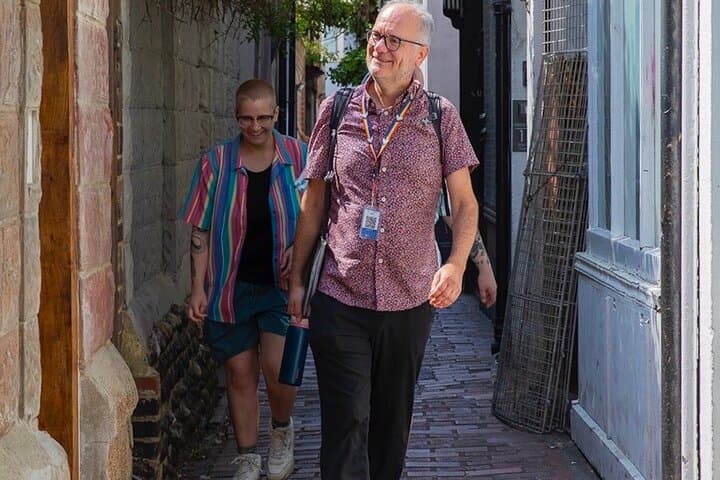
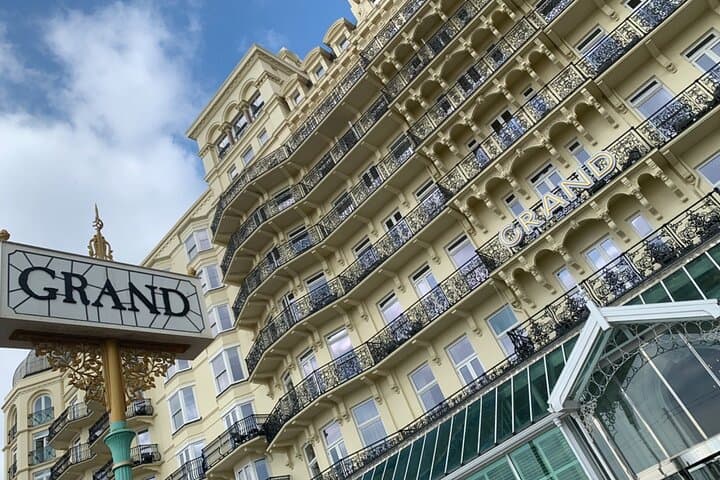


A brisk sea breeze carries salted spray and conversation as the small group sets off along Brighton’s pebbled seafront. The tour moves at a steady city-pace — along the promenade, past the hotel-lined esplanade, then inland through narrow lanes where Georgian and Victorian facades lean toward each other like witnesses.
A brisk sea breeze carries salted spray and conversation as the small group sets off along Brighton’s pebbled seafront. The tour moves at a steady city-pace — along the promenade, past the hotel-lined esplanade, then inland through narrow lanes where Georgian and Victorian facades lean toward each other like witnesses.
Brighton’s queer history spans Regency dandies and scandal-prone poets through 20th-century activism. The walk highlights household names—Lord Byron, Oscar Wilde—and local stories such as Anne Lister’s documented Brighton visit, Edwardian performers who blurred gender lines, and a 1923 same-sex ceremony that slipped through official notice. Underlying this cultural arc are the town’s geology and urban form: a chalk downland meeting the English Channel, a resort shaped by seaside tourism and 18th–19th century speculative building that created the compact old town you explore.
Expect three clear sections: seafront and pier culture, the old town’s alleys and civic buildings, and Brighton’s concentrated queer district. The guide is a Blue Badge professional who blends archival detail with street-level observation; this semi-private format keeps the group small for questions and photos.
Practical notes: the route is wheelchair-accessible with some firm pebbled and paved surfaces, takes about 90 minutes, and suits anyone with moderate mobility. Bring windproof layers, comfortable shoes for uneven paving, and a charged phone for mapping and images. Tours run year-round—book in advance for summer and Pride weekends. Arrive 10 minutes early to meet the guide and get the best position for seaside views.