THE ADVENTURE COLLECTIVE® · Independent discovery and booking for outdoor travel

Walk the streets where Bridgerton’s Regency set came to life. This private 90–120 minute tour pairs film locations with real Bath history—Georgian streets, local scandals and practical tips to get the best photos.
Walk the streets where Bridgerton’s Regency set came to life. This private 90–120 minute tour pairs film locations with real Bath history—Georgian streets, local scandals and practical tips to get the best photos.
A cool morning in Bath feels deliberately staged: honey‑coloured stone facades glow as you step onto cobbled streets, and a guide born in the city points out doorways, theatre fronts and a bridge that watched film crews at work. The tour threads through compact squares and grand crescents, the very settings producers chose to evoke Regency-era society.
Verified experiences and guided adventures in the surrounding area.
Operated by Bath Insider Tours · Bath, Somerset
A cool morning in Bath feels deliberately staged: honey‑coloured stone facades glow as you step onto cobbled streets, and a guide born in the city points out doorways, theatre fronts and a bridge that watched film crews at work. The tour threads through compact squares and grand crescents, the very settings producers chose to evoke Regency-era society.
Bath’s look comes from local oolitic limestone—Bath Stone—worked into the sweeping geometric forms laid out in the 18th century by architects like John Wood. The city’s Roman baths, Georgian assembly rooms and theatrical culture created the social machine that Bridgerton borrows for its drama; a guide will connect on-screen moments to real anecdotes, local scandals and how Bath shaped manners and fashion.
Expect a private, 90–120 minute stroll with stops outside landmark sites: cobbled squares, theatre fronts, a famous bridge and streets that doubled as aristocratic addresses. The tour balances batched film facts with local color—think unresolved mysteries, overheard gossip and a light themed quiz.
Practically: wear sturdy shoes for uneven stone, layer for sudden showers, and allow time to snap photos without blocking narrow pavements. The route is mostly flat and wheelchair accessible in parts, but cobbles are inherently uneven. Public transport and parking are close; aim for early slots to avoid coach groups. Ask your guide about quieter courtyards for photographs and independent tea rooms that still serve a proper cream tea—small detours that make the story feel lived in.
easy.
1.5–2 hours.
Suitable for most fitness levels; comfortable walking for up to two hours with short stops.
The operator lists wheelchair accessibility and many central areas are ramped, but cobbled surfaces can be uneven—contact the provider to confirm route adjustments.
This is a private tour tailored to your group size; the guide adapts pace and content to your interests.
Meeting is typically in central Bath near a prominent square or landmark; the exact point is confirmed at booking and is served by public transport.
No—while the tour highlights filming locations, it also covers Bath’s Georgian history and local stories that interest non‑fans.
Bath expanded as an 18th‑century spa town; its Georgian grid and crescents were designed to attract fashionable society and remain remarkably intact today.
High foot traffic affects stonework and green spaces—stay on designated paths, avoid touching fragile surfaces, and support local businesses that fund conservation.
Bath Insider Tours operates guided outdoor trips and adventures with an emphasis on safety, stewardship, and memorable experiences.


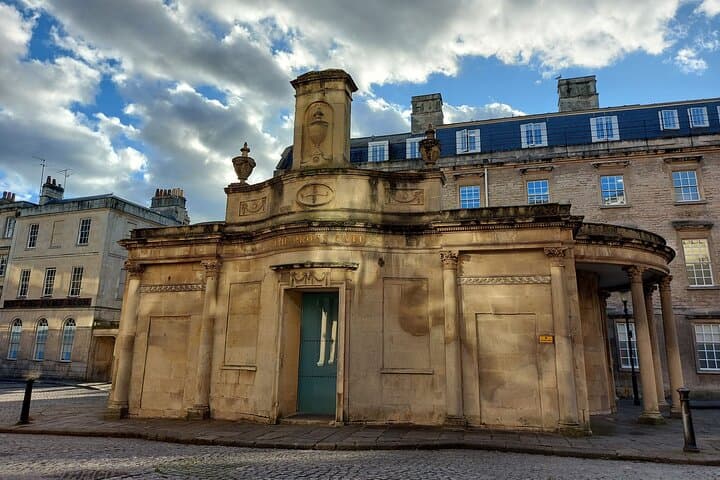
A cool morning in Bath feels deliberately staged: honey‑coloured stone facades glow as you step onto cobbled streets, and a guide born in the city points out doorways, theatre fronts and a bridge that watched film crews at work. The tour threads through compact squares and grand crescents, the very settings producers chose to evoke Regency-era society.
A cool morning in Bath feels deliberately staged: honey‑coloured stone facades glow as you step onto cobbled streets, and a guide born in the city points out doorways, theatre fronts and a bridge that watched film crews at work. The tour threads through compact squares and grand crescents, the very settings producers chose to evoke Regency-era society.
Bath’s look comes from local oolitic limestone—Bath Stone—worked into the sweeping geometric forms laid out in the 18th century by architects like John Wood. The city’s Roman baths, Georgian assembly rooms and theatrical culture created the social machine that Bridgerton borrows for its drama; a guide will connect on-screen moments to real anecdotes, local scandals and how Bath shaped manners and fashion.
Expect a private, 90–120 minute stroll with stops outside landmark sites: cobbled squares, theatre fronts, a famous bridge and streets that doubled as aristocratic addresses. The tour balances batched film facts with local color—think unresolved mysteries, overheard gossip and a light themed quiz.
Practically: wear sturdy shoes for uneven stone, layer for sudden showers, and allow time to snap photos without blocking narrow pavements. The route is mostly flat and wheelchair accessible in parts, but cobbles are inherently uneven. Public transport and parking are close; aim for early slots to avoid coach groups. Ask your guide about quieter courtyards for photographs and independent tea rooms that still serve a proper cream tea—small detours that make the story feel lived in.