THE ADVENTURE COLLECTIVE® · Independent discovery and booking for outdoor travel

Ride a section of the historic Death Railway, visit the Kanchanaburi War Cemetery and JEATH Museum, and cool off at Saiyok Noi waterfall on a full-day trip from Bangkok. This tour blends moving wartime history with riverside scenery and a heritage train experience.
Ride a section of the historic Death Railway, visit the Kanchanaburi War Cemetery and JEATH Museum, and cool off at Saiyok Noi waterfall on a full-day trip from Bangkok. This tour blends moving wartime history with riverside scenery and a heritage train experience.
Morning light cuts across the River Kwai as the rattle of a diesel carriage draws close, crossing the wooden viaduct that once carried the Death Railway.
You stand on a platform where history and landscape press in—limestone bluffs, teak forest and the slow, wide river that forced engineers and prisoners to improvise bridges and paths.
Verified experiences and guided adventures in the surrounding area.
Operated by Parallel Tour · Kanchanaburi, Kanchanaburi Province
Morning light cuts across the River Kwai as the rattle of a diesel carriage draws close, crossing the wooden viaduct that once carried the Death Railway.
You stand on a platform where history and landscape press in—limestone bluffs, teak forest and the slow, wide river that forced engineers and prisoners to improvise bridges and paths.
Kanchanaburi’s story is blunt and human: construction of the Burma Railway in 1942–1943 cost thousands of Allied lives under Japanese command. Sites on this day trip — the Kanchanaburi War Cemetery, JEATH War Museum and the iron-and-wood bridge — trace that difficult past with photographs, written records and preserved track. Geologically the valley cuts through Triassic limestone and alluvial plains, producing small falls such as Saiyok Noi where water finds sudden, cheerful drop-offs.
Local culture remains centered on riverside markets, casual Thai lunches and guides who balance respectful narration with practical context. Expect a scenic two-hour heritage train ride along sections of original track and a 30–45 minute visit to Saiyok Noi to stretch legs and cool off.
Practical guidance: the full day runs about 10–12 hours from Bangkok with coach transfer; wear sturdy shoes for uneven platforms and short walks, bring refillable water, and a lightweight rain layer—monsoon showers are common. Photography is allowed at most sites but be discrete at memorials. Mobile tickets and hotel pickup simplify logistics; cancel at least 24 hours if plans change. The route is accessible for most fitness levels and offers a measured, reflective outdoor history experience today.
easy.
10–12 hours.
Suitable for most fitness levels; expect short walks on uneven surfaces and standing during museum visits and train boarding.
The heritage train segment on this tour is roughly two hours in total, covering scenic stretches and the historic viaduct.
The tour includes some admissions as listed—confirm at booking; JEATH Museum and certain local sites may have separate fees covered by the operator.
Yes; the itinerary is rated easy with mostly short walks, though parents should supervise younger children on platforms and near water.
Most bookings include pickup within a specified free zone; check the operator’s pickup points or arrive at the designated meeting location if needed.
The Burma Railway was built in 1942–1943; tens of thousands of Allied and Asian laborers suffered and many died during construction under harsh conditions.
Tour operators and parks encourage staying on paths and using marked viewpoints to limit erosion; avoid feeding wildlife and pack out waste to protect riverside habitat.
Parallel Tour operates guided outdoor trips and adventures with an emphasis on safety, stewardship, and memorable experiences.
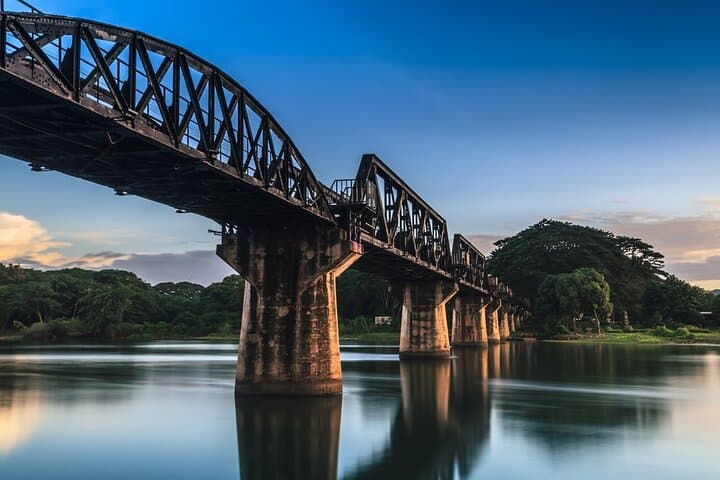
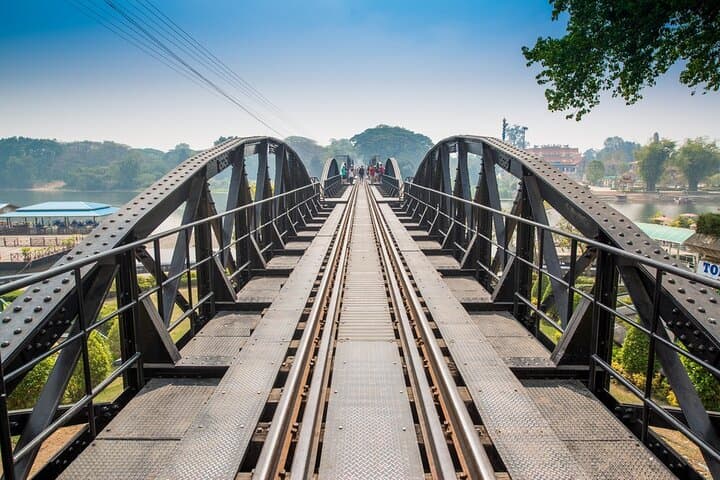
Morning light cuts across the River Kwai as the rattle of a diesel carriage draws close, crossing the wooden viaduct that once carried the Death Railway.
You stand on a platform where history and landscape press in—limestone bluffs, teak forest and the slow, wide river that forced engineers and prisoners to improvise bridges and paths.
Morning light cuts across the River Kwai as the rattle of a diesel carriage draws close, crossing the wooden viaduct that once carried the Death Railway.
You stand on a platform where history and landscape press in—limestone bluffs, teak forest and the slow, wide river that forced engineers and prisoners to improvise bridges and paths.
Kanchanaburi’s story is blunt and human: construction of the Burma Railway in 1942–1943 cost thousands of Allied lives under Japanese command. Sites on this day trip — the Kanchanaburi War Cemetery, JEATH War Museum and the iron-and-wood bridge — trace that difficult past with photographs, written records and preserved track. Geologically the valley cuts through Triassic limestone and alluvial plains, producing small falls such as Saiyok Noi where water finds sudden, cheerful drop-offs.
Local culture remains centered on riverside markets, casual Thai lunches and guides who balance respectful narration with practical context. Expect a scenic two-hour heritage train ride along sections of original track and a 30–45 minute visit to Saiyok Noi to stretch legs and cool off.
Practical guidance: the full day runs about 10–12 hours from Bangkok with coach transfer; wear sturdy shoes for uneven platforms and short walks, bring refillable water, and a lightweight rain layer—monsoon showers are common. Photography is allowed at most sites but be discrete at memorials. Mobile tickets and hotel pickup simplify logistics; cancel at least 24 hours if plans change. The route is accessible for most fitness levels and offers a measured, reflective outdoor history experience today.