THE ADVENTURE COLLECTIVE® · Independent discovery and booking for outdoor travel

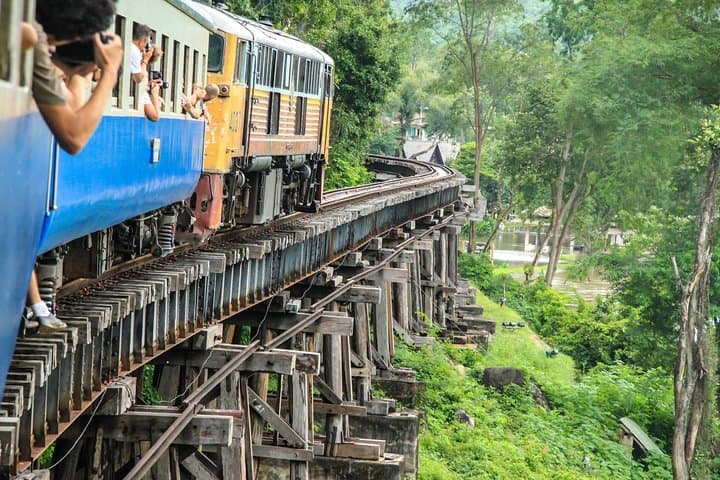
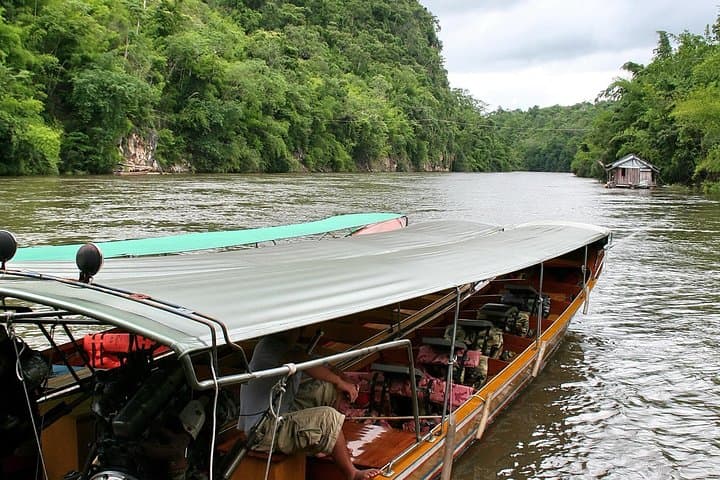
Visit the Bridge on the River Kwai and ride a section of the Thailand–Burma Death Railway on a full-day guided tour from Bangkok. This tour pairs a long-tail boat ride, war cemetery and museum visits, and a nostalgic local train journey.
Visit the Bridge on the River Kwai and ride a section of the Thailand–Burma Death Railway on a full-day guided tour from Bangkok. This tour pairs a long-tail boat ride, war cemetery and museum visits, and a nostalgic local train journey.
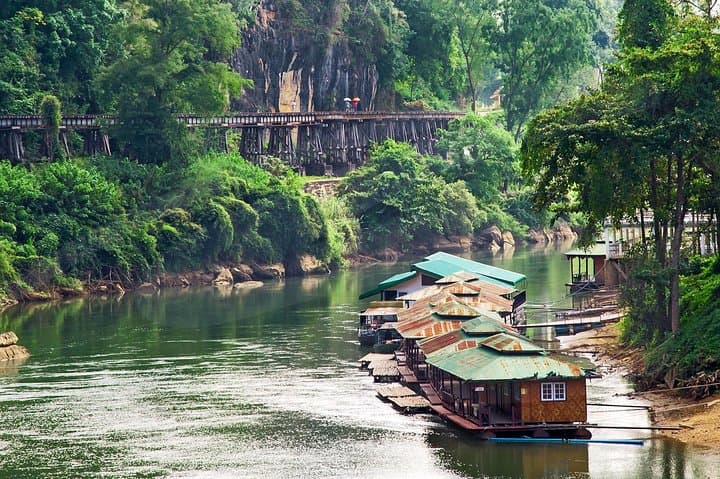
A low morning sun ignites the riveted steel of the River Kwai bridge as long-tail boats push cool mist across the water. Travelers step off an air-conditioned minivan into humid river air, the bridge’s rusted girders framing a scene that feels both ordinary—local fishermen, rice paddies—and charged with history.
Verified experiences and guided adventures in the surrounding area.
Operated by Tour East Thailand · Kanchanaburi, Kanchanaburi Province
A low morning sun ignites the riveted steel of the River Kwai bridge as long-tail boats push cool mist across the water. Travelers step off an air-conditioned minivan into humid river air, the bridge’s rusted girders framing a scene that feels both ordinary—local fishermen, rice paddies—and charged with history.
The bridge and the adjacent Death Railway were built in 1943 as part of a Japanese wartime route linking Thailand to Burma. Thousands of Allied POWs and Asian laborers died during construction; the Kanchanaburi War Cemetery and JEATH War Museum catalog losses and personal stories that give the landscape its somber cast. Geologically, the river valley’s alluvial plains support sugar cane and pineapple fields; culturally, the town around the bridge is a working provincial hub rather than a staged museum village.
Practically, this is a full-day, guided excursion from Bangkok (9–10 hours) that combines museum visits, a visit to the cemetery, a long-tail boat trip under the bridge, and a short local train ride along the historic track. Expect flat walking, occasional steps at museum sites, and open-air boat rides that can spray you with river mist. Bring sun protection, light rain layers in monsoon months, and sufficient water for a warm day. Optional train seat upgrades (roughly 200–300 THB) secure seating and basic refreshments.
The tone of the visit is reflective more than recreational—visitors often pace their steps across the bridge slowly. Time your trip for cooler morning departures, respect memorial spaces, and budget a few hours to absorb both the scenery and the difficult history embedded in the rails.
moderate.
9–10 hours.
Moderate fitness: able to walk on flat and uneven surfaces for several hours and board a long-tail boat
Expect a full-day outing of about 9–10 hours including roundtrip transport, museums, boat ride and a short train segment.
The site areas have flat sections and ramps, but the long-tail boat ride is not wheelchair accessible; check with the operator about specific needs and hotel pickup accessibility.
A lunch is included in the tour price; snacks and drinks are also available for purchase at sites and stations.
Yes—there is a local train ride included; optional paid upgrades (approx. 200–300 THB) guarantee a reserved seat and extra amenities.
The Death Railway was built in 1943 by Japanese forces using POW and forced labor to link Bangkok with Rangoon; sites in Kanchanaburi preserve personal records and graves of many who died during construction.
The river valley supports agricultural livelihoods; visitors should avoid littering and stick to marked paths to protect riparian vegetation and aquatic habitats.
Tour East Thailand operates guided outdoor trips and adventures with an emphasis on safety, stewardship, and memorable experiences.
A low morning sun ignites the riveted steel of the River Kwai bridge as long-tail boats push cool mist across the water. Travelers step off an air-conditioned minivan into humid river air, the bridge’s rusted girders framing a scene that feels both ordinary—local fishermen, rice paddies—and charged with history.
A low morning sun ignites the riveted steel of the River Kwai bridge as long-tail boats push cool mist across the water. Travelers step off an air-conditioned minivan into humid river air, the bridge’s rusted girders framing a scene that feels both ordinary—local fishermen, rice paddies—and charged with history.
The bridge and the adjacent Death Railway were built in 1943 as part of a Japanese wartime route linking Thailand to Burma. Thousands of Allied POWs and Asian laborers died during construction; the Kanchanaburi War Cemetery and JEATH War Museum catalog losses and personal stories that give the landscape its somber cast. Geologically, the river valley’s alluvial plains support sugar cane and pineapple fields; culturally, the town around the bridge is a working provincial hub rather than a staged museum village.
Practically, this is a full-day, guided excursion from Bangkok (9–10 hours) that combines museum visits, a visit to the cemetery, a long-tail boat trip under the bridge, and a short local train ride along the historic track. Expect flat walking, occasional steps at museum sites, and open-air boat rides that can spray you with river mist. Bring sun protection, light rain layers in monsoon months, and sufficient water for a warm day. Optional train seat upgrades (roughly 200–300 THB) secure seating and basic refreshments.
The tone of the visit is reflective more than recreational—visitors often pace their steps across the bridge slowly. Time your trip for cooler morning departures, respect memorial spaces, and budget a few hours to absorb both the scenery and the difficult history embedded in the rails.