THE ADVENTURE COLLECTIVE® · Independent discovery and booking for outdoor travel

Travel from Bangkok to the River Kwai for a private, full-day exploration of the Death Railway, its memorials and museums. This guided tour combines a boat approach to the bridge, a train ride over original track, and measured time at key historical sites.
Travel from Bangkok to the River Kwai for a private, full-day exploration of the Death Railway, its memorials and museums. This guided tour combines a boat approach to the bridge, a train ride over original track, and measured time at key historical sites.
Morning light thins over Bangkok as the tour vehicle peels westward, rice paddies and teak groves sliding into view. By the time the skyline is a memory, the River Kwai's slow current appears—quiet but insistent, as if it keeps the region's stories moving.
Verified experiences and guided adventures in the surrounding area.
Operated by Asian Trails LTD · Kanchanaburi, Kanchanaburi Province
Morning light thins over Bangkok as the tour vehicle peels westward, rice paddies and teak groves sliding into view. By the time the skyline is a memory, the River Kwai's slow current appears—quiet but insistent, as if it keeps the region's stories moving.
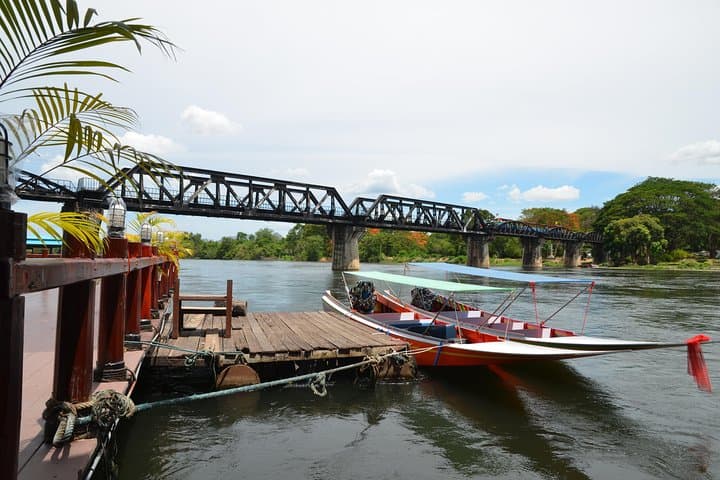
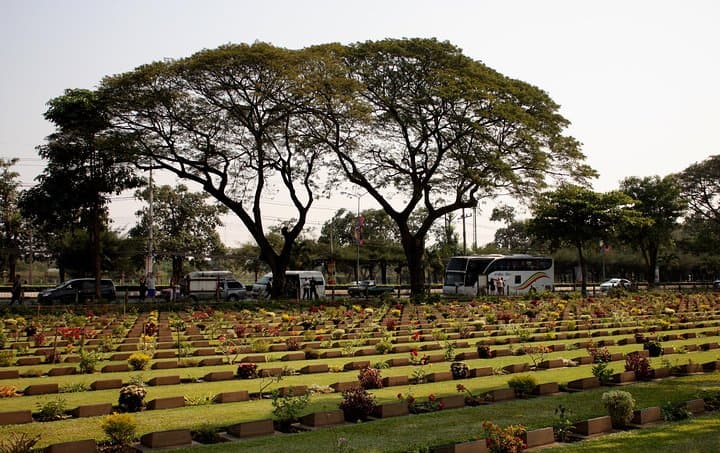
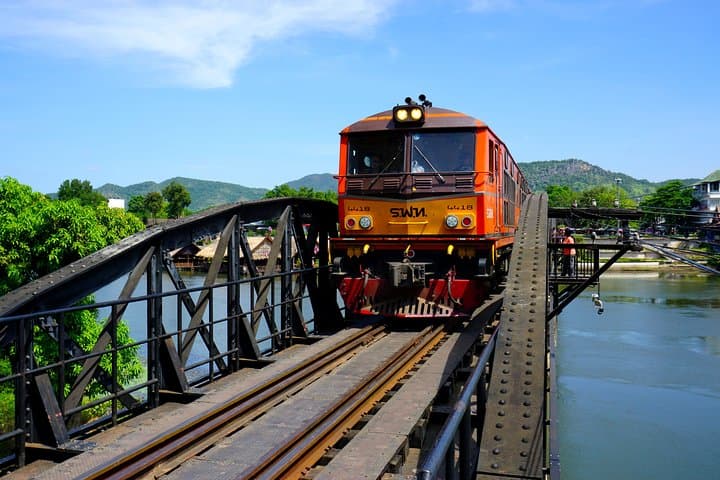
The day threads together places where history is physically present: the Allied Cemetery with its rows of white headstones, the Thailand–Burma Railway Centre’s eight galleries that reconstruct labor, logistics and survival, and the rebuilt iron bridge that still carries the local train. Geology here is flat alluvium carved by the Mae Klong system; the river’s floodplain shaped both travel routes and wartime supply lines. Local culture pulses in small-market stalls and riverside restaurants where Thai set lunches emphasize simple, clean flavors—rice, grilled fish, spicy salads—rooted in Kanchanaburi’s agricultural life.
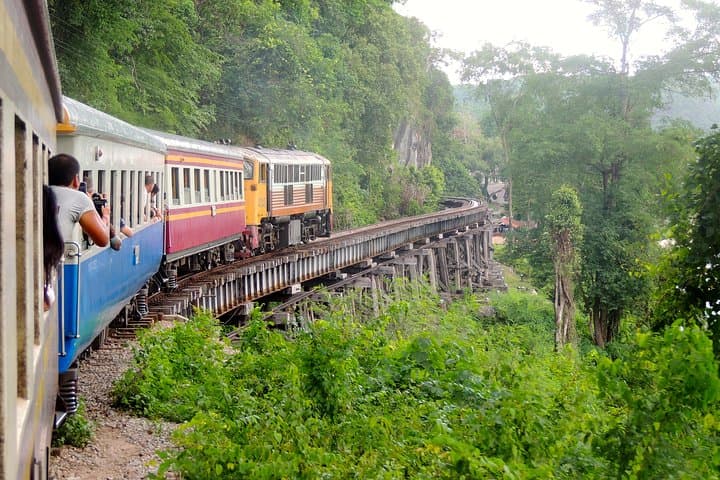
Expect a compact schedule: a roughly three-hour drive each way from central Bangkok, short narrated stops at the cemetery and museum, a brief boat transfer to the bridge, and a ride on the local train over preserved sections of the Death Railway. The experience is predominantly interpretive rather than strenuous—you walk gentle paths and platforms, not trails—and the emotional tone ranges from reflective to instructive.
Practical notes: wear sun protection and comfortable shoes, bring water and a respectful mindset for memorial sites, and plan for traffic back to Bangkok. The tour balances moving history with straightforward logistics—ideal for travelers who want context-rich, ground-level access to one of Southeast Asia’s most significant wartime landscapes.
easy.
10 hours.
Suitable for most fitness levels; involves standing, short walks on flat ground and getting on/off boats and trains.
Pickup and drop-off are provided for most downtown Bangkok hotels; some outer districts and private apartments may require a nearby hotel meeting point or surcharge.
Yes—physical demands are low, but those with mobility issues should note the tour is not wheelchair accessible and includes boat transfers and train boarding.
Lunch at a local restaurant and all mentioned entrance and donation fees are included in the tour price.
English-speaking guides are standard; other languages may be requested subject to availability and an extra charge.
The Thailand–Burma Railway, built 1942–45 by forced labor under Japanese control, cost thousands of lives; the bridge was rebuilt after wartime bombing and stands as a focal point for remembrance.
Local operators discourage disturbing riverbanks and wildlife; visitors are urged to avoid littering and to support sites that contribute to maintenance of memorials and museums.
Asian Trails LTD operates guided outdoor trips and adventures with an emphasis on safety, stewardship, and memorable experiences.
Morning light thins over Bangkok as the tour vehicle peels westward, rice paddies and teak groves sliding into view. By the time the skyline is a memory, the River Kwai's slow current appears—quiet but insistent, as if it keeps the region's stories moving.
Morning light thins over Bangkok as the tour vehicle peels westward, rice paddies and teak groves sliding into view. By the time the skyline is a memory, the River Kwai's slow current appears—quiet but insistent, as if it keeps the region's stories moving.
The day threads together places where history is physically present: the Allied Cemetery with its rows of white headstones, the Thailand–Burma Railway Centre’s eight galleries that reconstruct labor, logistics and survival, and the rebuilt iron bridge that still carries the local train. Geology here is flat alluvium carved by the Mae Klong system; the river’s floodplain shaped both travel routes and wartime supply lines. Local culture pulses in small-market stalls and riverside restaurants where Thai set lunches emphasize simple, clean flavors—rice, grilled fish, spicy salads—rooted in Kanchanaburi’s agricultural life.
Expect a compact schedule: a roughly three-hour drive each way from central Bangkok, short narrated stops at the cemetery and museum, a brief boat transfer to the bridge, and a ride on the local train over preserved sections of the Death Railway. The experience is predominantly interpretive rather than strenuous—you walk gentle paths and platforms, not trails—and the emotional tone ranges from reflective to instructive.
Practical notes: wear sun protection and comfortable shoes, bring water and a respectful mindset for memorial sites, and plan for traffic back to Bangkok. The tour balances moving history with straightforward logistics—ideal for travelers who want context-rich, ground-level access to one of Southeast Asia’s most significant wartime landscapes.