THE ADVENTURE COLLECTIVE® · Independent discovery and booking for outdoor travel

Explore the Pinacoteca di Brera with a local guide and follow a two‑hour path through Renaissance and Baroque masterpieces before wandering Brera’s artistic streets. Practical tips on timing, accessibility, and what to bring help you make the most of this cultural walk.
Explore the Pinacoteca di Brera with a local guide and follow a two‑hour path through Renaissance and Baroque masterpieces before wandering Brera’s artistic streets. Practical tips on timing, accessibility, and what to bring help you make the most of this cultural walk.
Stepping into the Pinacoteca di Brera feels like entering a practiced conversation between stone corridors and painted light. The guided two‑hour visit places you before canvases that changed European painting—Caravaggio’s chiaroscuro, Raphael’s measured grace, Hayez’s 19th‑century intensity—before spilling you back into Brera’s narrow streets lined with studios and independent ateliers.
Verified experiences and guided adventures in the surrounding area.
Operated by Naples Discovery Tours · Milan, Lombardy
Stepping into the Pinacoteca di Brera feels like entering a practiced conversation between stone corridors and painted light. The guided two‑hour visit places you before canvases that changed European painting—Caravaggio’s chiaroscuro, Raphael’s measured grace, Hayez’s 19th‑century intensity—before spilling you back into Brera’s narrow streets lined with studios and independent ateliers.
The gallery occupies a former convent established in the late 18th century as part of Napoleonic cultural reforms; its collection traces Italian painting from medieval panels to 19th‑century portraits. Brera itself grew around the Academy of Fine Arts, its streets shaped by artists, antique dealers, and small foundries. Geologically, Milan sits on the Po Valley plain—flat streets and paved courtyards that make the neighborhood easy to walk, but urban noise can be surprisingly present between museums and cafés.
Practicalities matter: the tour includes Pinacoteca admission and runs about 120 minutes with a local guide; lockers are required for large bags. The route moves at a museum pace—standing, short walks, close looking—so comfortable footwear and a charged phone for photos outside the gallery are sensible. Public transit serves Brera well; trams and the nearest metro stop keep walking minimal.
Plan to arrive 10–15 minutes early, check bag rules, and reserve a time to avoid midday crowds. After the gallery, allow thirty to sixty minutes to explore Via Fiori Chiari and the quieter courtyards—places where the gallery’s energy spills into daily Milanese life.
easy.
2 hours.
Suitable for all fitness levels; involves standing and short indoor walking segments.
Yes—the tour price includes admission to the Pinacoteca di Brera; you will receive mobile or paper ticket instructions when you book.
The tour is listed as wheelchair accessible, but notify the operator in advance so they can confirm any accommodations and meeting arrangements.
Photography policies vary by room and temporary exhibition; the guide will advise which works allow non‑flash photos—always avoid flash to protect paintings.
The operator may reassign you to another time the same day; for last‑minute bookings you could be moved to the following day if seats are limited.
The Pinacoteca was established in the late 18th century in a former Brera convent and expanded as Milan’s principal collection of Renaissance and Baroque painting.
The museum enforces bag checks and no‑flash photography to protect fragile works; visitors are encouraged to use public transport to reduce neighborhood congestion.
Naples Discovery Tours operates guided outdoor trips and adventures with an emphasis on safety, stewardship, and memorable experiences.
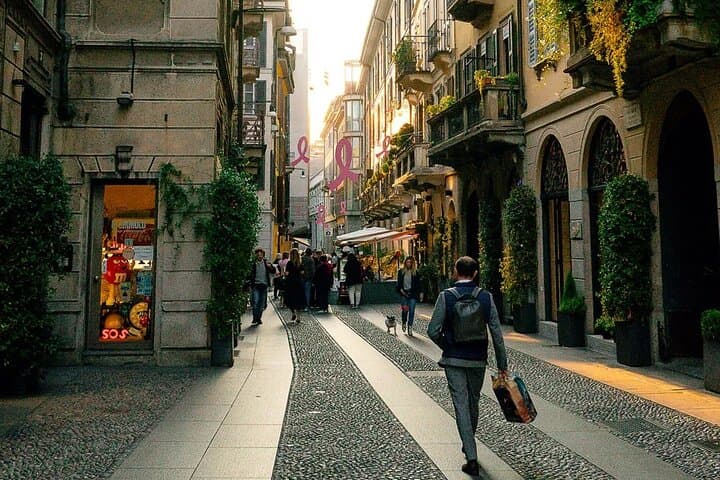
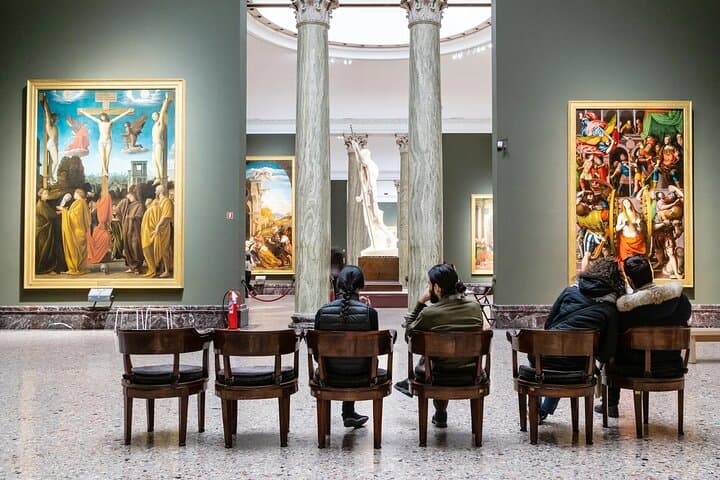
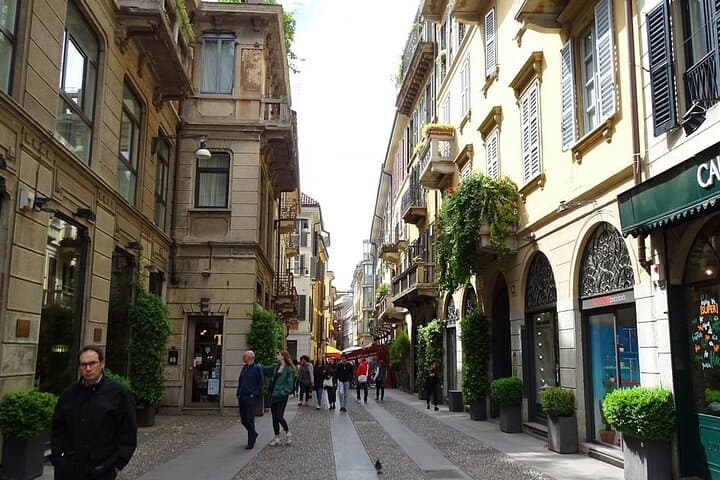
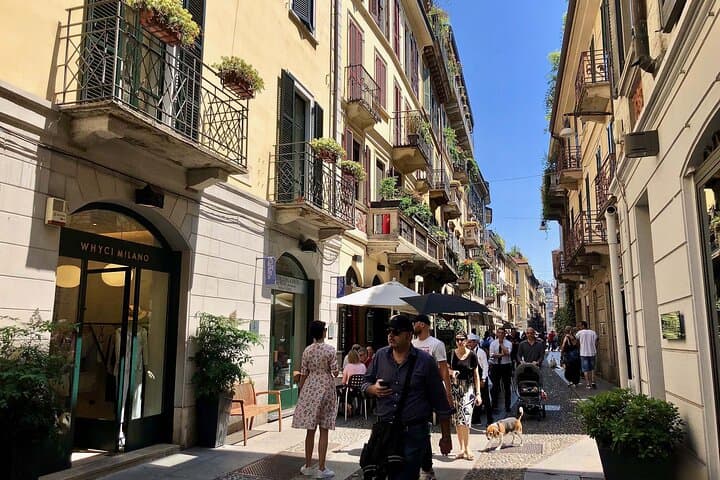
Stepping into the Pinacoteca di Brera feels like entering a practiced conversation between stone corridors and painted light. The guided two‑hour visit places you before canvases that changed European painting—Caravaggio’s chiaroscuro, Raphael’s measured grace, Hayez’s 19th‑century intensity—before spilling you back into Brera’s narrow streets lined with studios and independent ateliers.
Stepping into the Pinacoteca di Brera feels like entering a practiced conversation between stone corridors and painted light. The guided two‑hour visit places you before canvases that changed European painting—Caravaggio’s chiaroscuro, Raphael’s measured grace, Hayez’s 19th‑century intensity—before spilling you back into Brera’s narrow streets lined with studios and independent ateliers.
The gallery occupies a former convent established in the late 18th century as part of Napoleonic cultural reforms; its collection traces Italian painting from medieval panels to 19th‑century portraits. Brera itself grew around the Academy of Fine Arts, its streets shaped by artists, antique dealers, and small foundries. Geologically, Milan sits on the Po Valley plain—flat streets and paved courtyards that make the neighborhood easy to walk, but urban noise can be surprisingly present between museums and cafés.
Practicalities matter: the tour includes Pinacoteca admission and runs about 120 minutes with a local guide; lockers are required for large bags. The route moves at a museum pace—standing, short walks, close looking—so comfortable footwear and a charged phone for photos outside the gallery are sensible. Public transit serves Brera well; trams and the nearest metro stop keep walking minimal.
Plan to arrive 10–15 minutes early, check bag rules, and reserve a time to avoid midday crowds. After the gallery, allow thirty to sixty minutes to explore Via Fiori Chiari and the quieter courtyards—places where the gallery’s energy spills into daily Milanese life.