THE ADVENTURE COLLECTIVE® · Independent discovery and booking for outdoor travel

Spend a private day exploring Waterfall Country in the Brecon Beacons with a qualified guide. Hike into tree-lined gorges to visit Sgwd Clun-Gwyn, Sgwd Isaf Clun-Gwyn, Sgwd y Pannwr and the walk-behind Sgwd yr Eira.
Spend a private day exploring Waterfall Country in the Brecon Beacons with a qualified guide. Hike into tree-lined gorges to visit Sgwd Clun-Gwyn, Sgwd Isaf Clun-Gwyn, Sgwd y Pannwr and the walk-behind Sgwd yr Eira.
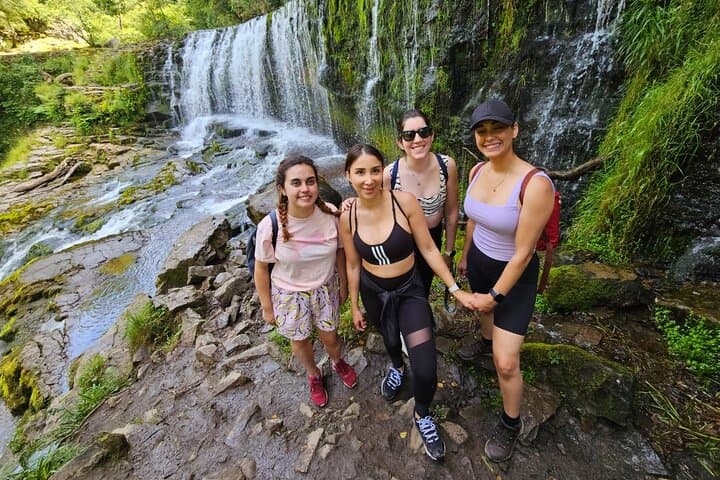
You step off the lane and the forest closes around you — cool, moss-slick air and the distant percussion of falling water. The guide checks boots and maps, then leads the party down into carved gorges where stone walls channel streams into curtains and plunge pools. Light slides through canopy gaps, catching spray that makes the rock glitter.
Verified experiences and guided adventures in the surrounding area.
Operated by The Great Weekender Experiences · Pontneddfechan, Wales
You step off the lane and the forest closes around you — cool, moss-slick air and the distant percussion of falling water. The guide checks boots and maps, then leads the party down into carved gorges where stone walls channel streams into curtains and plunge pools. Light slides through canopy gaps, catching spray that makes the rock glitter.
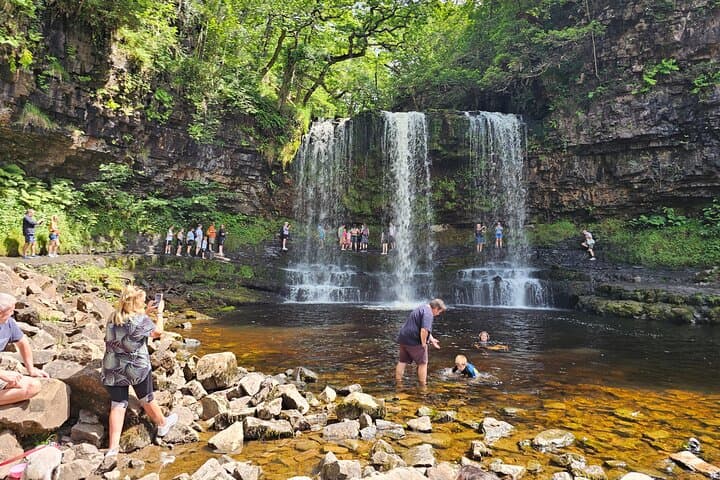
This route threads four of South Wales’ most photographed falls: Sgwd Clun-Gwyn, Sgwd Isaf Clun-Gwyn, Sgwd y Pannwr and Sgwd yr Eira, the famous curtain you can actually walk behind. The waterfalls are the visible work of millennia of geology: resistant sandstone and softer mudstones shaped by glacial melt and river incision. The River Neath and its tributaries powered local mills and fed ironworks in the 18th–19th centuries; industry and nature sit side-by-side here.
Culturally, Waterfall Country has long attracted poets, naturalists and, more recently, photographers chasing light and mist. Expect narrow trails, rock steps, occasional ladder-like sections and wet, slippery surfaces underfoot. Your guide will share local stories and point out features you’d miss alone — carved ledges, old quarry remains, and the best angles for photos.
Practical notes: allow about four hours, wear sturdy waterproof boots and bring a light waterproof layer. Trails can be muddy and uneven; poles help on descents. Timing matters — late morning or early afternoon gives balanced light and warmer river crossings. Respect fenced areas and private land, pack out rubbish, and leave room on the path for other hikers. With a guide this route becomes both safer and richer: you get context and confidence to enjoy the waterfalls fully.
moderate.
4 hours.
Moderate fitness — comfortable with steady uphill/downhill sections and uneven terrain; some prior day-hike experience helpful
The guided itinerary runs about four hours and is rated moderate: expect uneven terrain, short steep sections and wet rock; a reasonable level of fitness is recommended.
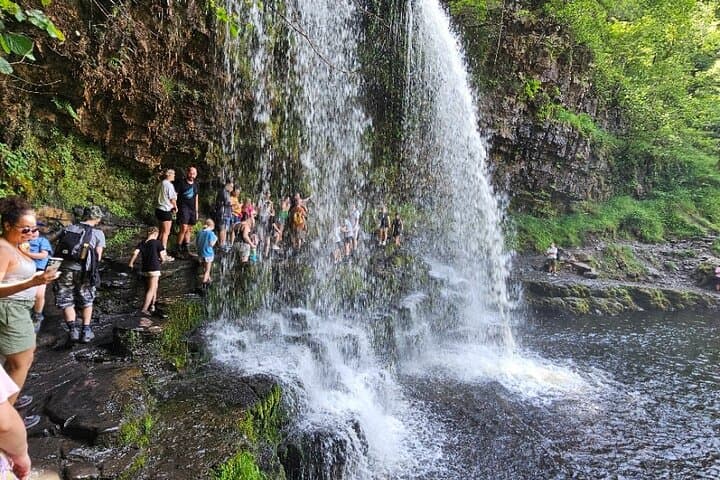
Yes—Sgwd yr Eira has a path that allows you to pass behind the curtain of water, but surfaces are slippery and visibility can be reduced by spray, so follow your guide’s directions.
Families with older children who are confident on uneven ground can join, but the operator notes travelers should have at least moderate fitness; people with serious mobility issues are not recommended.
Tours may be cancelled for safety in severe weather; in light rain the hike continues but leaders will adjust pace and route to keep everyone safe.
Industrial-era mills and ironworks used local streams for power; many paths follow former tramways and access routes used during the 18th–19th century industrial expansion.
Trails are fragile in wet weather — stick to marked paths, avoid trampling bankside vegetation, and pack out all waste to protect the sensitive gorge ecosystems.
The Great Weekender Experiences operates guided outdoor trips and adventures with an emphasis on safety, stewardship, and memorable experiences.
You step off the lane and the forest closes around you — cool, moss-slick air and the distant percussion of falling water. The guide checks boots and maps, then leads the party down into carved gorges where stone walls channel streams into curtains and plunge pools. Light slides through canopy gaps, catching spray that makes the rock glitter.
You step off the lane and the forest closes around you — cool, moss-slick air and the distant percussion of falling water. The guide checks boots and maps, then leads the party down into carved gorges where stone walls channel streams into curtains and plunge pools. Light slides through canopy gaps, catching spray that makes the rock glitter.
This route threads four of South Wales’ most photographed falls: Sgwd Clun-Gwyn, Sgwd Isaf Clun-Gwyn, Sgwd y Pannwr and Sgwd yr Eira, the famous curtain you can actually walk behind. The waterfalls are the visible work of millennia of geology: resistant sandstone and softer mudstones shaped by glacial melt and river incision. The River Neath and its tributaries powered local mills and fed ironworks in the 18th–19th centuries; industry and nature sit side-by-side here.
Culturally, Waterfall Country has long attracted poets, naturalists and, more recently, photographers chasing light and mist. Expect narrow trails, rock steps, occasional ladder-like sections and wet, slippery surfaces underfoot. Your guide will share local stories and point out features you’d miss alone — carved ledges, old quarry remains, and the best angles for photos.
Practical notes: allow about four hours, wear sturdy waterproof boots and bring a light waterproof layer. Trails can be muddy and uneven; poles help on descents. Timing matters — late morning or early afternoon gives balanced light and warmer river crossings. Respect fenced areas and private land, pack out rubbish, and leave room on the path for other hikers. With a guide this route becomes both safer and richer: you get context and confidence to enjoy the waterfalls fully.