THE ADVENTURE COLLECTIVE® · Independent discovery and booking for outdoor travel

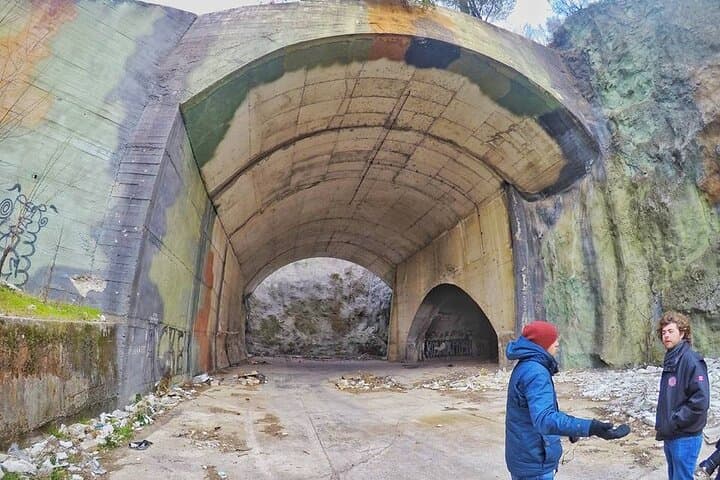
Walk the front lines of Mostar with a guide who lays out the breakup of Yugoslavia, strategic geography, and personal wartime stories. This three-hour walking tour visits an abandoned military hangar, the Mostar War Museum and streets that still show trench lines.
Walk the front lines of Mostar with a guide who lays out the breakup of Yugoslavia, strategic geography, and personal wartime stories. This three-hour walking tour visits an abandoned military hangar, the Mostar War Museum and streets that still show trench lines.
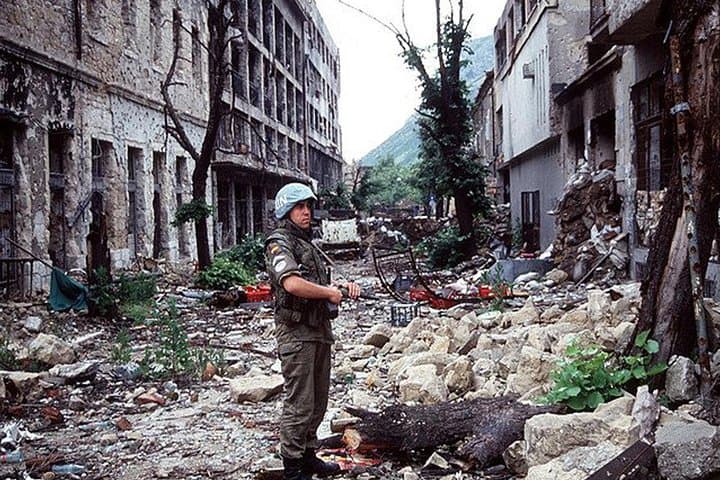
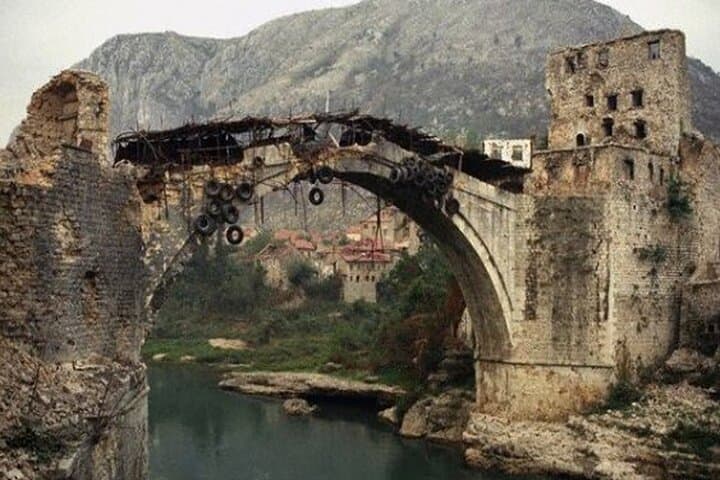
You step onto cobbled Šantića Street with the Neretva daring you from below; the river’s emerald current has watched Mostar’s fortunes shift for centuries. The tour moves through the city’s scars and recoveries—bunkers in plain sight, a ruined hangar tucked into the hills, and the silent rooms of the Mostar War Museum where maps and testimonies put dates and names into human scale.
Verified experiences and guided adventures in the surrounding area.
Operated by Mostar Travel Agency · Mostar, Herzegovina-Neretva Canton
You step onto cobbled Šantića Street with the Neretva daring you from below; the river’s emerald current has watched Mostar’s fortunes shift for centuries. The tour moves through the city’s scars and recoveries—bunkers in plain sight, a ruined hangar tucked into the hills, and the silent rooms of the Mostar War Museum where maps and testimonies put dates and names into human scale.
From a geopolitical vantage the guide traces Yugoslavia’s arc: Tito’s Cold War nonalignment, the 1980s economic squeeze and rising nationalism, then the fragmentation that made Mostar a frontline. Geology and urban form played a role—Mostar sits where karst ridges and the Neretva carve narrow corridors, making it strategically important and easy to isolate. Cultural layers are visible in stone and cuisine: Ottoman-era architecture and Croat and Bosniak neighborhoods that now share markets and memory.
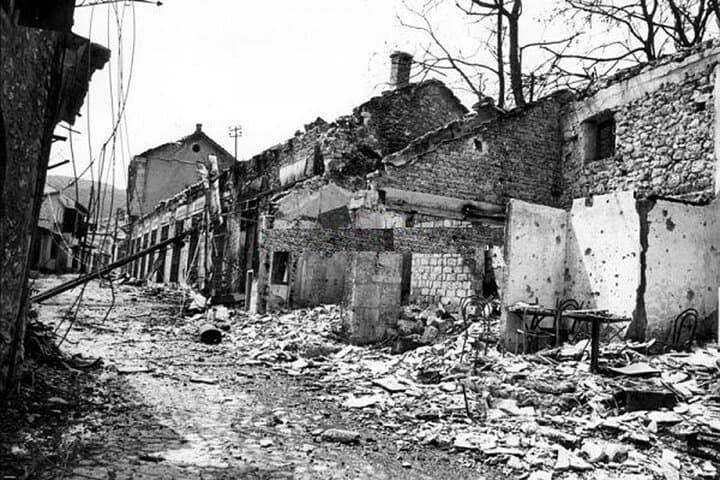
The itinerary includes an abandoned Yugoslav aircraft hangar, the Mostar War Museum with first-person accounts, and a walk along the former western front where you’ll see surviving bunkers and compare wartime photos to the present-day streets. Expect 3 hours of mostly flat walking on uneven cobbles and short inclines; the guide uses maps and photos to clarify complex history.
Practical edge: wear sturdy shoes for cobbles, bring water and a light layer for changing weather, and allow time after the tour to visit the museum exhibits more slowly. Photography is allowed in many places but be mindful in memorial spaces; listen to your guide and ask questions—this tour trades spectacle for context and testimony.
easy.
3 hours.
Suitable for most fitness levels; you should be able to walk on uneven ground for up to three hours.
Meeting details are provided at booking; downtown Mostar near the Old Bridge or hotel pickup if that option is selected.
Yes—children must be accompanied by an adult and the content includes wartime testimony that may be graphic; use parental discretion.
Much of the route uses historic cobblestones and some steps; accessibility is limited—contact the operator to discuss adaptations.
The Mostar War Museum entrance fee is included in the tour price as listed in the inclusions.
Mostar became a focal point in the 1992–1995 Bosnian War because its position over the Neretva linked strategic north–south routes; the city endured intense urban combat and division.
Preserving wartime sites and the river corridor is local priority—avoid touching fragile structures and follow marked paths to limit erosion and disturbance.
Mostar Travel Agency operates guided outdoor trips and adventures with an emphasis on safety, stewardship, and memorable experiences.
You step onto cobbled Šantića Street with the Neretva daring you from below; the river’s emerald current has watched Mostar’s fortunes shift for centuries. The tour moves through the city’s scars and recoveries—bunkers in plain sight, a ruined hangar tucked into the hills, and the silent rooms of the Mostar War Museum where maps and testimonies put dates and names into human scale.
You step onto cobbled Šantića Street with the Neretva daring you from below; the river’s emerald current has watched Mostar’s fortunes shift for centuries. The tour moves through the city’s scars and recoveries—bunkers in plain sight, a ruined hangar tucked into the hills, and the silent rooms of the Mostar War Museum where maps and testimonies put dates and names into human scale.
From a geopolitical vantage the guide traces Yugoslavia’s arc: Tito’s Cold War nonalignment, the 1980s economic squeeze and rising nationalism, then the fragmentation that made Mostar a frontline. Geology and urban form played a role—Mostar sits where karst ridges and the Neretva carve narrow corridors, making it strategically important and easy to isolate. Cultural layers are visible in stone and cuisine: Ottoman-era architecture and Croat and Bosniak neighborhoods that now share markets and memory.
The itinerary includes an abandoned Yugoslav aircraft hangar, the Mostar War Museum with first-person accounts, and a walk along the former western front where you’ll see surviving bunkers and compare wartime photos to the present-day streets. Expect 3 hours of mostly flat walking on uneven cobbles and short inclines; the guide uses maps and photos to clarify complex history.
Practical edge: wear sturdy shoes for cobbles, bring water and a light layer for changing weather, and allow time after the tour to visit the museum exhibits more slowly. Photography is allowed in many places but be mindful in memorial spaces; listen to your guide and ask questions—this tour trades spectacle for context and testimony.