THE ADVENTURE COLLECTIVE® · Independent discovery and booking for outdoor travel

Get hands-on in a traditional Monchique kitchen where local chestnuts, honey and medronho flavor rustic breads. This 2½-hour workshop pairs a village producers’ tour with practical baking and generous tastings.
Get hands-on in a traditional Monchique kitchen where local chestnuts, honey and medronho flavor rustic breads. This 2½-hour workshop pairs a village producers’ tour with practical baking and generous tastings.
Dawn in the Serra de Monchique smells of wood smoke and warm dough. Participants gather in a low stone house where ovens still hold the memory of last night’s fire; outside, the hills press green and fragrant, the arbutus berries and chestnut trees crowding the lanes. The workshop opens with a short walk past terraced plots and a quick tour of the village producers who supply honey, chouriço and medronho—local ingredients that will find their way into the bread and tastings that follow.
Verified experiences and guided adventures in the surrounding area.
Dawn in the Serra de Monchique smells of wood smoke and warm dough. Participants gather in a low stone house where ovens still hold the memory of last night’s fire; outside, the hills press green and fragrant, the arbutus berries and chestnut trees crowding the lanes. The workshop opens with a short walk past terraced plots and a quick tour of the village producers who supply honey, chouriço and medronho—local ingredients that will find their way into the bread and tastings that follow.
Geology here feels honest: an ancient volcanic massif of granite and schist that raises cooler air above the Algarve plain. That elevation produced a distinctive microclimate and a rural food culture built on chestnuts, mushrooms and cured pork. Bread in Monchique is practical and flavored by what the land offers—coarse chestnut flour, wild herbs, a lick of local honey or a drop of medronho to wake the palate.
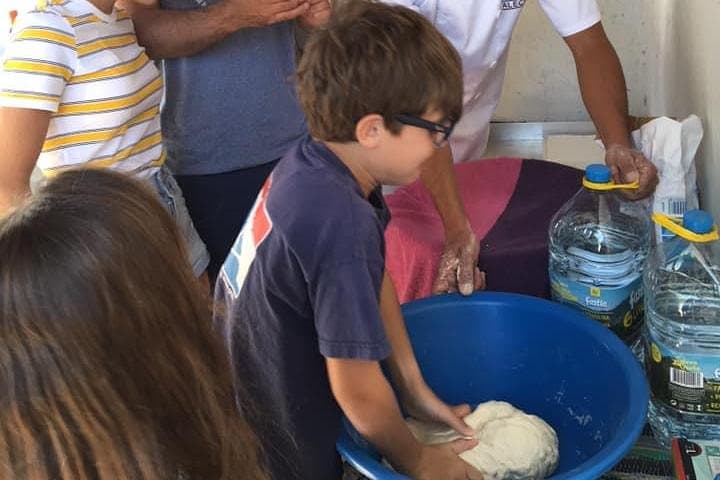
The experience balances demonstration and hands-on work: mixing, folding, shaping and sliding loaves into a communal oven. Expect a mix of sitting and light standing, lots of tactile learning, and generous tastings paired with regional products. Practical notes: book at least 24 hours in advance, declare allergies early, and allow about 2–3 hours. Wear closed-toe shoes and bring a light layer—the mountain can cool quickly.
This is as much a social kitchen as a class: come ready to knead, ask questions about production and leave with a loaf and a clearer sense of how Monchique’s geology and farming shape its table.
easy.
2–3 hours.
Light activity; suitable for most fitness levels with short periods of standing and light walking
The experience runs about 2–3 hours (the listing specifies roughly 150 minutes), including producer visits and baking time.
Children can join but supervision is required around ovens and during tasting; check age limits with the operator when booking.
Hosts can often adapt tastings for common allergies or vegetarian diets if informed at least 24 hours in advance.
Transfers depend on the operator; many tours depart from nearby towns—confirm pickup details on booking if you need transport from Faro, Portimão or Lagos.
Monchique’s food culture grew from its alpine-like climate and granite soils; chestnuts and pig-rearing have sustained local diets for centuries.
Small-scale farming dominates; visitors should stick to paths, avoid disturbing producers’ plots and support local businesses to keep these practices viable.
Dawn in the Serra de Monchique smells of wood smoke and warm dough. Participants gather in a low stone house where ovens still hold the memory of last night’s fire; outside, the hills press green and fragrant, the arbutus berries and chestnut trees crowding the lanes. The workshop opens with a short walk past terraced plots and a quick tour of the village producers who supply honey, chouriço and medronho—local ingredients that will find their way into the bread and tastings that follow.
Dawn in the Serra de Monchique smells of wood smoke and warm dough. Participants gather in a low stone house where ovens still hold the memory of last night’s fire; outside, the hills press green and fragrant, the arbutus berries and chestnut trees crowding the lanes. The workshop opens with a short walk past terraced plots and a quick tour of the village producers who supply honey, chouriço and medronho—local ingredients that will find their way into the bread and tastings that follow.
Geology here feels honest: an ancient volcanic massif of granite and schist that raises cooler air above the Algarve plain. That elevation produced a distinctive microclimate and a rural food culture built on chestnuts, mushrooms and cured pork. Bread in Monchique is practical and flavored by what the land offers—coarse chestnut flour, wild herbs, a lick of local honey or a drop of medronho to wake the palate.
The experience balances demonstration and hands-on work: mixing, folding, shaping and sliding loaves into a communal oven. Expect a mix of sitting and light standing, lots of tactile learning, and generous tastings paired with regional products. Practical notes: book at least 24 hours in advance, declare allergies early, and allow about 2–3 hours. Wear closed-toe shoes and bring a light layer—the mountain can cool quickly.
This is as much a social kitchen as a class: come ready to knead, ask questions about production and leave with a loaf and a clearer sense of how Monchique’s geology and farming shape its table.