THE ADVENTURE COLLECTIVE® · Independent discovery and booking for outdoor travel

Escape Houston for a half-day guided tour of Brazos Bend State Park: alligators sunning along oxbow lakes, migratory birds in elm groves, and an observation deck with sweeping marsh views. This practical wildlife outing pairs storytelling guides with easy walking trails.
Escape Houston for a half-day guided tour of Brazos Bend State Park: alligators sunning along oxbow lakes, migratory birds in elm groves, and an observation deck with sweeping marsh views. This practical wildlife outing pairs storytelling guides with easy walking trails.
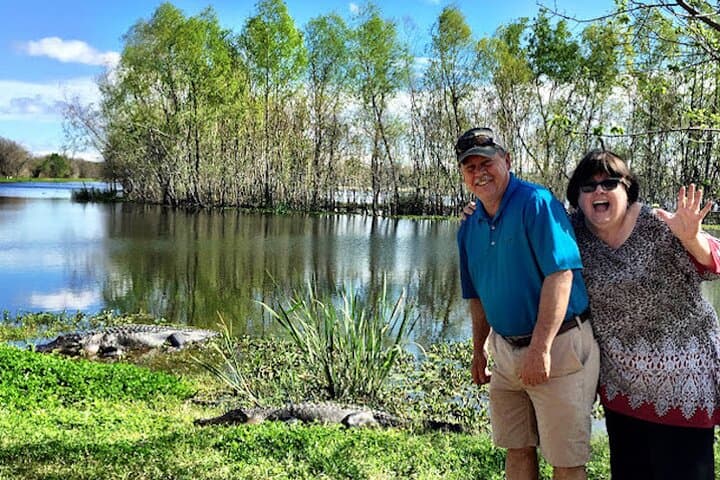
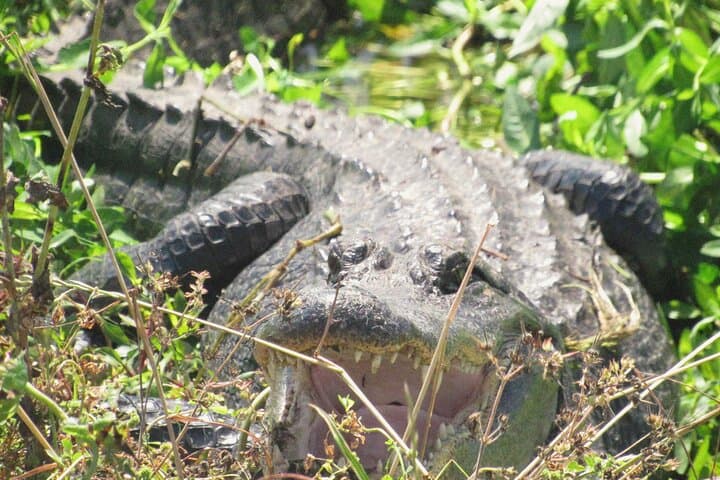
The van eases out of Houston and the high-rises thrum behind you; highway noise gives way to a subtler cadence of wind through live oaks. By the time the tour arrives at Brazos Bend State Park, the air smells of wet earth and sun-warmed grass. A guide with a field guide in hand points to the low horizon where a dark, motionless line marks an alligator’s back. The group hushes—this is Texas wildlife at close quarters, not behind glass.
Verified experiences and guided adventures in the surrounding area.
Operated by Blake Dyer · Needville, Texas
The van eases out of Houston and the high-rises thrum behind you; highway noise gives way to a subtler cadence of wind through live oaks. By the time the tour arrives at Brazos Bend State Park, the air smells of wet earth and sun-warmed grass. A guide with a field guide in hand points to the low horizon where a dark, motionless line marks an alligator’s back. The group hushes—this is Texas wildlife at close quarters, not behind glass.
Brazos Bend sits on the broad floodplain of the Brazos River, where Pleistocene and more recent geologic forces left behind oxbow lakes, blackland prairie fragments, and thick bottomland hardwoods. European settlement here began in the 19th century, but the land's identity is older: seasonal floods shaped the looped lakes and the complex wetland mosaic you explore today. The park also hosts the George Observatory, a remnant of mid-20th-century public astronomy programs, giving the area an unusual mix of natural and cultural history.
On the tour, guides focus on more than checklist sightings. They narrate local stories—how settlers adapted cattle ranching to periodic floods, how conservation measures in the late 20th century reconnected habitats, and how the park became a refuge for both migratory birds and city people seeking open sky. Geology, hydrology, and human history thread together here: the same slow river shifts that created alligator habitat also created long stretches of bald cypress and elm that anchor the walking routes.
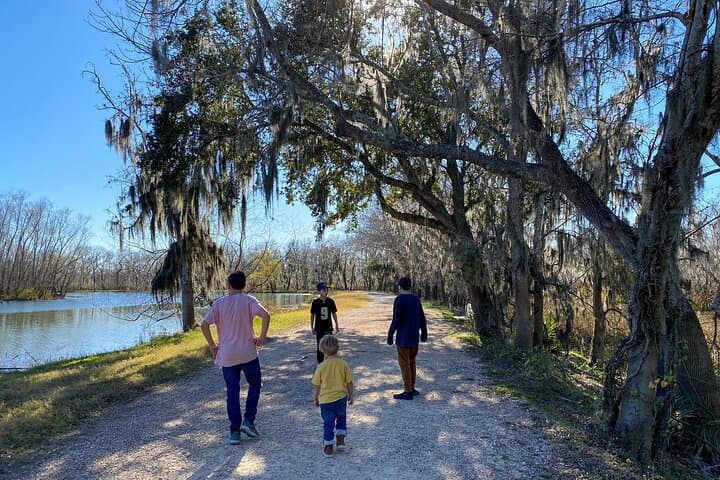
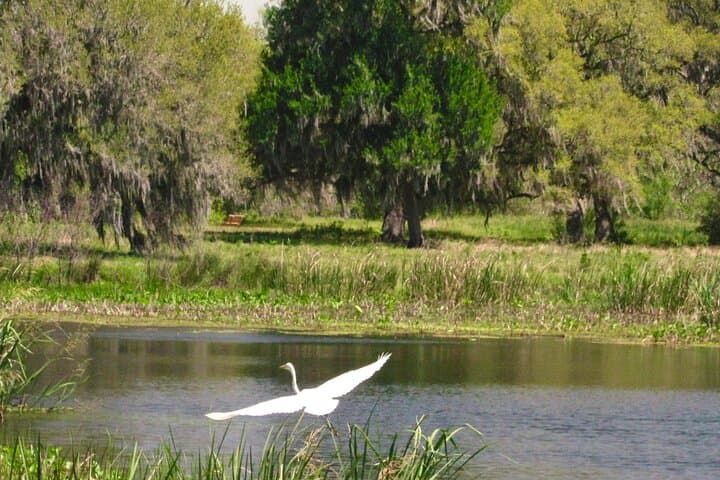
The experience is practical and paced. You follow two short trails that thread through cedar-elms and around oxbow lakes, cross a raised boardwalk, and ascend an observation deck that gives a horseshoe view of the marsh. Guides bring binoculars and point out white-tailed deer, wading herons, and the patterns of nesting activity in the trees. Time is kept tight—the round trip from Houston eats up about an hour each way—so the tour compresses the park's highlights into a focused half-day outing.
Plan for heat and insects in summer, muddy boardwalks in spring, and glorious low-light animal activity at dawn and dusk. Sturdy, closed-toe shoes and layered clothing make the short hikes more comfortable. Bring a refillable water bottle, a hat, and a camera with a telephoto lens or a good zoom; guides will position you for photos without disturbing wildlife. If you want a quieter, more photographic experience, ask about sunrise departures that catch bird migrations and the gator-rich hours.
For travelers pressed for time in Houston, this tour is a practical way to step into Texas' wild side: taught, safe, and attentive to natural rhythms—an afternoon where the city falls away and you measure distance instead by the flap of a heron's wings or the slow slide of an alligator into the reeds.
moderate.
4–5 hours.
Suitable for travelers with a moderate level of fitness who can walk short trails and stand on observation decks.
The total booking is about 4.5 hours; expect roughly 2 to 3 hours exploring Brazos Bend with travel time from Houston taking about 50 minutes each way.
Alligators are common and often visible from trails and observation points, but wildlife sightings cannot be guaranteed—guides maximize chances by visiting known viewing areas.
Yes—infants must sit on an adult's lap; the route is family-friendly though close supervision is required near water and wildlife.
The tour mentions binoculars and snacks in the inclusions, but bringing your own binoculars and personal snacks is recommended for comfort.
The tour requires moderate mobility for short trails and boardwalks; contact the operator in advance to discuss specific accessibility needs and pickup arrangements.
For a full refund cancel at least 24 hours before the scheduled departure; cancellations inside 24 hours are not refundable.
The park protects floodplain habitats shaped by the Brazos River and was developed as a state park in the late 20th century to preserve local wetlands and provide public access to wildlife.
Park staff manage water levels and habitat restoration to support nesting birds and native wetland species; visitors are asked to stay on trails, avoid feeding wildlife, and pack out trash.
Blake Dyer operates guided outdoor trips and adventures with an emphasis on safety, stewardship, and memorable experiences.
The van eases out of Houston and the high-rises thrum behind you; highway noise gives way to a subtler cadence of wind through live oaks. By the time the tour arrives at Brazos Bend State Park, the air smells of wet earth and sun-warmed grass. A guide with a field guide in hand points to the low horizon where a dark, motionless line marks an alligator’s back. The group hushes—this is Texas wildlife at close quarters, not behind glass.
The van eases out of Houston and the high-rises thrum behind you; highway noise gives way to a subtler cadence of wind through live oaks. By the time the tour arrives at Brazos Bend State Park, the air smells of wet earth and sun-warmed grass. A guide with a field guide in hand points to the low horizon where a dark, motionless line marks an alligator’s back. The group hushes—this is Texas wildlife at close quarters, not behind glass.
Brazos Bend sits on the broad floodplain of the Brazos River, where Pleistocene and more recent geologic forces left behind oxbow lakes, blackland prairie fragments, and thick bottomland hardwoods. European settlement here began in the 19th century, but the land's identity is older: seasonal floods shaped the looped lakes and the complex wetland mosaic you explore today. The park also hosts the George Observatory, a remnant of mid-20th-century public astronomy programs, giving the area an unusual mix of natural and cultural history.
On the tour, guides focus on more than checklist sightings. They narrate local stories—how settlers adapted cattle ranching to periodic floods, how conservation measures in the late 20th century reconnected habitats, and how the park became a refuge for both migratory birds and city people seeking open sky. Geology, hydrology, and human history thread together here: the same slow river shifts that created alligator habitat also created long stretches of bald cypress and elm that anchor the walking routes.
The experience is practical and paced. You follow two short trails that thread through cedar-elms and around oxbow lakes, cross a raised boardwalk, and ascend an observation deck that gives a horseshoe view of the marsh. Guides bring binoculars and point out white-tailed deer, wading herons, and the patterns of nesting activity in the trees. Time is kept tight—the round trip from Houston eats up about an hour each way—so the tour compresses the park's highlights into a focused half-day outing.
Plan for heat and insects in summer, muddy boardwalks in spring, and glorious low-light animal activity at dawn and dusk. Sturdy, closed-toe shoes and layered clothing make the short hikes more comfortable. Bring a refillable water bottle, a hat, and a camera with a telephoto lens or a good zoom; guides will position you for photos without disturbing wildlife. If you want a quieter, more photographic experience, ask about sunrise departures that catch bird migrations and the gator-rich hours.
For travelers pressed for time in Houston, this tour is a practical way to step into Texas' wild side: taught, safe, and attentive to natural rhythms—an afternoon where the city falls away and you measure distance instead by the flap of a heron's wings or the slow slide of an alligator into the reeds.