THE ADVENTURE COLLECTIVE® · Independent discovery and booking for outdoor travel

A compact, high-impact visit to the Brazilian side of Iguazu Falls delivers wide panoramic views and a close, elevator-assisted encounter with Devil’s Throat. This half-day excursion combines short boardwalk walks with dramatic vistas—ideal for travelers who want maximum spectacle with minimal hiking.
A compact, high-impact visit to the Brazilian side of Iguazu Falls delivers wide panoramic views and a close, elevator-assisted encounter with Devil’s Throat. This half-day excursion combines short boardwalk walks with dramatic vistas—ideal for travelers who want maximum spectacle with minimal hiking.
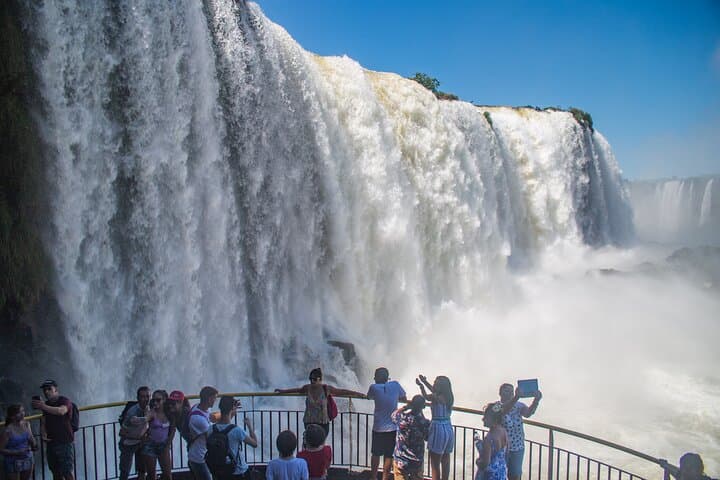
You step off the bus into a humid corridor of forest; the distant roar grows teethier with every footfall until the first spray hits your face. The Brazilian side of Iguazu is a viewing stage—wide terraces, a head-on panorama and an elevator that drops you level with the Devil’s Throat terrace, where mist and thunder claim the air.
Verified experiences and guided adventures in the surrounding area.
Operated by RipioTurismo · Foz do Iguaçu, Paraná
You step off the bus into a humid corridor of forest; the distant roar grows teethier with every footfall until the first spray hits your face. The Brazilian side of Iguazu is a viewing stage—wide terraces, a head-on panorama and an elevator that drops you level with the Devil’s Throat terrace, where mist and thunder claim the air.
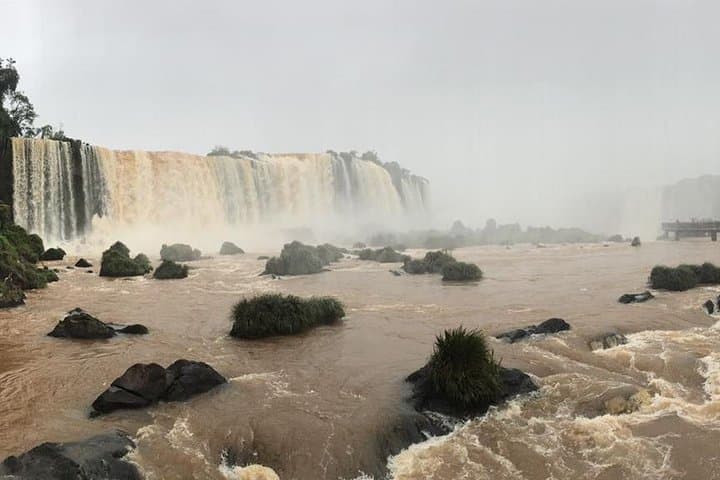
Geologically, Iguazu is a dramatic break in the Paraná Basalt plain, the river slicing a 2.7-kilometre-wide fault to create a serrated line of falls. The park—protected since the mid-20th century and part of the World Heritage designation—sits where Brazilian and Argentine conservation priorities meet, with local Guarani history threaded through riverside sites and settlement patterns.
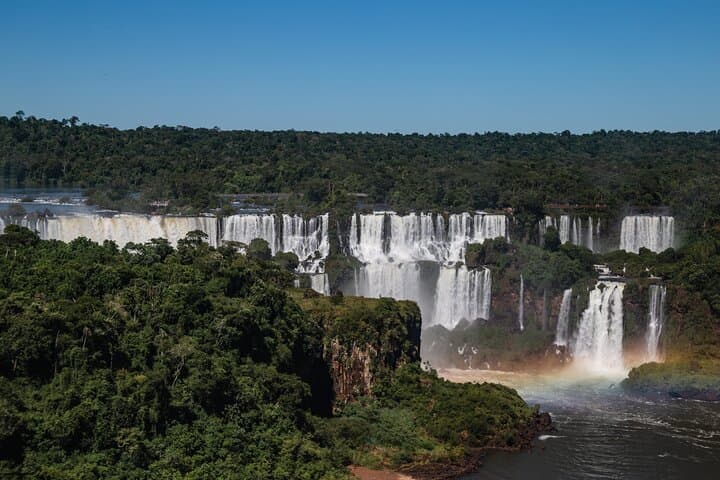
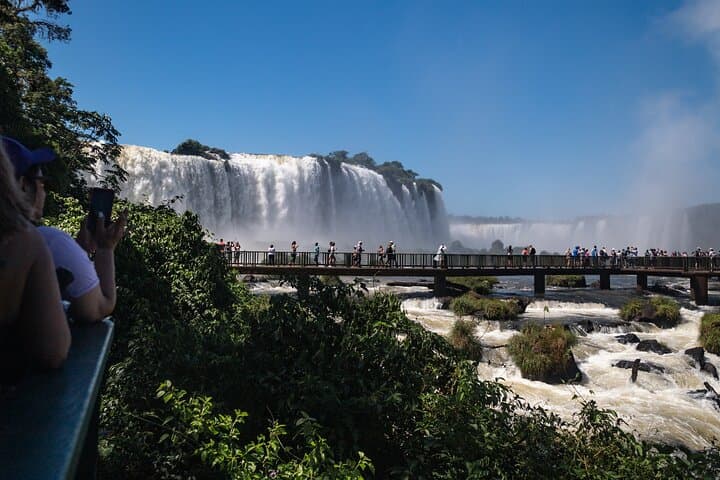
The standard excursion includes a 1.5 km circuit of boardwalks and viewpoints, with sweeping views of multi-tiered drops and the isolated silhouette of the Melia hotel on the Argentine shore. The Devil’s Throat terrace arrives as a climax: an elevator ride, a short walk, and then the falls’ push—the air filled with spray, cameras blinking furiously.
Practicalities matter: bring waterproof protection for electronics, expect wet clothing near the main viewpoints, and allow the better part of a half day for border formalities and park entry. Passport and any visa requirements must be in order; entrance fees are paid at the gate. Travel early to avoid crowds and use solid footwear on wet boardwalks. The Brazilian side rewards a concise, panoramic experience—designed for dramatic photos while keeping the walk accessible for most visitors.
easy.
4–5 hours.
Suitable for most fitness levels; involves short walks on mostly flat boardwalks and a few steps at viewpoints.
Yes—a valid passport is required. Visa rules depend on nationality, so check Brazil’s entry requirements well before travel.
No—the entrance fee is paid at the park gate separately (approx. USD 20, subject to change).
The main circuit on the Brazilian side is about 1.5 km on boardwalks and terraces; it’s short and suitable for most visitors with minimal elevation.
Yes—an elevator and terrace bring you to a frontal viewpoint where mist and spray are intense; waterproofing for gear and clothing is recommended.
The falls sit along basalt formed by ancient lava flows; the national parks protecting the falls were established in the 20th century and later recognized by UNESCO for their global significance.
Park fees and regulated boardwalks concentrate tourism impact; staying on trails and avoiding feeding wildlife helps protect fragile rainforest and resident species.
RipioTurismo operates guided outdoor trips and adventures with an emphasis on safety, stewardship, and memorable experiences.
You step off the bus into a humid corridor of forest; the distant roar grows teethier with every footfall until the first spray hits your face. The Brazilian side of Iguazu is a viewing stage—wide terraces, a head-on panorama and an elevator that drops you level with the Devil’s Throat terrace, where mist and thunder claim the air.
You step off the bus into a humid corridor of forest; the distant roar grows teethier with every footfall until the first spray hits your face. The Brazilian side of Iguazu is a viewing stage—wide terraces, a head-on panorama and an elevator that drops you level with the Devil’s Throat terrace, where mist and thunder claim the air.
Geologically, Iguazu is a dramatic break in the Paraná Basalt plain, the river slicing a 2.7-kilometre-wide fault to create a serrated line of falls. The park—protected since the mid-20th century and part of the World Heritage designation—sits where Brazilian and Argentine conservation priorities meet, with local Guarani history threaded through riverside sites and settlement patterns.
The standard excursion includes a 1.5 km circuit of boardwalks and viewpoints, with sweeping views of multi-tiered drops and the isolated silhouette of the Melia hotel on the Argentine shore. The Devil’s Throat terrace arrives as a climax: an elevator ride, a short walk, and then the falls’ push—the air filled with spray, cameras blinking furiously.
Practicalities matter: bring waterproof protection for electronics, expect wet clothing near the main viewpoints, and allow the better part of a half day for border formalities and park entry. Passport and any visa requirements must be in order; entrance fees are paid at the gate. Travel early to avoid crowds and use solid footwear on wet boardwalks. The Brazilian side rewards a concise, panoramic experience—designed for dramatic photos while keeping the walk accessible for most visitors.