THE ADVENTURE COLLECTIVE® · Independent discovery and booking for outdoor travel

A private hike up Braunsberg places you above the Danube at the Hungarian Gate, where ruins, tunnels and a replica Celtic palisade meet sweeping views to Hainburg and Bratislava. This family-friendly walk blends geology, history and riverside scenery with practical guidance for a half-day outing from Vienna.
A private hike up Braunsberg places you above the Danube at the Hungarian Gate, where ruins, tunnels and a replica Celtic palisade meet sweeping views to Hainburg and Bratislava. This family-friendly walk blends geology, history and riverside scenery with practical guidance for a half-day outing from Vienna.
Fog lifts off the Danube as a private group threads uphill from the Hungarian Gate, the river’s current daring you to look away. Footsteps crunch on limestone scree, and the slope opens to a ruin where wood and stone keep company: a replica Celtic palisade, a tunneled passage, and broad views that pin Hainburg and Bratislava on the opposite banks.
Verified experiences and guided adventures in the surrounding area.
Operated by Wiener Wandern · Hainburg an der Donau, Lower Austria
Fog lifts off the Danube as a private group threads uphill from the Hungarian Gate, the river’s current daring you to look away. Footsteps crunch on limestone scree, and the slope opens to a ruin where wood and stone keep company: a replica Celtic palisade, a tunneled passage, and broad views that pin Hainburg and Bratislava on the opposite banks.
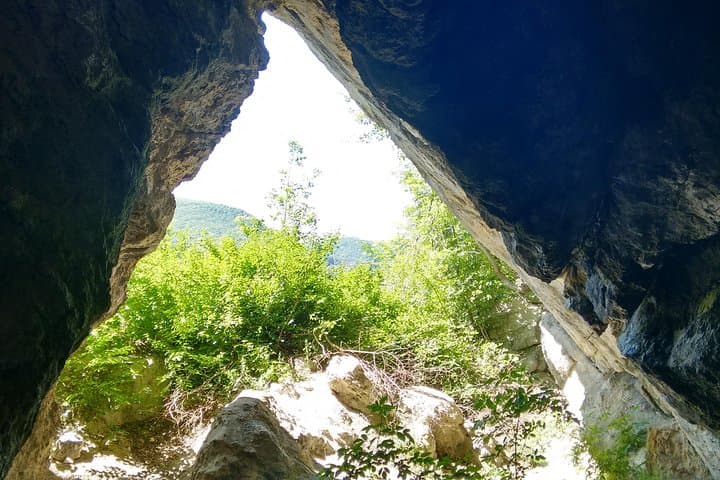
Braunsberg is a compact ridge formed from layered limestone and loess, a natural lookout that has drawn humans since Celtic and Roman times. The hill’s caves and manmade tunnels speak to its long use as a waypoint and refuge; today the route reveals mixed oak-beech forest, wildflowers on sunlit escarpments, and a floodplain mosaic below where the Danube narrows between Braunsberg and Devín.
Culturally, the area is a crossroads — Austrian, Hungarian and Slovak influences meet in local place names and simple village cuisine. Guides on this private walk point out geology, local flora and fauna, and the strategic role the site played guarding river traffic.
Practical guide: expect uneven, sometimes steep paths and short rock scrambles that require sure-footedness. The tour runs in most weather; in winter the operator may add snowshoes or change plans. Wear sturdy boots, bring layered clothing, 1–2 liters of water, and sun protection. Allow 2–5 hours for pickup, walking, stops at viewpoints and ruins. Families will find the route approachable but check with the operator about young children and any mobility limits. Plan transit from Vienna by car or regional train to Hainburg and aim for morning starts to avoid midday sun and catch clearer Danube views.
moderate.
2–5 hours.
Suitable for people in decent walking shape; requires sure-footedness on uneven terrain and short steep sections.
The operator schedules this as a half-day private walk; expect 2–5 hours including stops. The terrain is family-friendly but includes uneven and occasionally steep sections requiring sure-footedness.
Pick-up and drop-off are provided from designated meeting points; confirm the exact pickup location in Vienna when booking.
Children can join but must be accompanied by an adult; service animals are allowed but the route is not suitable for guests with walking disabilities or wheelchairs.
The tour operates in most weather; if conditions are dangerous the operator may cancel or offer an alternative comparable route. Check cancellation terms when booking.
Braunsberg has Celtic and Roman associations and its elevated position historically controlled passage through the narrow Danube corridor between Braunsberg and Devín.
The ridge overlooks sensitive floodplain habitats; stick to trails, pack out waste and respect cultural sites to reduce erosion and disturbance.
Wiener Wandern operates guided outdoor trips and adventures with an emphasis on safety, stewardship, and memorable experiences.
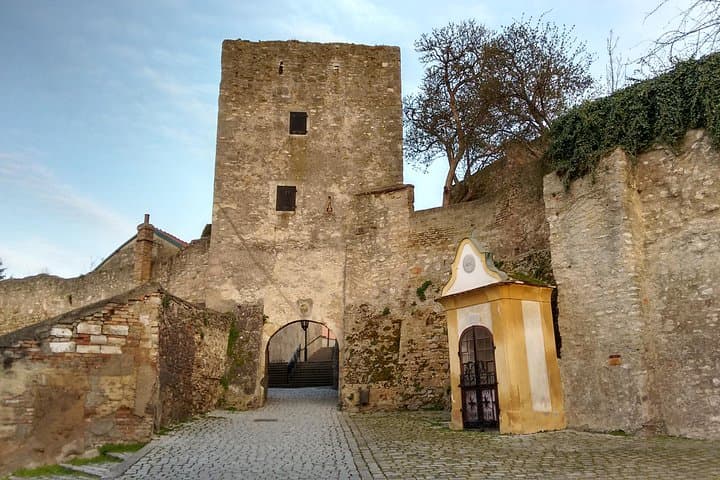
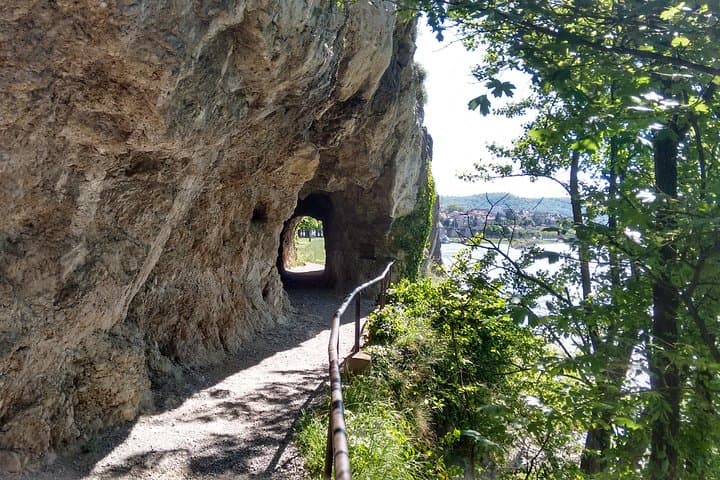
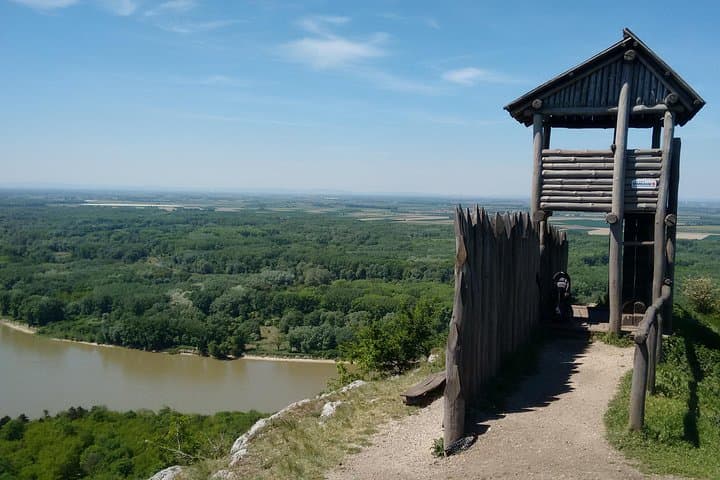
Fog lifts off the Danube as a private group threads uphill from the Hungarian Gate, the river’s current daring you to look away. Footsteps crunch on limestone scree, and the slope opens to a ruin where wood and stone keep company: a replica Celtic palisade, a tunneled passage, and broad views that pin Hainburg and Bratislava on the opposite banks.
Fog lifts off the Danube as a private group threads uphill from the Hungarian Gate, the river’s current daring you to look away. Footsteps crunch on limestone scree, and the slope opens to a ruin where wood and stone keep company: a replica Celtic palisade, a tunneled passage, and broad views that pin Hainburg and Bratislava on the opposite banks.
Braunsberg is a compact ridge formed from layered limestone and loess, a natural lookout that has drawn humans since Celtic and Roman times. The hill’s caves and manmade tunnels speak to its long use as a waypoint and refuge; today the route reveals mixed oak-beech forest, wildflowers on sunlit escarpments, and a floodplain mosaic below where the Danube narrows between Braunsberg and Devín.
Culturally, the area is a crossroads — Austrian, Hungarian and Slovak influences meet in local place names and simple village cuisine. Guides on this private walk point out geology, local flora and fauna, and the strategic role the site played guarding river traffic.
Practical guide: expect uneven, sometimes steep paths and short rock scrambles that require sure-footedness. The tour runs in most weather; in winter the operator may add snowshoes or change plans. Wear sturdy boots, bring layered clothing, 1–2 liters of water, and sun protection. Allow 2–5 hours for pickup, walking, stops at viewpoints and ruins. Families will find the route approachable but check with the operator about young children and any mobility limits. Plan transit from Vienna by car or regional train to Hainburg and aim for morning starts to avoid midday sun and catch clearer Danube views.