THE ADVENTURE COLLECTIVE® · Independent discovery and booking for outdoor travel

Beat the crowds on an early-morning double kayak paddle along the Bow River and Vermilion Lakes. Expect Mount Rundle views, possible beaver sightings, a potential portage, and a two-hour guided outing best suited to paddlers with prior experience.
Beat the crowds on an early-morning double kayak paddle along the Bow River and Vermilion Lakes. Expect Mount Rundle views, possible beaver sightings, a potential portage, and a two-hour guided outing best suited to paddlers with prior experience.
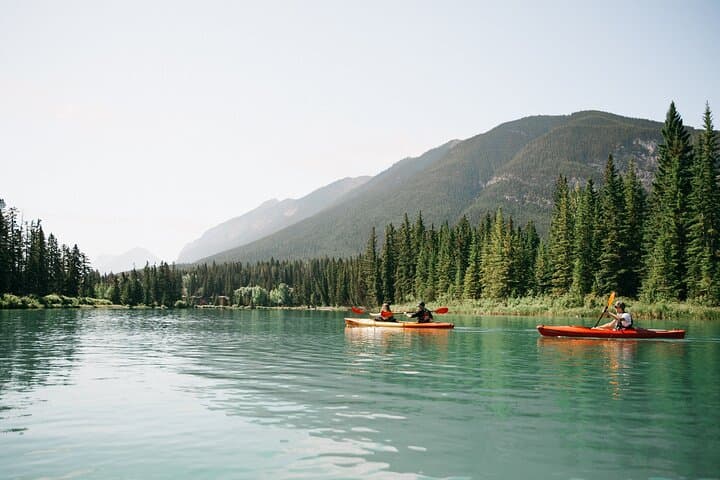
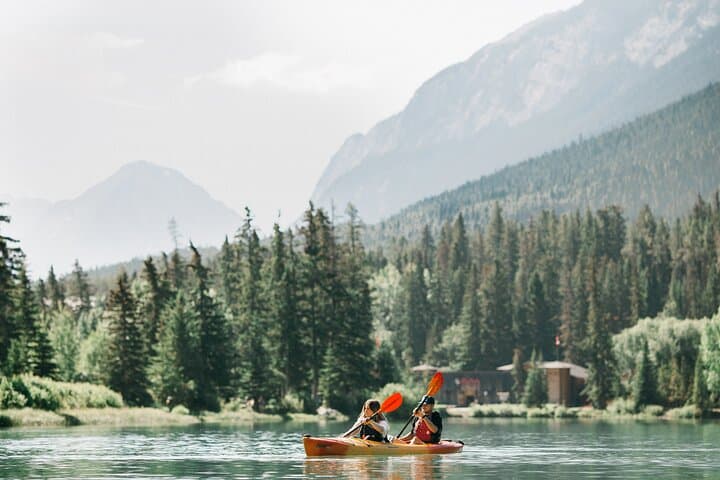
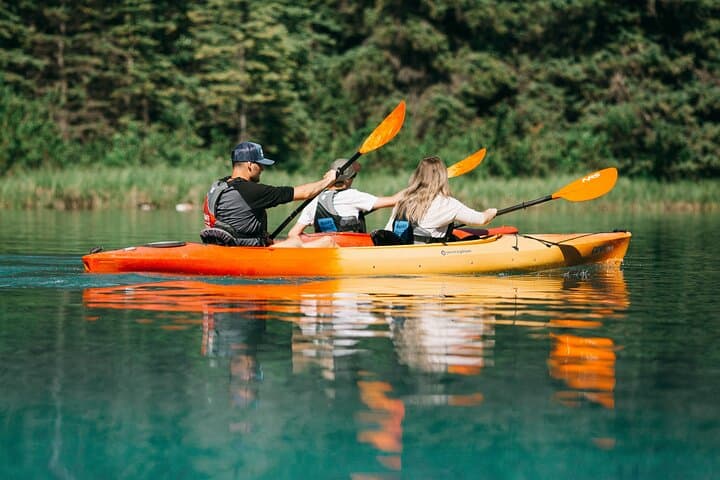
Dawn cuts across the Rockies and the Bow River dares you forward — a narrow ribbon of turquoise that slides past cottonwoods and the rising face of Mount Rundle. In a double kayak you and a partner slip into still water, the town of Banff hushed behind you, and the first light paints the peaks a hard, sharp gold.
Verified experiences and guided adventures in the surrounding area.
Operated by The Banff Canoe Club · Banff, Alberta
Dawn cuts across the Rockies and the Bow River dares you forward — a narrow ribbon of turquoise that slides past cottonwoods and the rising face of Mount Rundle. In a double kayak you and a partner slip into still water, the town of Banff hushed behind you, and the first light paints the peaks a hard, sharp gold.
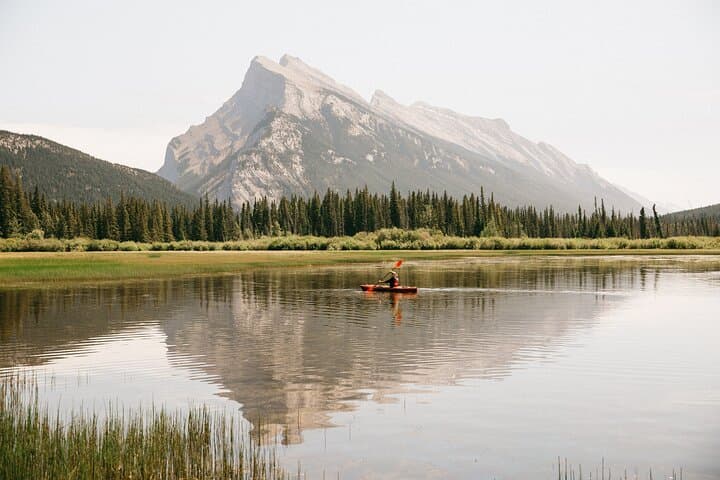
This two-hour group paddle follows calm stretches of the Bow and opens into the glassy Vermilion Lakes, where reflections double the range and songs of waterfowl punctuate the quiet. The route runs through glacially carved valleys shaped by Pleistocene ice and fed by mountain snowmelt; the river’s clarity and color come from fine rock flour suspended in meltwater. The park sits on land traditionally used by the Stoney Nakoda, Cree and other Indigenous peoples, and Banff itself is Canada’s first national park, established in 1885.
Expect wildlife sightings — beavers at work, elk grazing on distant meadows, and a collection of waterbirds. Guides keep the pace steady and may ask you to portage around shallow stretches, so shoes that tolerate mud are required. The experience is early-morning focused to avoid rental traffic and maximize wildlife viewing.
Practical guidance: arrive 30 minutes early for a safety briefing and gear fit; bring a dry bag, layered clothing, sun protection and water. This is not a beginner lesson — previous kayak experience and moderate fitness are required. Come prepared to get wet, lift a kayak, and read current on the river. Weather can change fast in the Rockies, but those who show up ready are rewarded with quiet water, sweeping mountain views, and a rare, intimate look at Banff from water level.
moderate.
2 hours.
Moderate fitness—able to paddle continuously, assist with short portages, and handle brief currents.
Yes — this offering is for paddlers who already have basic kayak control; guides do not provide beginner instruction.
Price listed is per double kayak; single kayak rates may be available by contacting the operator directly.
Tours may be canceled for severe weather; cancelations made at least 24 hours in advance are fully refundable per the operator’s policy.
Wildlife sightings are common—look for beavers, elk and waterfowl—but sightings cannot be guaranteed and you should follow guide instructions to minimize disturbance.
Banff is part of Canada’s first national park (established 1885) and lies on territory historically used by Stoney Nakoda, Cree and Métis peoples.
Follow Leave No Trace on water: avoid approaching wildlife, keep distance from shorelines where birds nest, and pack out all waste to protect sensitive wetlands.
The Banff Canoe Club operates guided outdoor trips and adventures with an emphasis on safety, stewardship, and memorable experiences.
Dawn cuts across the Rockies and the Bow River dares you forward — a narrow ribbon of turquoise that slides past cottonwoods and the rising face of Mount Rundle. In a double kayak you and a partner slip into still water, the town of Banff hushed behind you, and the first light paints the peaks a hard, sharp gold.
Dawn cuts across the Rockies and the Bow River dares you forward — a narrow ribbon of turquoise that slides past cottonwoods and the rising face of Mount Rundle. In a double kayak you and a partner slip into still water, the town of Banff hushed behind you, and the first light paints the peaks a hard, sharp gold.
This two-hour group paddle follows calm stretches of the Bow and opens into the glassy Vermilion Lakes, where reflections double the range and songs of waterfowl punctuate the quiet. The route runs through glacially carved valleys shaped by Pleistocene ice and fed by mountain snowmelt; the river’s clarity and color come from fine rock flour suspended in meltwater. The park sits on land traditionally used by the Stoney Nakoda, Cree and other Indigenous peoples, and Banff itself is Canada’s first national park, established in 1885.
Expect wildlife sightings — beavers at work, elk grazing on distant meadows, and a collection of waterbirds. Guides keep the pace steady and may ask you to portage around shallow stretches, so shoes that tolerate mud are required. The experience is early-morning focused to avoid rental traffic and maximize wildlife viewing.
Practical guidance: arrive 30 minutes early for a safety briefing and gear fit; bring a dry bag, layered clothing, sun protection and water. This is not a beginner lesson — previous kayak experience and moderate fitness are required. Come prepared to get wet, lift a kayak, and read current on the river. Weather can change fast in the Rockies, but those who show up ready are rewarded with quiet water, sweeping mountain views, and a rare, intimate look at Banff from water level.