THE ADVENTURE COLLECTIVE® · Independent discovery and booking for outdoor travel

A compact canyoneering route near Moab that pairs a three-mile interpretive hike with four guided rappels, including a 120-foot free-hang. Ideal for families and beginners who want a technical taste of canyon travel without long approaches.
A compact canyoneering route near Moab that pairs a three-mile interpretive hike with four guided rappels, including a 120-foot free-hang. Ideal for families and beginners who want a technical taste of canyon travel without long approaches.
The canyon narrows like a page being turned as you step off the trailhead—sandstone walls warming underfoot, wind working like an unseen guide through ledges and alcoves. Within minutes the landscape shifts: scrub gives way to smooth rock faces, petroglyph panels peer down from sheltered benches, and the canyon’s clefts begin to promise vertical travel.
Verified experiences and guided adventures in the surrounding area.
Operated by Canyon Country Adventures - Moab · Moab, Utah
The canyon narrows like a page being turned as you step off the trailhead—sandstone walls warming underfoot, wind working like an unseen guide through ledges and alcoves. Within minutes the landscape shifts: scrub gives way to smooth rock faces, petroglyph panels peer down from sheltered benches, and the canyon’s clefts begin to promise vertical travel.
Bow and Arrow Canyon sits roughly 15 minutes from Moab at the edge of the Behind the Rocks complex, an area carved by uplift and wind over millions of years. The sandstone here is the same Jurassic-era Entrada and Navajo layers that shape Arches and the greater Colorado Plateau; ancient hands left polka-dot petroglyphs that connect modern visitors to a long human history of this landscape.
Culturally the route is accessible—designed as an interpretive canyoneering loop that mixes geology and rock art with four rappels, including a 120-foot free-hanging descent that’s the trip’s technical highlight.
Practically, expect a 3-mile round-trip on mostly flat terrain with minimal elevation gain, route-finding around broad canyon floors, and short sector approaches. Guides supply harnesses, helmets, and instruction, making it suitable for families and beginners who can hike ~3 miles and follow basic safety directions.
Bring steady footwear, layered sun protection, and water; plan for afternoon heat in summer and variable shoulder-season temperatures. Timing your visit for morning or late afternoon reduces glare on the walls and increases comfort for the big rappel. For first-timers, listen closely during the instructional brief—good rope technique and attention make the free-hanging rappel memorable for the right reasons.
moderate.
3–4 hours.
Suitable for participants who can hike 3 miles over uneven desert terrain and handle short climbs; not highly aerobic but requires balance and comfort with exposure.
There are four rappels, the largest a 120-foot free-hanging descent; guides teach technique and manage rigging, so beginners can participate with instruction.
Expect about a 3-mile round-trip with minimal net elevation gain—terrain is mostly flat canyon floor with some short ups and downs.
Yes—it's family-friendly if kids meet the minimum age/weight requirements and can hike 3 miles while following safety instructions.
Wear grippy shoes, sun protection, and layered clothing; bring water, snacks, and any personal medications—guides supply technical gear.
The canyon’s rock art records centuries of Indigenous presence; the surrounding Entrada and Navajo sandstones formed in ancient dune and tidal environments during the Jurassic period.
Stay on durable surfaces, avoid touching petroglyphs, and pack out all trash—human impact is visible on fragile rock surfaces and cultural sites.
Canyon Country Adventures - Moab operates guided outdoor trips and adventures with an emphasis on safety, stewardship, and memorable experiences.
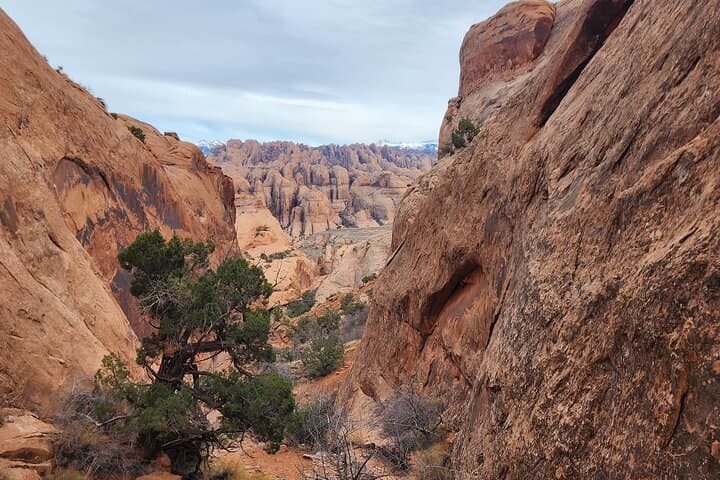
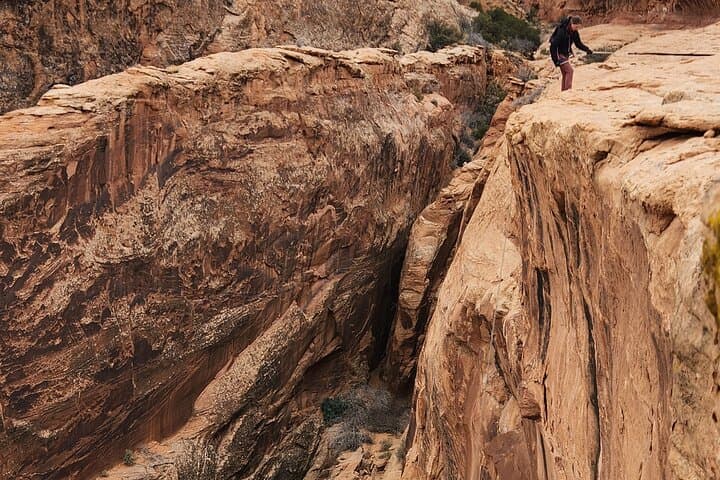
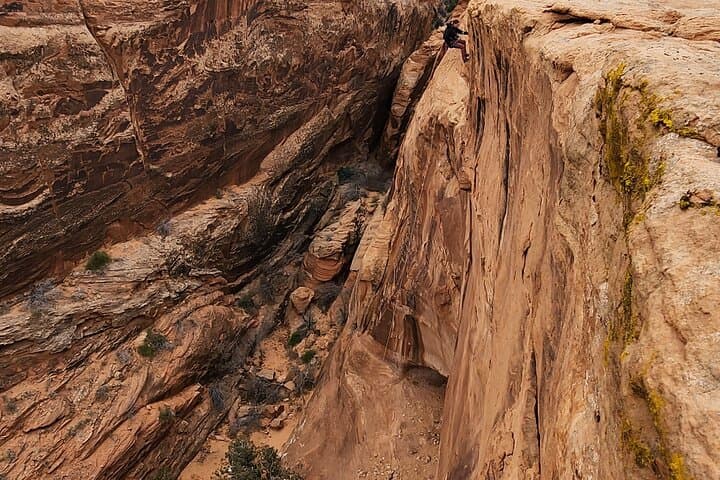
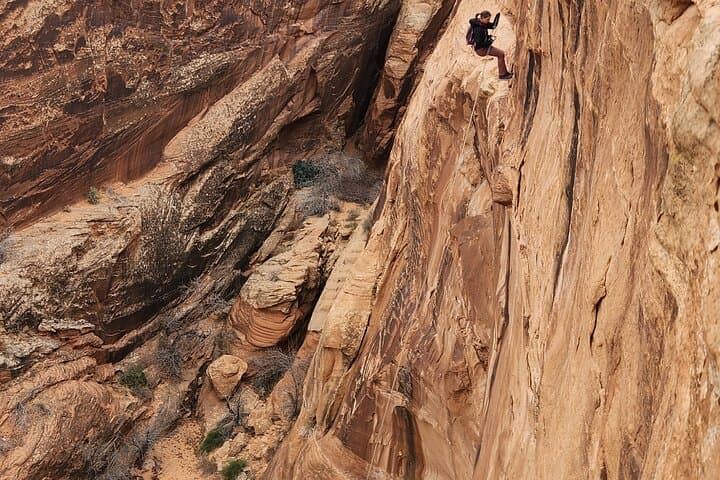
The canyon narrows like a page being turned as you step off the trailhead—sandstone walls warming underfoot, wind working like an unseen guide through ledges and alcoves. Within minutes the landscape shifts: scrub gives way to smooth rock faces, petroglyph panels peer down from sheltered benches, and the canyon’s clefts begin to promise vertical travel.
The canyon narrows like a page being turned as you step off the trailhead—sandstone walls warming underfoot, wind working like an unseen guide through ledges and alcoves. Within minutes the landscape shifts: scrub gives way to smooth rock faces, petroglyph panels peer down from sheltered benches, and the canyon’s clefts begin to promise vertical travel.
Bow and Arrow Canyon sits roughly 15 minutes from Moab at the edge of the Behind the Rocks complex, an area carved by uplift and wind over millions of years. The sandstone here is the same Jurassic-era Entrada and Navajo layers that shape Arches and the greater Colorado Plateau; ancient hands left polka-dot petroglyphs that connect modern visitors to a long human history of this landscape.
Culturally the route is accessible—designed as an interpretive canyoneering loop that mixes geology and rock art with four rappels, including a 120-foot free-hanging descent that’s the trip’s technical highlight.
Practically, expect a 3-mile round-trip on mostly flat terrain with minimal elevation gain, route-finding around broad canyon floors, and short sector approaches. Guides supply harnesses, helmets, and instruction, making it suitable for families and beginners who can hike ~3 miles and follow basic safety directions.
Bring steady footwear, layered sun protection, and water; plan for afternoon heat in summer and variable shoulder-season temperatures. Timing your visit for morning or late afternoon reduces glare on the walls and increases comfort for the big rappel. For first-timers, listen closely during the instructional brief—good rope technique and attention make the free-hanging rappel memorable for the right reasons.