THE ADVENTURE COLLECTIVE® · Independent discovery and booking for outdoor travel

Trace Bourges’ unexpected stories on a 90‑minute self‑guided walk from Gallo‑Roman ramparts to Renaissance mansions. This compact route pairs historic architecture and local legend with offline maps and audio for independent exploration.
Trace Bourges’ unexpected stories on a 90‑minute self‑guided walk from Gallo‑Roman ramparts to Renaissance mansions. This compact route pairs historic architecture and local legend with offline maps and audio for independent exploration.
You step off the main square and the city tightens around you: narrow cobbled lanes, half-timbered façades, and the low murmur of the Yèvre as it threads through town. In ninety minutes the walk moves from the austerity of Gallo‑Roman ramparts to the ornate gutters of the Palais Jacques Cœur, with a detour into a quiet garden where 16th‑century geometry still holds sway.
Verified experiences and guided adventures in the surrounding area.
Operated by Tourific · Bourges, Centre-Val de Loire
You step off the main square and the city tightens around you: narrow cobbled lanes, half-timbered façades, and the low murmur of the Yèvre as it threads through town. In ninety minutes the walk moves from the austerity of Gallo‑Roman ramparts to the ornate gutters of the Palais Jacques Cœur, with a detour into a quiet garden where 16th‑century geometry still holds sway.
Bourges grew wealthy as a medieval trade hub; merchants and jurists left stone signatures you can read in doorways, carvings, and civic halls. Geology is subtle here — the shallow Loire basin produced the clays and limestones used for the city’s churches and ramparts — and the cathedral’s stained glass charts both devotional life and local craft traditions. Culture in Bourges mixes civic pride with pockets of Protestant history and a long legal humanism traced to local scholars.
The route is compact and mostly flat: expect paved streets, occasional setts, one or two stair sections at older buildings, and short grass borders in gardens. Audio and offline maps mean you can wander without signal and linger where a plaque sparks curiosity.
Practical guidance: wear supportive shoes for cobbles, download the tour ahead of time, and schedule the walk mid‑morning to avoid market crowds. Bring a light layer — stone streets hold chill — and a small bottle of water. Allow extra time for the Palais and cathedral if you plan to go inside; they reward slow inspection. This self‑guided tour is equal parts architecture lesson and street theatre, letting the city’s hidden details do the storytelling.
easy.
1.5 hours (90 minutes).
Suitable for most fitness levels; involves continuous walking on paved and cobbled streets.
Yes—streets are generally stroller accessible though cobbles can be bumpy; some historic interiors may have steps.
The self‑guided tour includes audio and map only; sites like the Palais Jacques Cœur and cathedral may charge separate admission.
Yes—audio and written guides can be downloaded for offline use on iOS and Android once purchased.
Guides are typically offered in major languages—check the app listing for available translations before booking.
Bourges became wealthy in the Middle Ages through trade and law; Jacques Cœur, a 15th‑century merchant, left one of the city’s richest Renaissance houses.
The city emphasizes preservation of its medieval core; stick to paths, avoid touching delicate stonework, and support local conservation by visiting responsibly.
Tourific operates guided outdoor trips and adventures with an emphasis on safety, stewardship, and memorable experiences.
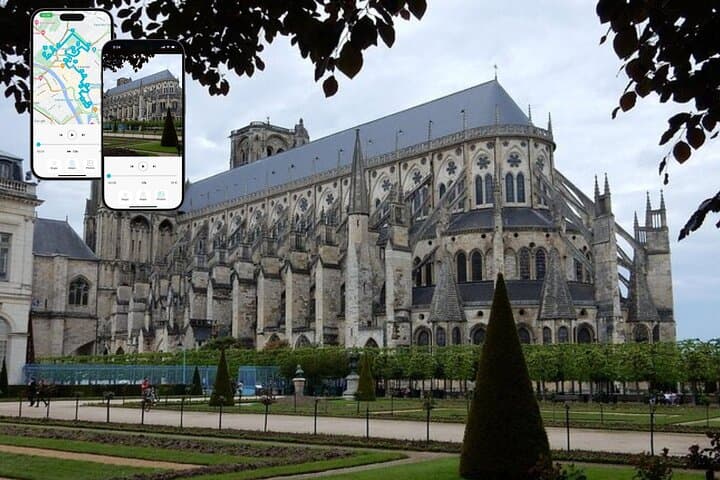
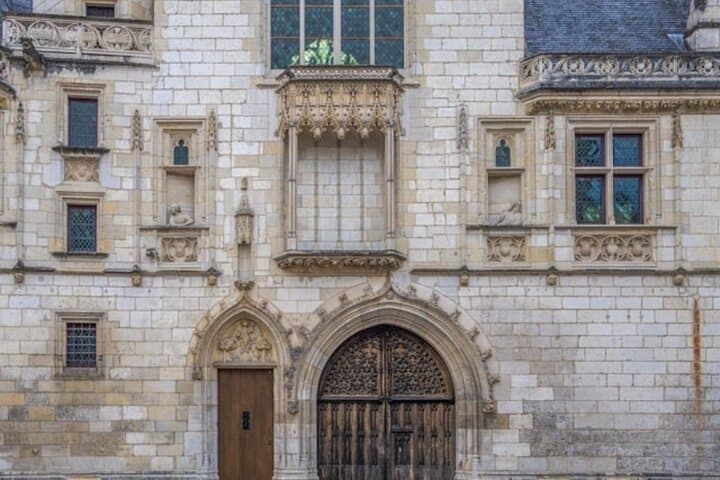
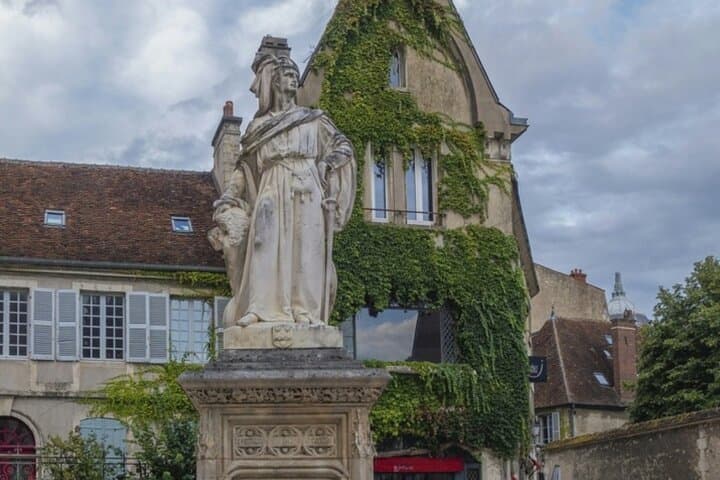
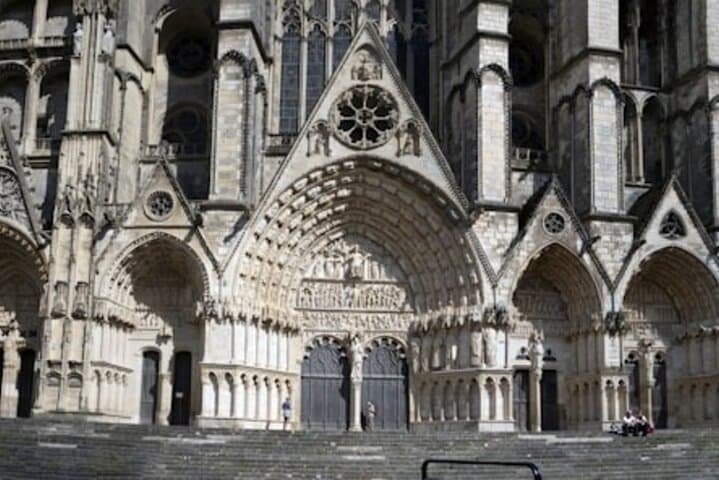
You step off the main square and the city tightens around you: narrow cobbled lanes, half-timbered façades, and the low murmur of the Yèvre as it threads through town. In ninety minutes the walk moves from the austerity of Gallo‑Roman ramparts to the ornate gutters of the Palais Jacques Cœur, with a detour into a quiet garden where 16th‑century geometry still holds sway.
You step off the main square and the city tightens around you: narrow cobbled lanes, half-timbered façades, and the low murmur of the Yèvre as it threads through town. In ninety minutes the walk moves from the austerity of Gallo‑Roman ramparts to the ornate gutters of the Palais Jacques Cœur, with a detour into a quiet garden where 16th‑century geometry still holds sway.
Bourges grew wealthy as a medieval trade hub; merchants and jurists left stone signatures you can read in doorways, carvings, and civic halls. Geology is subtle here — the shallow Loire basin produced the clays and limestones used for the city’s churches and ramparts — and the cathedral’s stained glass charts both devotional life and local craft traditions. Culture in Bourges mixes civic pride with pockets of Protestant history and a long legal humanism traced to local scholars.
The route is compact and mostly flat: expect paved streets, occasional setts, one or two stair sections at older buildings, and short grass borders in gardens. Audio and offline maps mean you can wander without signal and linger where a plaque sparks curiosity.
Practical guidance: wear supportive shoes for cobbles, download the tour ahead of time, and schedule the walk mid‑morning to avoid market crowds. Bring a light layer — stone streets hold chill — and a small bottle of water. Allow extra time for the Palais and cathedral if you plan to go inside; they reward slow inspection. This self‑guided tour is equal parts architecture lesson and street theatre, letting the city’s hidden details do the storytelling.