THE ADVENTURE COLLECTIVE® · Independent discovery and booking for outdoor travel

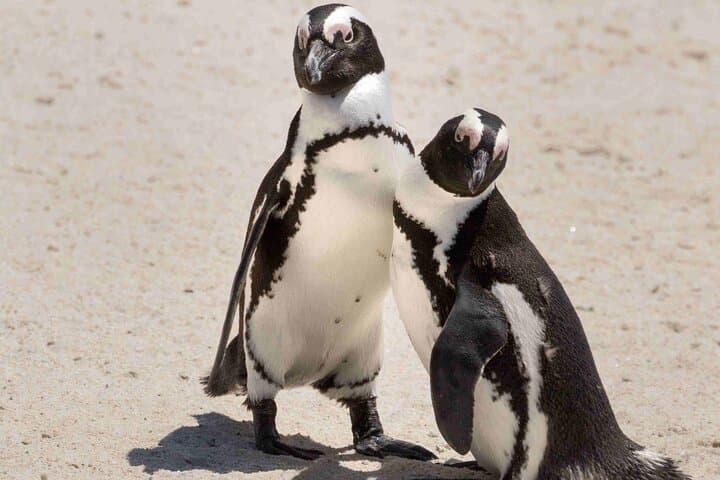
Drive the Atlantic seaboard to Simon’s Town and Boulders Beach for close-up views of African Penguins from boardwalks and optional swims in the cool surf. This half‑day tour pairs scenic stops—Chapman’s Peak, Maiden’s Cove and Muizenberg—with guided commentary and conservation insights.
Drive the Atlantic seaboard to Simon’s Town and Boulders Beach for close-up views of African Penguins from boardwalks and optional swims in the cool surf. This half‑day tour pairs scenic stops—Chapman’s Peak, Maiden’s Cove and Muizenberg—with guided commentary and conservation insights.
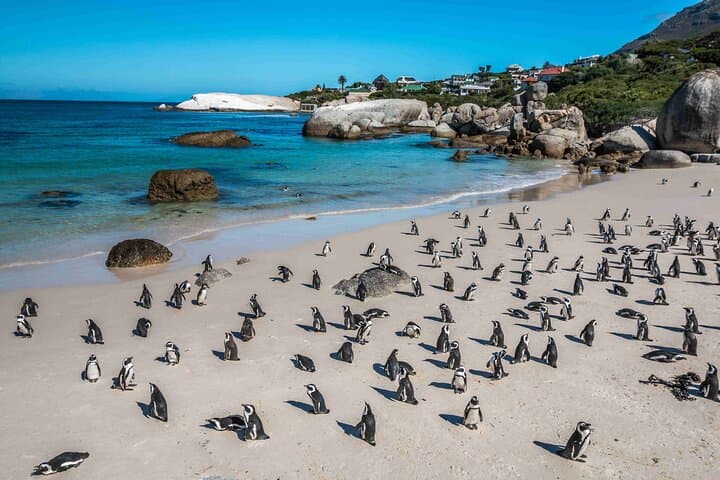
A low-slung van peels away from Cape Town’s waterfront and the Atlantic wind sharpens the view: rugged cliffs, a string of blue bays, and the rolling bulk of Table Mountain behind you. The half‑day tour to Boulders Beach threads the seaboard—Maidens Cove, Chapman’s Peak Drive and Hout Bay—before settling at Simon’s Town, where the coastline softens into sheltered coves and the famous granite outcrops that give Boulders its name.
Verified experiences and guided adventures in the surrounding area.
Operated by Bakunda Travel and Tours · Simon's Town, Western Cape
A low-slung van peels away from Cape Town’s waterfront and the Atlantic wind sharpens the view: rugged cliffs, a string of blue bays, and the rolling bulk of Table Mountain behind you. The half‑day tour to Boulders Beach threads the seaboard—Maidens Cove, Chapman’s Peak Drive and Hout Bay—before settling at Simon’s Town, where the coastline softens into sheltered coves and the famous granite outcrops that give Boulders its name.
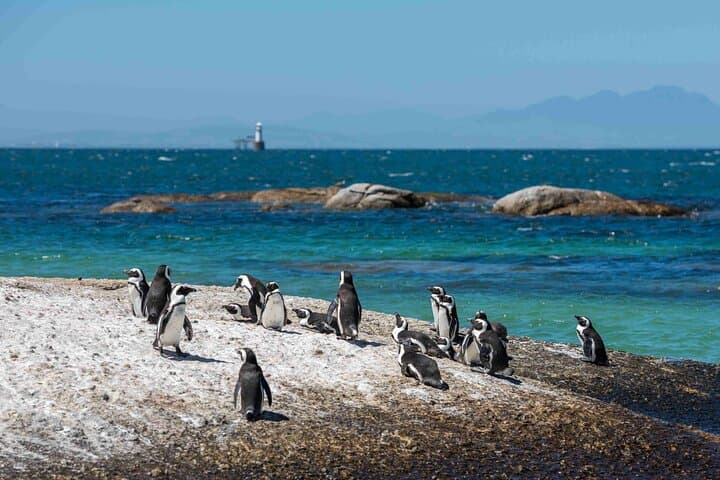
The beach sits at the edge of False Bay, where cooler Atlantic currents meet the Indian Ocean’s influence and created a microhabitat that suits the endangered African Penguin. Granite boulders here are part of the Cape Peninsula’s coastal geology—weathered, rounded forms that funnel sandy coves and protected tidal pools. Culturally, Simon’s Town has maritime roots: a former Royal Navy base with a small fishing harbour and a tight-knit village feel.
Visitors spend time on raised boardwalks and viewing platforms that keep penguins safe while offering close observation; guided commentary explains penguin behavior, breeding seasons and local conservation efforts. If conditions allow, there’s an opportunity to enter the surf—cold, clear water with occasional penguins bobbing nearby—though interaction is regulated and feeding or touching is prohibited.
Practical notes: wear supportive sandals or light hiking shoes for rocky approaches, bring layered windproof clothing and a reef‑safe sunscreen, and expect 5–6 hours for transit and time on site. Morning departures give softer light and fewer crowds; midday can be busy. This tour balances easy walking with high wildlife payoff and a scenic backcountry drive that showcases the Cape’s coastal character.
easy.
5–6 hours.
Suitable for most fitness levels; involves short walks on sandy and wooden boardwalks and short periods on the bus.
Swimming is sometimes possible in designated areas; guides will advise on safety and local rules—do not chase or touch wildlife.
This tour includes hotel pick‑up and some taxes; check the booking link for whether siting area fees (park or tolls) are covered—Chapman’s Peak toll is commonly included.
Many viewing platforms and sections of the site have accessible elements, but accessibility through all rocky sections may be limited—confirm specifics with the operator.
Penguins are present year‑round, but breeding and chick seasons (spring to summer) increase onshore activity—mornings often offer the most movement.
Simon’s Town developed as a naval base in the 18th–19th centuries; the town’s maritime heritage shapes its architecture and harbour life.
The African Penguin is endangered; stick to boardwalks, don’t feed wildlife, and support local conservation trusts that monitor colonies and rescue injured birds.
Bakunda Travel and Tours operates guided outdoor trips and adventures with an emphasis on safety, stewardship, and memorable experiences.
A low-slung van peels away from Cape Town’s waterfront and the Atlantic wind sharpens the view: rugged cliffs, a string of blue bays, and the rolling bulk of Table Mountain behind you. The half‑day tour to Boulders Beach threads the seaboard—Maidens Cove, Chapman’s Peak Drive and Hout Bay—before settling at Simon’s Town, where the coastline softens into sheltered coves and the famous granite outcrops that give Boulders its name.
A low-slung van peels away from Cape Town’s waterfront and the Atlantic wind sharpens the view: rugged cliffs, a string of blue bays, and the rolling bulk of Table Mountain behind you. The half‑day tour to Boulders Beach threads the seaboard—Maidens Cove, Chapman’s Peak Drive and Hout Bay—before settling at Simon’s Town, where the coastline softens into sheltered coves and the famous granite outcrops that give Boulders its name.
The beach sits at the edge of False Bay, where cooler Atlantic currents meet the Indian Ocean’s influence and created a microhabitat that suits the endangered African Penguin. Granite boulders here are part of the Cape Peninsula’s coastal geology—weathered, rounded forms that funnel sandy coves and protected tidal pools. Culturally, Simon’s Town has maritime roots: a former Royal Navy base with a small fishing harbour and a tight-knit village feel.
Visitors spend time on raised boardwalks and viewing platforms that keep penguins safe while offering close observation; guided commentary explains penguin behavior, breeding seasons and local conservation efforts. If conditions allow, there’s an opportunity to enter the surf—cold, clear water with occasional penguins bobbing nearby—though interaction is regulated and feeding or touching is prohibited.
Practical notes: wear supportive sandals or light hiking shoes for rocky approaches, bring layered windproof clothing and a reef‑safe sunscreen, and expect 5–6 hours for transit and time on site. Morning departures give softer light and fewer crowds; midday can be busy. This tour balances easy walking with high wildlife payoff and a scenic backcountry drive that showcases the Cape’s coastal character.