THE ADVENTURE COLLECTIVE® · Independent discovery and booking for outdoor travel

Circle the immense white dome of Boudhanath with a local guide and step into rituals, monasteries, and market life surrounding one of the world’s largest stupas. This 3–4 hour walking tour blends practical orientation with cultural insight for first-time visitors to Kathmandu.
Circle the immense white dome of Boudhanath with a local guide and step into rituals, monasteries, and market life surrounding one of the world’s largest stupas. This 3–4 hour walking tour blends practical orientation with cultural insight for first-time visitors to Kathmandu.
You step from a narrow street into a wide, white dome crowned with painted eyes that watch the city — Boudhanath’s great wheel of prayer flags ripples overhead like a bright, fluttering river. Local vendors call out softly; the scent of butter lamps and incense threads through the air. A guide leads you clockwise, explaining the mud-brick foundation, the layered terraces and the symbolism carved into each mani stone as pilgrims spin prayer wheels beside you.
Verified experiences and guided adventures in the surrounding area.
Operated by Himalayan Wander Walkers · Kathmandu, Bagmati
You step from a narrow street into a wide, white dome crowned with painted eyes that watch the city — Boudhanath’s great wheel of prayer flags ripples overhead like a bright, fluttering river. Local vendors call out softly; the scent of butter lamps and incense threads through the air. A guide leads you clockwise, explaining the mud-brick foundation, the layered terraces and the symbolism carved into each mani stone as pilgrims spin prayer wheels beside you.
The stupa dates to at least the 5th century CE and grew into a central hub for Tibetan Buddhism after waves of Himalayan migration. Its mound-shaped mandala sits on a pyramidal base; beneath the plaster and painted eyes lie centuries of rebuilding, most recently after the 2015 earthquake when artisans restored masonry and iconography. Surrounding alleys host gompas where monks chant, and a market where Tibetan thangka painters and butter-sculptors still work by hand.
Expect slow, intentional movement more than vigorous hiking: this is cultural terrain, not wilderness. Your guide will take you into smaller monasteries, explain ritual practices and point out artisans in the market. Respectful photography, removing shoes where required, and following the clockwise circumambulation are practical musts.
Plan for mid-morning or late afternoon to avoid peak heat and crowds; light footwear, a water bottle, and a scarf for temple entry will keep you comfortable. The experience combines sensory detail — clack of beads, flutter of flags — with clear, digestible history. For travelers who want a deep, short immersion into living Buddhist practice, this three-hour walk delivers close-contact culture and a compact lesson in Kathmandu’s layered past.
easy.
3–4 hours.
Basic walking fitness; this tour involves gentle, continuous movement with short stops.
The guided experience runs about 3–4 hours, depending on group pace and time spent inside monasteries.
Yes—it's low-impact walking but not recommended for people with serious spinal, cardiovascular, or pregnancy concerns.
Admission to the stupa complex is typically open-access; the tour price usually covers guide services and local taxes as noted in the booking details.
Yes—there are shops and stalls selling thangka paintings, prayer wheels, jewelry, and tea; bargaining is common but should be polite.
Boudhanath expanded into a major Tibetan Buddhist center after 1950 and is recognized as a UNESCO World Heritage site; much of its decorative work reflects Tibetan-Buddhist iconography.
Respect religious spaces by avoiding litter and not touching ritual objects; supporting monastery-run shops and licensed guides helps local conservation and cultural preservation.
Himalayan Wander Walkers operates guided outdoor trips and adventures with an emphasis on safety, stewardship, and memorable experiences.
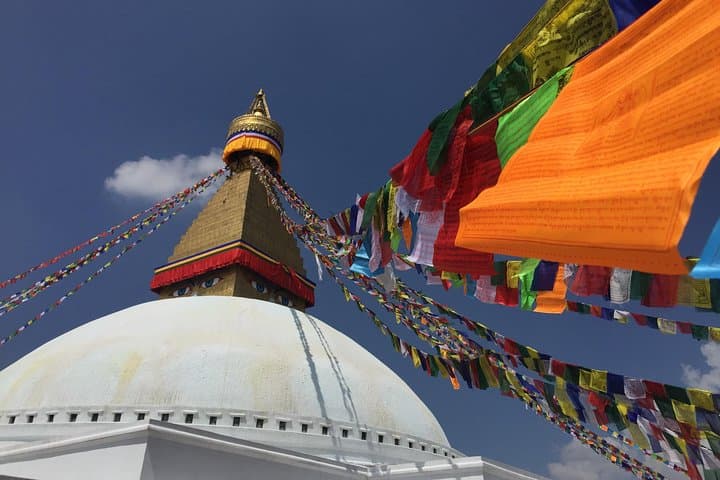
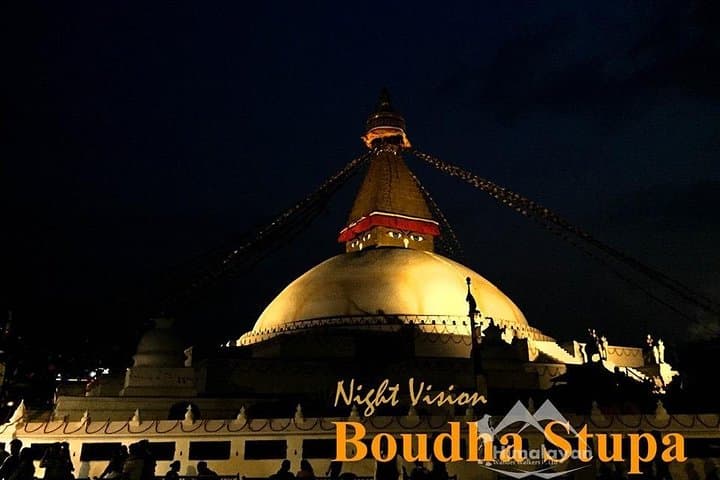
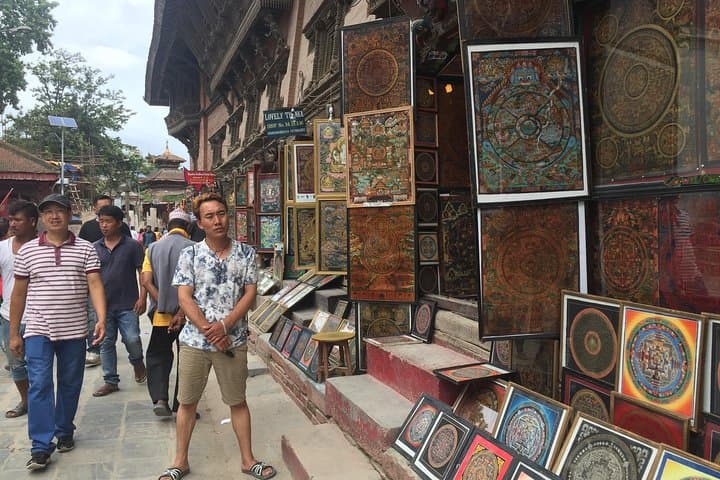
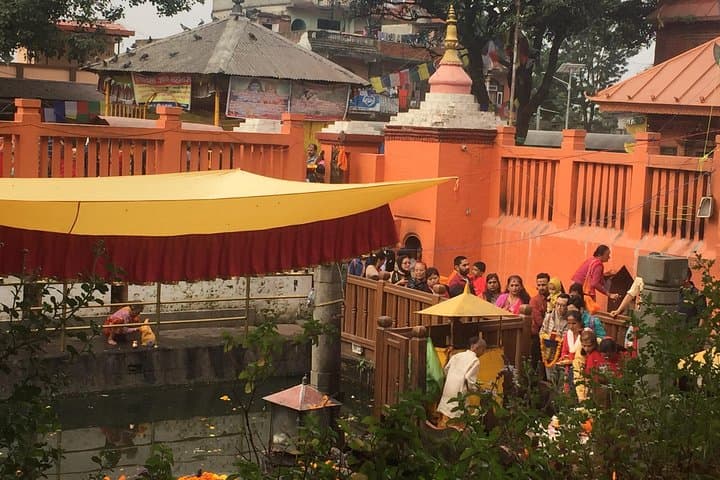
You step from a narrow street into a wide, white dome crowned with painted eyes that watch the city — Boudhanath’s great wheel of prayer flags ripples overhead like a bright, fluttering river. Local vendors call out softly; the scent of butter lamps and incense threads through the air. A guide leads you clockwise, explaining the mud-brick foundation, the layered terraces and the symbolism carved into each mani stone as pilgrims spin prayer wheels beside you.
You step from a narrow street into a wide, white dome crowned with painted eyes that watch the city — Boudhanath’s great wheel of prayer flags ripples overhead like a bright, fluttering river. Local vendors call out softly; the scent of butter lamps and incense threads through the air. A guide leads you clockwise, explaining the mud-brick foundation, the layered terraces and the symbolism carved into each mani stone as pilgrims spin prayer wheels beside you.
The stupa dates to at least the 5th century CE and grew into a central hub for Tibetan Buddhism after waves of Himalayan migration. Its mound-shaped mandala sits on a pyramidal base; beneath the plaster and painted eyes lie centuries of rebuilding, most recently after the 2015 earthquake when artisans restored masonry and iconography. Surrounding alleys host gompas where monks chant, and a market where Tibetan thangka painters and butter-sculptors still work by hand.
Expect slow, intentional movement more than vigorous hiking: this is cultural terrain, not wilderness. Your guide will take you into smaller monasteries, explain ritual practices and point out artisans in the market. Respectful photography, removing shoes where required, and following the clockwise circumambulation are practical musts.
Plan for mid-morning or late afternoon to avoid peak heat and crowds; light footwear, a water bottle, and a scarf for temple entry will keep you comfortable. The experience combines sensory detail — clack of beads, flutter of flags — with clear, digestible history. For travelers who want a deep, short immersion into living Buddhist practice, this three-hour walk delivers close-contact culture and a compact lesson in Kathmandu’s layered past.