THE ADVENTURE COLLECTIVE® · Independent discovery and booking for outdoor travel

A full-day outing from Accra that pairs the thunder of Boti Falls with the botanical calm of Aburi Gardens and a hands-on look at Ghana’s cocoa farms. Ideal for travelers wanting nature, culture, and easy walking in one trip.
A full-day outing from Accra that pairs the thunder of Boti Falls with the botanical calm of Aburi Gardens and a hands-on look at Ghana’s cocoa farms. Ideal for travelers wanting nature, culture, and easy walking in one trip.
You step off the air-conditioned van into humid air that smells faintly of wet earth and cocoa. Footsteps crunch on the wooden stairs as you descend toward Boti Falls; the roar grows, then fills the valley—two streams of water carving cliff and pool, daring you closer. Umbrella Rock perches nearby, its overhang large enough to shelter a small group and to frame the sky like a natural stage.
Verified experiences and guided adventures in the surrounding area.
Operated by EAA Tours · Boti, Eastern Region
You step off the air-conditioned van into humid air that smells faintly of wet earth and cocoa. Footsteps crunch on the wooden stairs as you descend toward Boti Falls; the roar grows, then fills the valley—two streams of water carving cliff and pool, daring you closer. Umbrella Rock perches nearby, its overhang large enough to shelter a small group and to frame the sky like a natural stage.
This loop through Ghana’s Eastern Region links living history and geology. Aburi Botanic Gardens, founded during the colonial plant-introduction era, showcases introduced and indigenous species used historically for medicine and agriculture. The cocoa farms recall Tetteh Quarshie’s 19th-century introduction of cocoa beans that helped transform Ghana’s economy. The geology here is ancient Precambrian gneiss and schist; the falls follow fractures and softer beds, producing the upper and lower cascades locals personify as male and female in seasonal “mating” meetings.
Expect a mixed day of short walks, viewpoints and village visits—stairs to the falls, uneven rock at the pool, and shady paths in Aburi. Wear good traction shoes, carry water, and allow time for photos and a guided cocoa-farm demonstration to see fermentation and drying processes.
Practical timing: leave Accra early to beat traffic and midday heat; the falls are most dramatic after rains but can be slippery. Mind local customs around photography and ask before entering private farm plots. With basic fitness and sensible gear, this day tour combines easy hiking, natural spectacle and cultural context into a compact, memorable outing.
easy.
6–8 hours.
Suitable for people with basic fitness; involves short walks, a stair descent to the falls, and light standing at viewpoints.
A shallow pool forms at the base and locals sometimes bathe there; swimming depends on water levels and operator rules—always follow your guide and avoid swimming after heavy rains due to strong currents.
The tour runs about 7 hours (approx. 420 minutes) and typically departs from Accra with hotel pickup included on most bookings.
The walk includes a long stair descent and some uneven terrain but is considered easy for most visitors; wear sturdy shoes and take your time on the return climb.
Guided visits explain cocoa cultivation stages—fermentation, drying and local processing—plus the historic role of cocoa in Ghana’s economy.
Aburi Gardens began as a colonial-era plant introduction and research station; nearby cocoa farms tie directly to Tetteh Quarshie’s introduction of cocoa to Ghana in the late 19th century.
The gardens serve as a plant-diversity and environmental-education center; visitors should stick to trails and avoid taking plant material or disturbing farm processes.
EAA Tours operates guided outdoor trips and adventures with an emphasis on safety, stewardship, and memorable experiences.
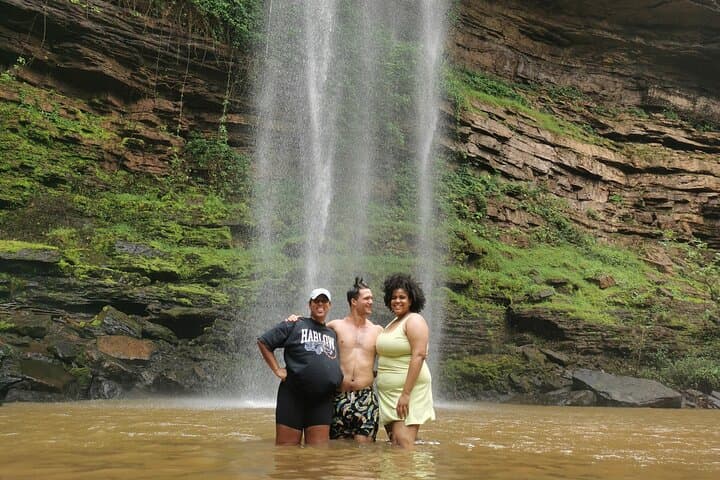
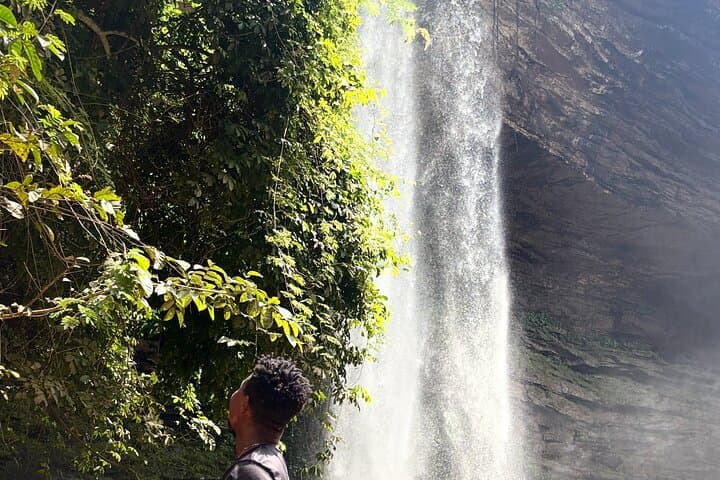
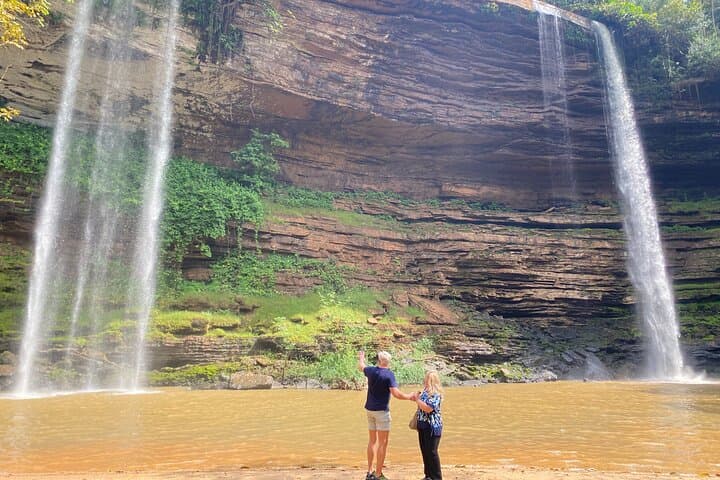
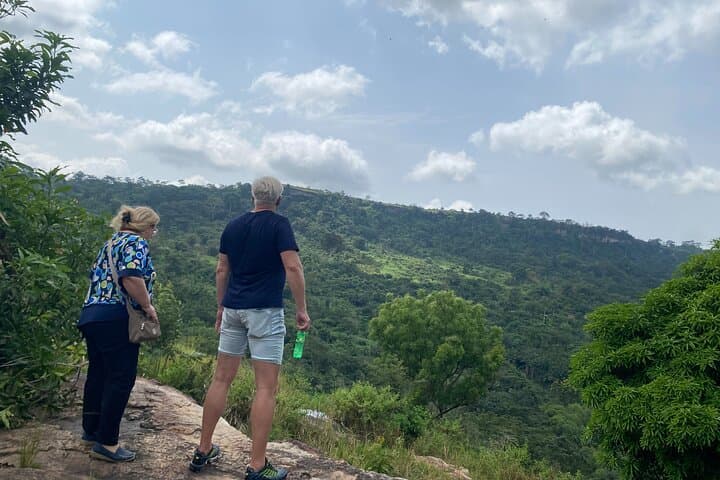
You step off the air-conditioned van into humid air that smells faintly of wet earth and cocoa. Footsteps crunch on the wooden stairs as you descend toward Boti Falls; the roar grows, then fills the valley—two streams of water carving cliff and pool, daring you closer. Umbrella Rock perches nearby, its overhang large enough to shelter a small group and to frame the sky like a natural stage.
You step off the air-conditioned van into humid air that smells faintly of wet earth and cocoa. Footsteps crunch on the wooden stairs as you descend toward Boti Falls; the roar grows, then fills the valley—two streams of water carving cliff and pool, daring you closer. Umbrella Rock perches nearby, its overhang large enough to shelter a small group and to frame the sky like a natural stage.
This loop through Ghana’s Eastern Region links living history and geology. Aburi Botanic Gardens, founded during the colonial plant-introduction era, showcases introduced and indigenous species used historically for medicine and agriculture. The cocoa farms recall Tetteh Quarshie’s 19th-century introduction of cocoa beans that helped transform Ghana’s economy. The geology here is ancient Precambrian gneiss and schist; the falls follow fractures and softer beds, producing the upper and lower cascades locals personify as male and female in seasonal “mating” meetings.
Expect a mixed day of short walks, viewpoints and village visits—stairs to the falls, uneven rock at the pool, and shady paths in Aburi. Wear good traction shoes, carry water, and allow time for photos and a guided cocoa-farm demonstration to see fermentation and drying processes.
Practical timing: leave Accra early to beat traffic and midday heat; the falls are most dramatic after rains but can be slippery. Mind local customs around photography and ask before entering private farm plots. With basic fitness and sensible gear, this day tour combines easy hiking, natural spectacle and cultural context into a compact, memorable outing.