THE ADVENTURE COLLECTIVE® · Independent discovery and booking for outdoor travel

A full-day loop from Accra that pairs the cool rush of Boti Falls with the leafy promenades of Aburi Botanical Gardens and a visit to Ghana’s historic Tetteh Quarshie Cocoa Farm. Expect swimming opportunities, a short forest hike to Umbrella Rock, and cultural insights into cocoa’s role in Ghana.
A full-day loop from Accra that pairs the cool rush of Boti Falls with the leafy promenades of Aburi Botanical Gardens and a visit to Ghana’s historic Tetteh Quarshie Cocoa Farm. Expect swimming opportunities, a short forest hike to Umbrella Rock, and cultural insights into cocoa’s role in Ghana.
You step off the air-conditioned van into the humid Ghanaian morning and a chorus of insects and distant water sets the pace. The path to Boti Falls drops quickly: 250 stone steps that lead to twin curtains of water, a dugout canoe bobbing at the bank, and the option to cool off in a natural pool. The falls demand a moment of simple reckoning—current pulling, spray on your face, the three-headed palm nearby keeping its odd rhythm of fruiting.
Verified experiences and guided adventures in the surrounding area.
Operated by Kwame Tours · Aburi, Eastern Region
You step off the air-conditioned van into the humid Ghanaian morning and a chorus of insects and distant water sets the pace. The path to Boti Falls drops quickly: 250 stone steps that lead to twin curtains of water, a dugout canoe bobbing at the bank, and the option to cool off in a natural pool. The falls demand a moment of simple reckoning—current pulling, spray on your face, the three-headed palm nearby keeping its odd rhythm of fruiting.
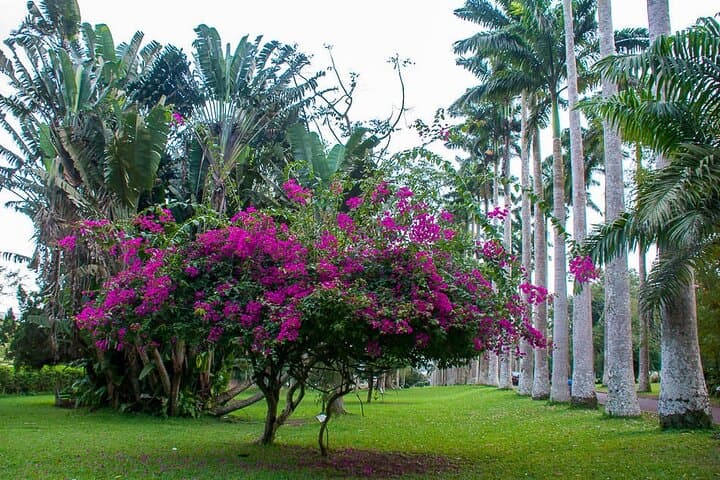
This route threads history and botany. Aburi Botanical Gardens dates to the colonial era when tree species were collected for timber and acclimatization; today its palm walk, rock garden and retired bush house are classrooms for Ghanaian horticulture. The Tetteh Quarshie Cocoa Farm ties the trip to national identity—cocoa was introduced in the 19th century and transformed local economies. Geologically the falls pour from Volta Basin highlands over resistant rock, carving the steep amphitheater you visit.
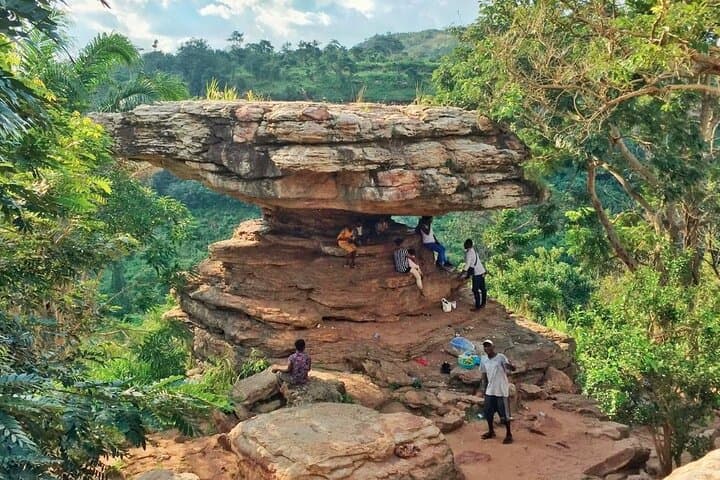
Local culture is present in small ways: roadside spice vendors, the guide’s stories about the three-headed palm, and cocoa beans drying under the sun. Umbrella Rock offers a short 30–45 minute forest hike for a compact vista and good views of the canopy.
Practical notes: the full loop is a 6–8 hour day; wear grippy shoes for the steps and riverbank, bring swimwear and a towel if you plan to swim, use insect repellent and sun protection, and carry cash for snacks and small purchases. During the dry season (roughly Nov–Mar) flows may be reduced—ask about alternative waterfalls if water is low.
easy.
6–8 hours.
Suitable for most fitness levels; you should be comfortable walking stairs and short forest trails.
The private day tour runs about 6–8 hours and typically includes transport, an English-speaking local guide, bottled water, snacks, and entry to listed sites.
Yes—swimming is permitted in designated pools when conditions are safe; follow the guide’s instructions and be cautious of currents and slippery rocks.
During the dry season (roughly November–March) flows can be reduced; operators usually offer alternatives such as Adom Falls or Oboadaka Falls on the same day.
The tour is family-friendly, but the 250-step descent to Boti Falls and uneven terrain may be challenging for those with limited mobility; consider staying at viewpoint areas instead.
Aburi Gardens was established during the colonial era for acclimatizing economic tree species; Tetteh Quarshie is linked to the introduction of cocoa farming that helped shape Ghana’s economy.
Sites are actively managed to protect tree collections and riverine vegetation; visitors should stick to trails, avoid littering, and respect local guidelines to minimize erosion and disturbance.
Kwame Tours operates guided outdoor trips and adventures with an emphasis on safety, stewardship, and memorable experiences.
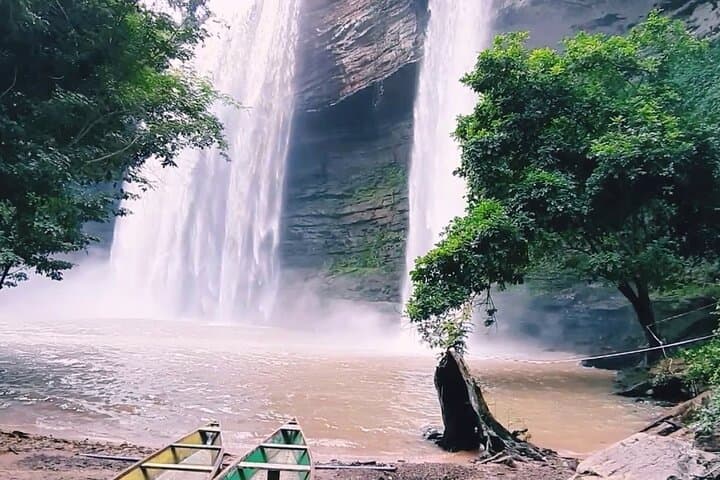
You step off the air-conditioned van into the humid Ghanaian morning and a chorus of insects and distant water sets the pace. The path to Boti Falls drops quickly: 250 stone steps that lead to twin curtains of water, a dugout canoe bobbing at the bank, and the option to cool off in a natural pool. The falls demand a moment of simple reckoning—current pulling, spray on your face, the three-headed palm nearby keeping its odd rhythm of fruiting.
You step off the air-conditioned van into the humid Ghanaian morning and a chorus of insects and distant water sets the pace. The path to Boti Falls drops quickly: 250 stone steps that lead to twin curtains of water, a dugout canoe bobbing at the bank, and the option to cool off in a natural pool. The falls demand a moment of simple reckoning—current pulling, spray on your face, the three-headed palm nearby keeping its odd rhythm of fruiting.
This route threads history and botany. Aburi Botanical Gardens dates to the colonial era when tree species were collected for timber and acclimatization; today its palm walk, rock garden and retired bush house are classrooms for Ghanaian horticulture. The Tetteh Quarshie Cocoa Farm ties the trip to national identity—cocoa was introduced in the 19th century and transformed local economies. Geologically the falls pour from Volta Basin highlands over resistant rock, carving the steep amphitheater you visit.
Local culture is present in small ways: roadside spice vendors, the guide’s stories about the three-headed palm, and cocoa beans drying under the sun. Umbrella Rock offers a short 30–45 minute forest hike for a compact vista and good views of the canopy.
Practical notes: the full loop is a 6–8 hour day; wear grippy shoes for the steps and riverbank, bring swimwear and a towel if you plan to swim, use insect repellent and sun protection, and carry cash for snacks and small purchases. During the dry season (roughly Nov–Mar) flows may be reduced—ask about alternative waterfalls if water is low.