THE ADVENTURE COLLECTIVE® · Independent discovery and booking for outdoor travel

Descend into one of South Africa’s largest chambers and walk among calcite columns formed over millions of years. This guided tour combines geological storytelling with accessible pathways and surface amenities.
Descend into one of South Africa’s largest chambers and walk among calcite columns formed over millions of years. This guided tour combines geological storytelling with accessible pathways and surface amenities.
You step down a steep concrete stairwell, the air cooling as the world above narrows to a rim of light. A 22‑meter drop gives way to an elevator that lowers you into a wide chamber where calcite columns tower and flowstone ripples as if frozen in motion. Echoes carry soft guide commentary across columns that reach up to 15 meters — the cave asserts itself like a slow-moving presence.
Verified experiences and guided adventures in the surrounding area.
Operated by Big Wild Tours · Pretoria, Gauteng
You step down a steep concrete stairwell, the air cooling as the world above narrows to a rim of light. A 22‑meter drop gives way to an elevator that lowers you into a wide chamber where calcite columns tower and flowstone ripples as if frozen in motion. Echoes carry soft guide commentary across columns that reach up to 15 meters — the cave asserts itself like a slow-moving presence.
Discovered by Italian miners in 1898, the WonderCave records both natural processes and human industry: calcite mined and processed locally for cement and toothpaste before mining stopped in 1902. The formations date to roughly 5–10 million years, built by mineral-rich water depositing layers of calcite. The chamber ranks among South Africa’s largest — a geological page in the country’s karst story alongside Cango and Sudwala.
The experience is focused and accessible: guided tours run hourly, with a three‑hour in‑cave program within a five‑hour visit that includes surface facilities — picnic spots, a kiosk and a restaurant. No crawling is required; abseiling is available by prior arrangement. Visitors with limited mobility should note the 87 stairs and elevator access; the walkways are set but can be damp and cool.
Practical notes: arrive with a light jacket, closed-toe shoes with grip, and a headlamp if you intend to explore beyond the main route with a specialist. Plan for moderate physical exertion and take advantage of midday tours for steadier light and fewer shadows. Respect low-light rules to protect delicate formations and follow guide instructions to keep the cave’s slow work intact for future visitors.
moderate.
5 hours.
Moderate fitness recommended: able to descend stairs, stand and walk on uneven surfaces for up to 3 hours.
The guided in‑cave portion is about three hours within a total scheduled visit of roughly five hours including surface activities.
Children can join; infant seats are available but the route includes steep stairs—check age and mobility limits with the operator.
Abseiling is available by prior booking only and requires additional safety briefings and equipment.
Yes — a kiosk and restaurant are on site and lunch is usually included with organized visits.
Italian miners discovered the cave in 1898 and mined calcite used locally for cement and other products until 1902; the site now preserves its geological features.
Visitor access is managed to limit touch and lighting inside the cave; follow guide instructions to minimize impact on slow-forming calcite structures.
Big Wild Tours operates guided outdoor trips and adventures with an emphasis on safety, stewardship, and memorable experiences.
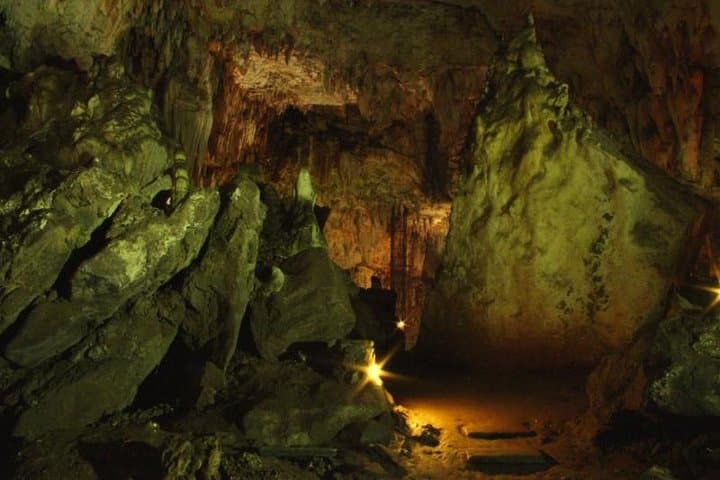
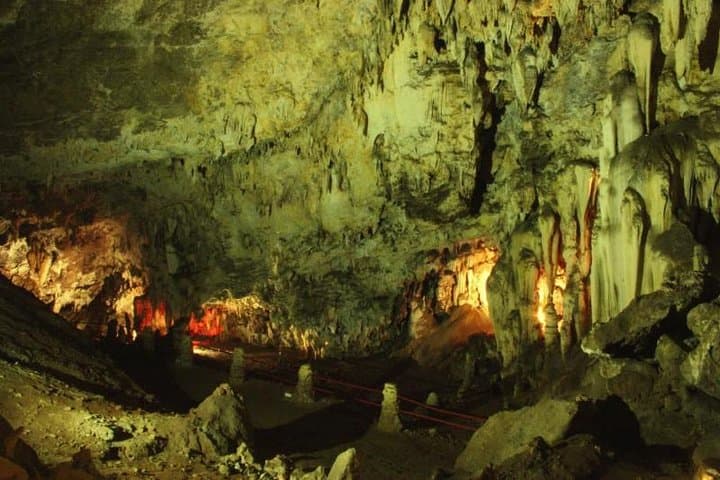
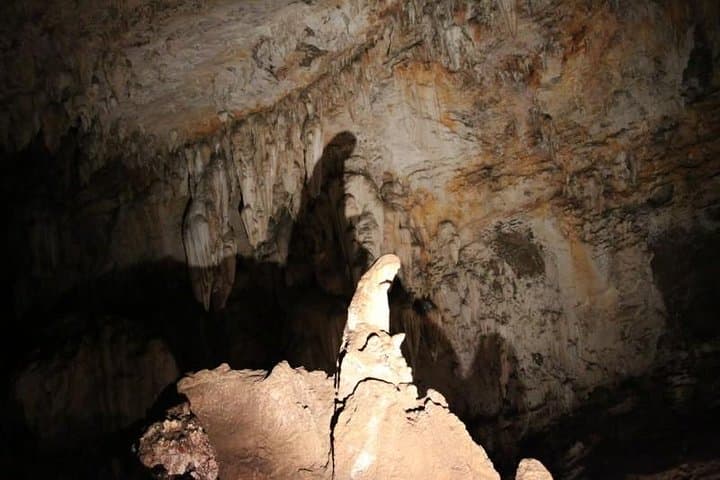
You step down a steep concrete stairwell, the air cooling as the world above narrows to a rim of light. A 22‑meter drop gives way to an elevator that lowers you into a wide chamber where calcite columns tower and flowstone ripples as if frozen in motion. Echoes carry soft guide commentary across columns that reach up to 15 meters — the cave asserts itself like a slow-moving presence.
You step down a steep concrete stairwell, the air cooling as the world above narrows to a rim of light. A 22‑meter drop gives way to an elevator that lowers you into a wide chamber where calcite columns tower and flowstone ripples as if frozen in motion. Echoes carry soft guide commentary across columns that reach up to 15 meters — the cave asserts itself like a slow-moving presence.
Discovered by Italian miners in 1898, the WonderCave records both natural processes and human industry: calcite mined and processed locally for cement and toothpaste before mining stopped in 1902. The formations date to roughly 5–10 million years, built by mineral-rich water depositing layers of calcite. The chamber ranks among South Africa’s largest — a geological page in the country’s karst story alongside Cango and Sudwala.
The experience is focused and accessible: guided tours run hourly, with a three‑hour in‑cave program within a five‑hour visit that includes surface facilities — picnic spots, a kiosk and a restaurant. No crawling is required; abseiling is available by prior arrangement. Visitors with limited mobility should note the 87 stairs and elevator access; the walkways are set but can be damp and cool.
Practical notes: arrive with a light jacket, closed-toe shoes with grip, and a headlamp if you intend to explore beyond the main route with a specialist. Plan for moderate physical exertion and take advantage of midday tours for steadier light and fewer shadows. Respect low-light rules to protect delicate formations and follow guide instructions to keep the cave’s slow work intact for future visitors.