THE ADVENTURE COLLECTIVE® · Independent discovery and booking for outdoor travel

Explore both Upper and Lower Antelope Canyon on a half-day guided tour from Page, AZ. Small-group access on Navajo Nation land reveals contrasting slot canyon experiences — ladders and tight turns below, sunlit bowls above.
Explore both Upper and Lower Antelope Canyon on a half-day guided tour from Page, AZ. Small-group access on Navajo Nation land reveals contrasting slot canyon experiences — ladders and tight turns below, sunlit bowls above.
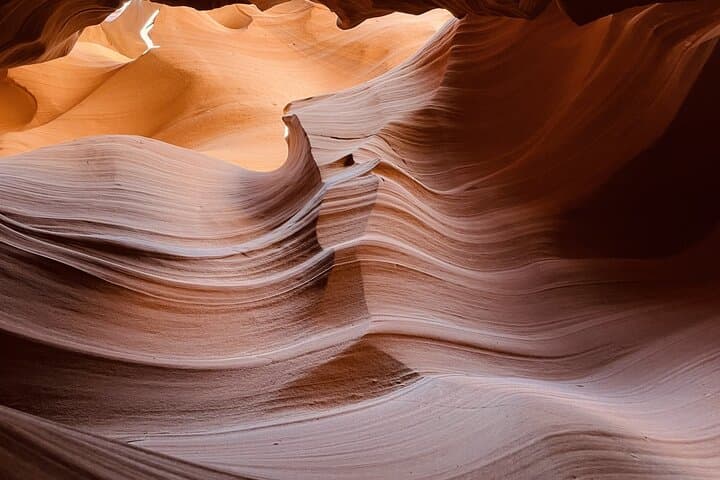
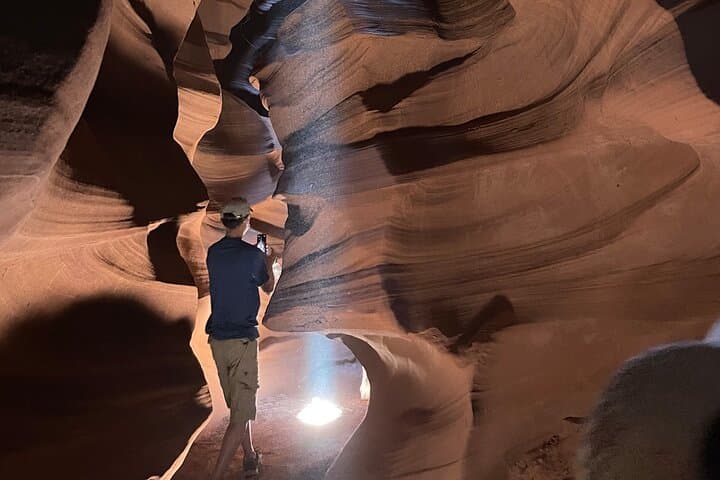
You step out of the van and the desert air immediately sharpens: sandstone cliffs lean in like bookends and a narrow slit of sky slices overhead. A Navajo guide leads the small group toward the first rift; sunlight slants down and the canyon seems to breathe as you descend ladders into Lower Antelope. Sand underfoot muffles your steps while wind and past floods have sculpted the walls into flowing grooves that catch light in bands.
Verified experiences and guided adventures in the surrounding area.
Operated by JoyFun Tour, LLC · Page, AZ
You step out of the van and the desert air immediately sharpens: sandstone cliffs lean in like bookends and a narrow slit of sky slices overhead. A Navajo guide leads the small group toward the first rift; sunlight slants down and the canyon seems to breathe as you descend ladders into Lower Antelope. Sand underfoot muffles your steps while wind and past floods have sculpted the walls into flowing grooves that catch light in bands.
Antelope Canyon is carved from Jurassic Navajo Sandstone by centuries of flash floods and wind, producing sinuous walls and tight chambers that change with every shift of sunlight. The canyons sit on Navajo Nation land; access requires permits and guided entry — a stewardship rooted in Diné culture and local regulations.
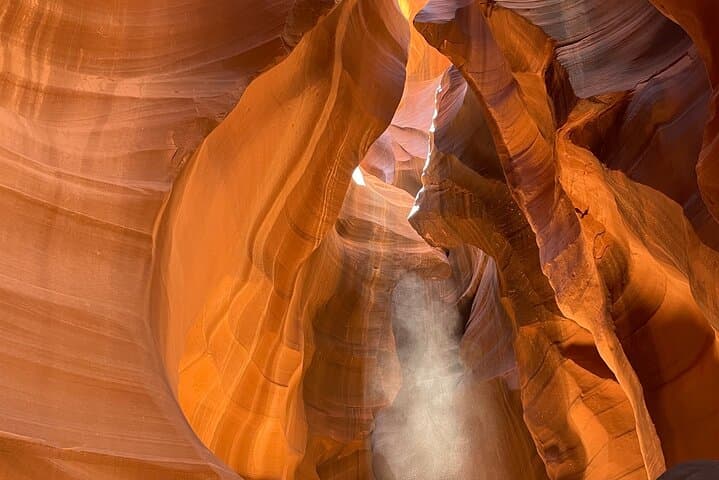
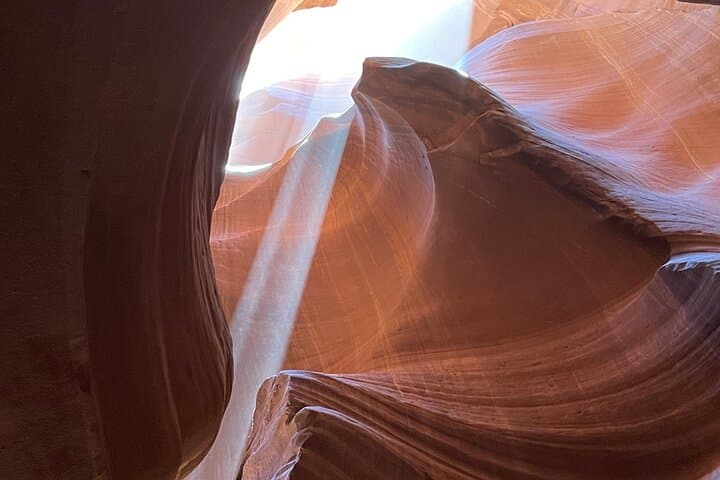
Expect two distinct experiences: Lower’s ladders, tighter corridors and vertical movement; Upper’s wider, sunlit bowls and the classic light beams when the sun is high. Guides share geology, local history and safety briefings before each visit.
Practical guidance: tours run about four hours including transfers; be ready for uneven sand, short climbs and crowds in peak season. Hydrate before arrival, wear closed-toe shoes with good traction, and carry only what you can manage in the canyon’s narrow turns. Photography is a highlight but tripods and professional rigs may be restricted on standard tours — check ahead. Weather matters: monsoon season (summer) brings flash-flood risk and possible closures. Respect the fragile sandstone and the rules set by Navajo guides — they preserve access for future visitors.
moderate.
4 hours.
Moderate fitness—able to climb short ladders, walk on uneven sand and stand for portions of the tour.
Yes — Antelope Canyon is on Navajo Nation land and admission is arranged through guided tours; operators include permits in the booking.
Standard sightseeing tours often restrict tripods and large rigs; specialized photography tours permit them—confirm with the operator before booking.
No—Lower Antelope has ladders and narrow passages; Upper Antelope has uneven ground and stairs, so these tours are not suitable for most mobility aids.
Heavy rain can trigger flash-flood closures; guides and operators monitor conditions and tours may be delayed or canceled for safety.
Antelope Canyon is on Navajo (Diné) land; the canyons formed over millions of years and are managed under Navajo Nation regulations and permit systems.
Tours limit access and group sizes to protect fragile sandstone; follow guides, stay on routes and pack out all waste to reduce impact.
JoyFun Tour, LLC operates guided outdoor trips and adventures with an emphasis on safety, stewardship, and memorable experiences.
You step out of the van and the desert air immediately sharpens: sandstone cliffs lean in like bookends and a narrow slit of sky slices overhead. A Navajo guide leads the small group toward the first rift; sunlight slants down and the canyon seems to breathe as you descend ladders into Lower Antelope. Sand underfoot muffles your steps while wind and past floods have sculpted the walls into flowing grooves that catch light in bands.
You step out of the van and the desert air immediately sharpens: sandstone cliffs lean in like bookends and a narrow slit of sky slices overhead. A Navajo guide leads the small group toward the first rift; sunlight slants down and the canyon seems to breathe as you descend ladders into Lower Antelope. Sand underfoot muffles your steps while wind and past floods have sculpted the walls into flowing grooves that catch light in bands.
Antelope Canyon is carved from Jurassic Navajo Sandstone by centuries of flash floods and wind, producing sinuous walls and tight chambers that change with every shift of sunlight. The canyons sit on Navajo Nation land; access requires permits and guided entry — a stewardship rooted in Diné culture and local regulations.
Expect two distinct experiences: Lower’s ladders, tighter corridors and vertical movement; Upper’s wider, sunlit bowls and the classic light beams when the sun is high. Guides share geology, local history and safety briefings before each visit.
Practical guidance: tours run about four hours including transfers; be ready for uneven sand, short climbs and crowds in peak season. Hydrate before arrival, wear closed-toe shoes with good traction, and carry only what you can manage in the canyon’s narrow turns. Photography is a highlight but tripods and professional rigs may be restricted on standard tours — check ahead. Weather matters: monsoon season (summer) brings flash-flood risk and possible closures. Respect the fragile sandstone and the rules set by Navajo guides — they preserve access for future visitors.