THE ADVENTURE COLLECTIVE® · Independent discovery and booking for outdoor travel

Spend a day moving between Borobudur’s terraces, Merapi’s ash-formed slopes, and Prambanan’s soaring spires. This private, full-day tour combines UNESCO sites with a 4x4 Merapi viewpoint and includes tickets and hotel pickup.
Spend a day moving between Borobudur’s terraces, Merapi’s ash-formed slopes, and Prambanan’s soaring spires. This private, full-day tour combines UNESCO sites with a 4x4 Merapi viewpoint and includes tickets and hotel pickup.
You arrive before sunrise to a plateau where stone reliefs silhouette against a cooling sky; incense smoke from a ritual drifts through the terraces while the first light picks out stupas at Borobudur. The air smells of volcanic soil and frying street food as a driver folds maps into the rear seat and the day stretches ahead.
Verified experiences and guided adventures in the surrounding area.
Operated by Borobudursunrise.com · Yogyakarta, Special Region of Yogyakarta
You arrive before sunrise to a plateau where stone reliefs silhouette against a cooling sky; incense smoke from a ritual drifts through the terraces while the first light picks out stupas at Borobudur. The air smells of volcanic soil and frying street food as a driver folds maps into the rear seat and the day stretches ahead.
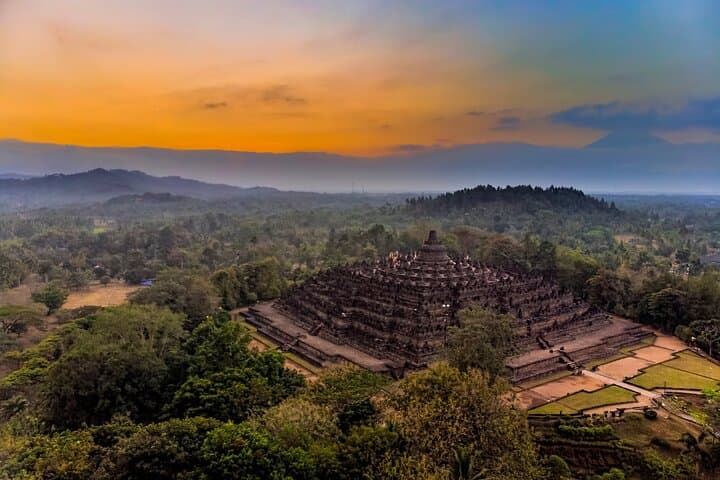
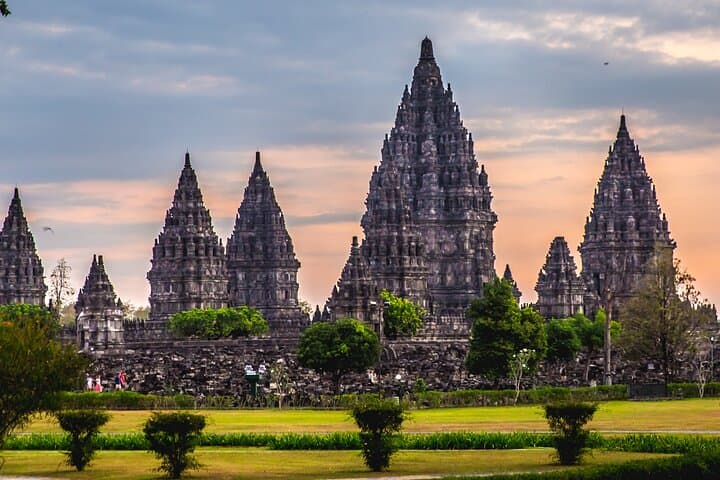
This full-day route threads three of Java’s defining places: Borobudur, the ninth-century Buddhist monument whose stacked terraces narrate ancient life; Mount Merapi, an active stratovolcano that has rebuilt and reshaped nearby villages for centuries; and Prambanan, the 8th–9th century Hindu temple complex with soaring spires. Geology and culture sit close—Merapi’s eruptions deposit fertile ash that feeds rice paddies, while successive kingdoms erected stone temples that anchor modern Yogyakarta’s identity.
Expect 1–2 hours at each site: stair climbs at Borobudur and Prambanan, short walks across uneven temple compounds, and a Jeep-accessed viewpoint near Merapi where ash fields and lava-sculpted ridgelines dominate the sightline. Guides typically handle tickets and logistics; temples can be busy mid-morning, while Merapi views are clearer in the cooler hours.
Practical guidance: wear grippy shoes for stone steps, carry a refillable water bottle and sun protection, and plan for variable weather—light showers can appear fast. Respect temple rules (no climbing on reliefs), keep a modest dress standard, and leave time for brief stops at smaller neighbors like Pawon and Mendut. With basic preparation, this is a focused, high-value day that balances cultural immersion and raw volcanic landscape.
moderate.
6–8 hours.
Suitable for travelers in average physical condition who can climb multiple flights of stone steps and walk uneven surfaces.
Yes — this tour includes admission to Borobudur and Prambanan and the Merapi viewpoint as stated, so you typically won’t need to buy separate tickets on-site.
The tour runs about 6–8 hours; start times vary but early departures maximize light and visibility at Borobudur and Merapi.
Borobudur and Prambanan are sometimes closed for national holidays, special ceremonies, or maintenance — they are commonly closed on Mondays, so check the schedule before booking.
No — crater access is restricted for safety; this tour uses a 4x4 route to reach viewpoints and hardened ash fields that offer safe, close views without approaching the crater rim.
Borobudur and Prambanan date to the 8th–9th centuries and are UNESCO World Heritage Sites; Merapi’s eruptions have shaped local culture and agriculture for centuries.
Stick to marked paths, avoid touching reliefs, and use refillable bottles to reduce plastic waste; local sites depend on visitor stewardship to preserve fragile stonework and landscapes.
Borobudursunrise.com operates guided outdoor trips and adventures with an emphasis on safety, stewardship, and memorable experiences.
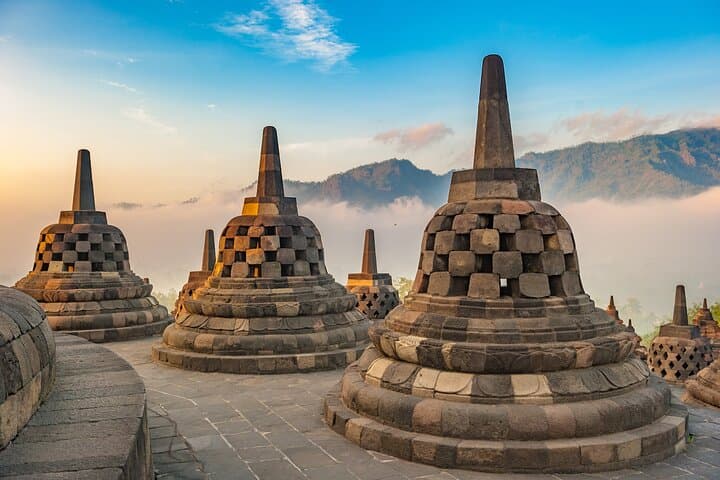
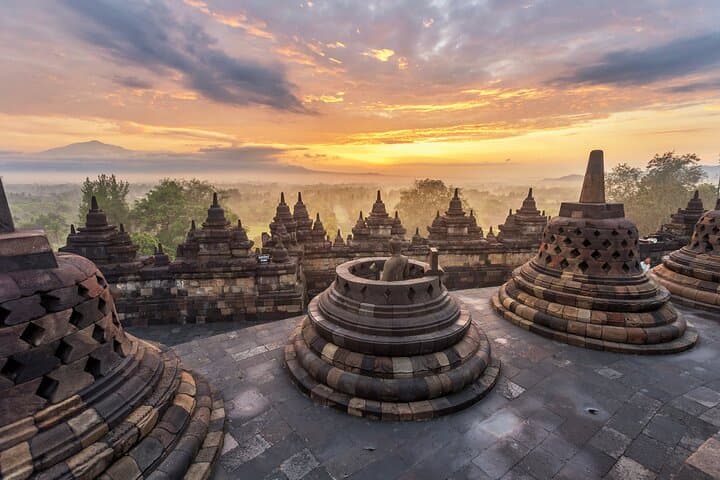
You arrive before sunrise to a plateau where stone reliefs silhouette against a cooling sky; incense smoke from a ritual drifts through the terraces while the first light picks out stupas at Borobudur. The air smells of volcanic soil and frying street food as a driver folds maps into the rear seat and the day stretches ahead.
You arrive before sunrise to a plateau where stone reliefs silhouette against a cooling sky; incense smoke from a ritual drifts through the terraces while the first light picks out stupas at Borobudur. The air smells of volcanic soil and frying street food as a driver folds maps into the rear seat and the day stretches ahead.
This full-day route threads three of Java’s defining places: Borobudur, the ninth-century Buddhist monument whose stacked terraces narrate ancient life; Mount Merapi, an active stratovolcano that has rebuilt and reshaped nearby villages for centuries; and Prambanan, the 8th–9th century Hindu temple complex with soaring spires. Geology and culture sit close—Merapi’s eruptions deposit fertile ash that feeds rice paddies, while successive kingdoms erected stone temples that anchor modern Yogyakarta’s identity.
Expect 1–2 hours at each site: stair climbs at Borobudur and Prambanan, short walks across uneven temple compounds, and a Jeep-accessed viewpoint near Merapi where ash fields and lava-sculpted ridgelines dominate the sightline. Guides typically handle tickets and logistics; temples can be busy mid-morning, while Merapi views are clearer in the cooler hours.
Practical guidance: wear grippy shoes for stone steps, carry a refillable water bottle and sun protection, and plan for variable weather—light showers can appear fast. Respect temple rules (no climbing on reliefs), keep a modest dress standard, and leave time for brief stops at smaller neighbors like Pawon and Mendut. With basic preparation, this is a focused, high-value day that balances cultural immersion and raw volcanic landscape.