THE ADVENTURE COLLECTIVE® · Independent discovery and booking for outdoor travel

Two days of Georgian highlands: mineral springs, hilltop monasteries, and the cliff-cut chambers of Vardzia. This private escape pairs driving ease with short, active exploration of history and wide, open landscapes.
Two days of Georgian highlands: mineral springs, hilltop monasteries, and the cliff-cut chambers of Vardzia. This private escape pairs driving ease with short, active exploration of history and wide, open landscapes.
You step out of the car and the air changes — cooler, mineral-scented, edged with pine. Day one moves from the Jvari viewpoint down into ancient Mtskheta where rivers meet, past crumbling rock streets and the hush of Svetitskhoveli cathedral, then on toward the spas and shaded trails of Borjomi National Park.
Verified experiences and guided adventures in the surrounding area.
Operated by 11 Regions • Georgia · Borjomi, Samtskhe-Javakheti
You step out of the car and the air changes — cooler, mineral-scented, edged with pine. Day one moves from the Jvari viewpoint down into ancient Mtskheta where rivers meet, past crumbling rock streets and the hush of Svetitskhoveli cathedral, then on toward the spas and shaded trails of Borjomi National Park.
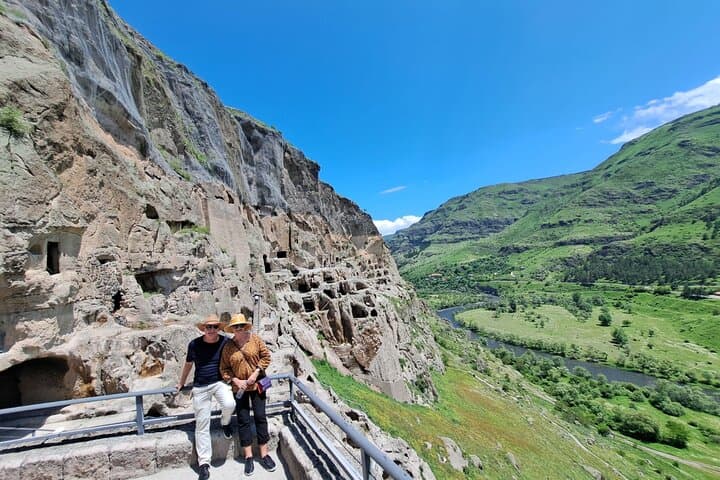
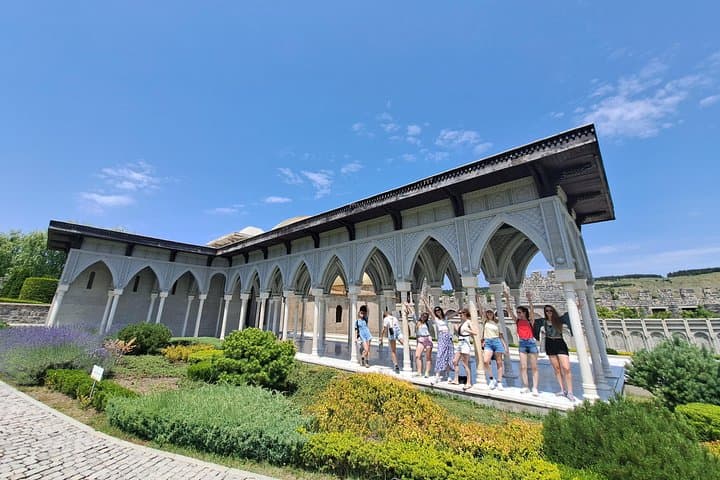
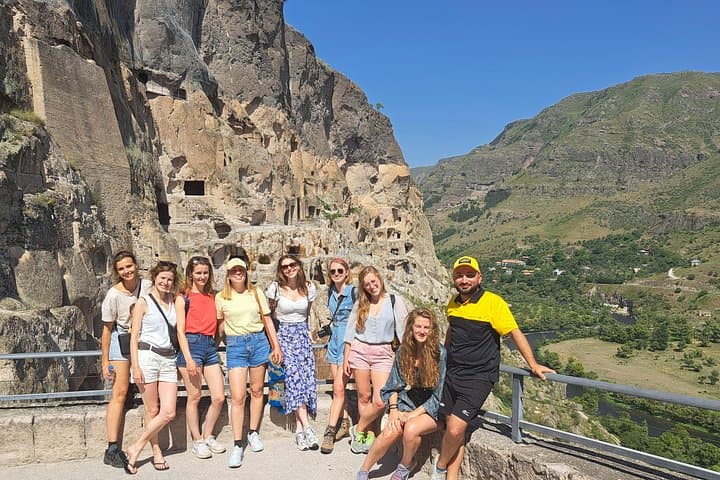
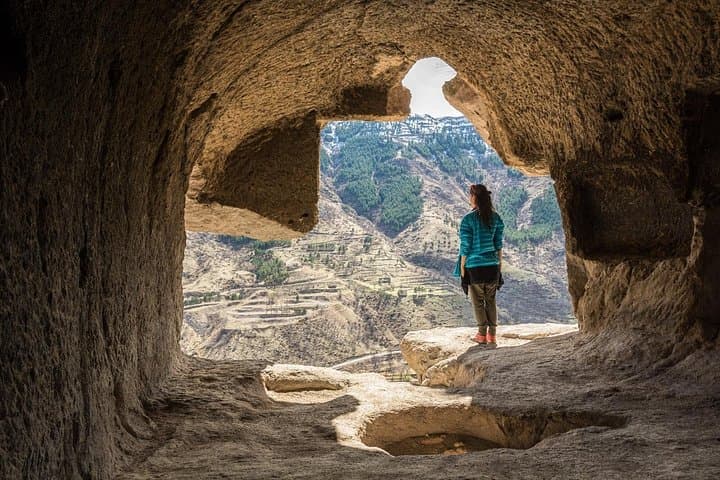
This route reads like a compact history of Georgia: early medieval churches above river confluences, the fortress streets of Rabati, and then Vardzia — a 12th‑century cave monastery hewn into a cliff during Queen Tamar’s era. Geology here is bold: volcanic plateaus give way to eroded tuff and sandstone that human hands hollowed into rooms and tunnels. Paravani Lake sits high on the Javakheti plateau, its shallow marshes attracting migrating birds and keeping the horizons wide.
Culturally, expect warm hospitality, hearty stews, and mineral water poured from springs that made Borjomi famous in the Russian imperial era. Guides frame stories with local names, and routes trace both trade routes and strategic mountain passes.
Practically: this is a road‑based, moderately active escape with short walks, stair-climbing and uneven cave passages at Vardzia and Uplistsikhe. Wear sturdy shoes, carry a daypack with layers (nights can be cold at altitude), and bring cash for small village purchases. Distances by car are long — plan for multiple one‑hour drives and a full day of stops each day. Respect fragile sites: stay on marked paths, and allow extra time for photos and local food. The trip balances easy driving with brisk exploration — nature and history both push you forward.
moderate.
2 days.
Suitable for travelers with moderate fitness who can handle multiple short hikes, stairs and uneven terrain
Vardzia and Rabati accept visitors without advance booking, but organized tours make logistics easier and skip wait times during high season.
Main roads are paved and generally safe for private cars; some short local approaches are narrow and winding—drivers should be comfortable on mountain roads.
Short walks are manageable, but cave complexes and steep steps at Vardzia and Uplistsikhe are not suitable for those with serious mobility limits or recent spinal issues.
Local guides commonly speak Georgian and Russian; many operators provide English-speaking guides—confirm language when booking.
Vardzia expanded into a cliff city in the late 12th century under royal patronage; Borjomi’s mineral springs became prized during the Russian imperial period.
The plateau wetlands and cave sites are ecologically and archaeologically sensitive—stick to trails, avoid removing artifacts, and limit single-use plastics to protect bird habitat.
11 Regions • Georgia operates guided outdoor trips and adventures with an emphasis on safety, stewardship, and memorable experiences.
You step out of the car and the air changes — cooler, mineral-scented, edged with pine. Day one moves from the Jvari viewpoint down into ancient Mtskheta where rivers meet, past crumbling rock streets and the hush of Svetitskhoveli cathedral, then on toward the spas and shaded trails of Borjomi National Park.
You step out of the car and the air changes — cooler, mineral-scented, edged with pine. Day one moves from the Jvari viewpoint down into ancient Mtskheta where rivers meet, past crumbling rock streets and the hush of Svetitskhoveli cathedral, then on toward the spas and shaded trails of Borjomi National Park.
This route reads like a compact history of Georgia: early medieval churches above river confluences, the fortress streets of Rabati, and then Vardzia — a 12th‑century cave monastery hewn into a cliff during Queen Tamar’s era. Geology here is bold: volcanic plateaus give way to eroded tuff and sandstone that human hands hollowed into rooms and tunnels. Paravani Lake sits high on the Javakheti plateau, its shallow marshes attracting migrating birds and keeping the horizons wide.
Culturally, expect warm hospitality, hearty stews, and mineral water poured from springs that made Borjomi famous in the Russian imperial era. Guides frame stories with local names, and routes trace both trade routes and strategic mountain passes.
Practically: this is a road‑based, moderately active escape with short walks, stair-climbing and uneven cave passages at Vardzia and Uplistsikhe. Wear sturdy shoes, carry a daypack with layers (nights can be cold at altitude), and bring cash for small village purchases. Distances by car are long — plan for multiple one‑hour drives and a full day of stops each day. Respect fragile sites: stay on marked paths, and allow extra time for photos and local food. The trip balances easy driving with brisk exploration — nature and history both push you forward.