THE ADVENTURE COLLECTIVE® · Independent discovery and booking for outdoor travel

A single-day loop from Tbilisi that pairs Borjomi’s mineral springs with the hilltop Rabati Castle and the cliff-cut monasteries of Vardzia. Expect easy walks, dramatic views and concentrated doses of Georgian history and geology.
A single-day loop from Tbilisi that pairs Borjomi’s mineral springs with the hilltop Rabati Castle and the cliff-cut monasteries of Vardzia. Expect easy walks, dramatic views and concentrated doses of Georgian history and geology.
Morning light slides over Tbilisi as a small minivan pulls out toward the highlands, and the road opens into a landscape that tests how fast a traveler can shift gears — from spa-town leisure to medieval stonework and cliff-carved monasteries.
Verified experiences and guided adventures in the surrounding area.
Operated by Dream Tours · Tbilisi, Tbilisi
Morning light slides over Tbilisi as a small minivan pulls out toward the highlands, and the road opens into a landscape that tests how fast a traveler can shift gears — from spa-town leisure to medieval stonework and cliff-carved monasteries.
First stop: Borjomi Central Park, where the town’s sulphate-rich springs have drawn visitors since the 19th century. The mineral water seems to tug at people’s curiosity and thirst alike; under the park’s blue dome visitors sample the famously effervescent draughts and can opt for a short cable-car climb into conifered slopes.
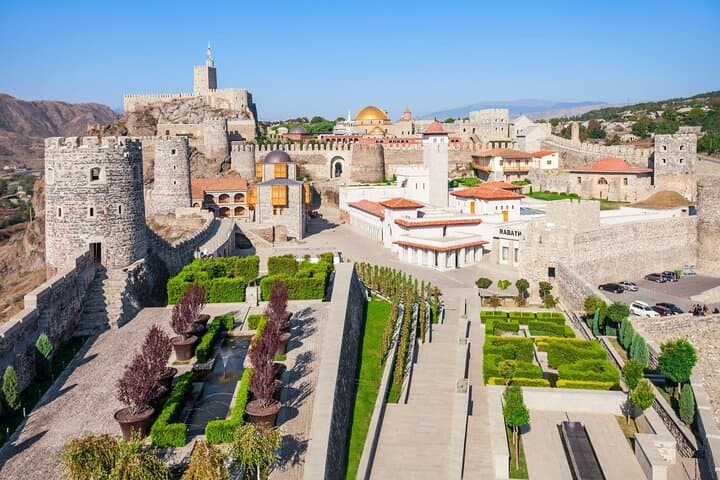
Akhaltsikhe’s Rabati Castle follows — a compact hilltop complex that wears Ottoman, Georgian and Russian layers of history. Renovated in the early 2010s, its restored walls and museum galleries narrate borderland stories that shaped southern Georgia.
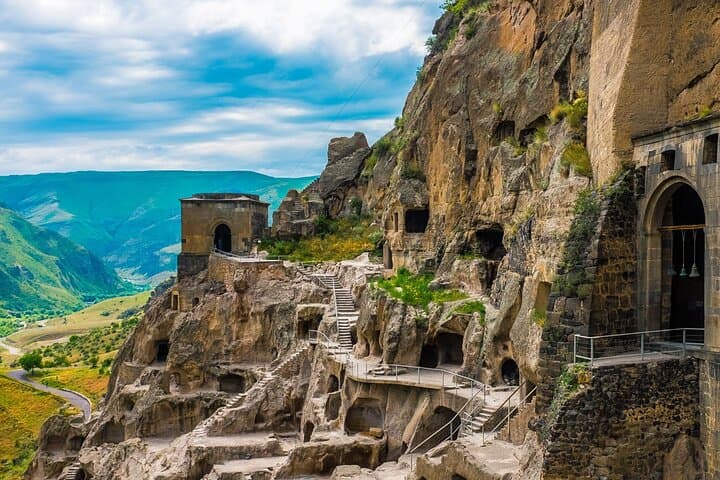
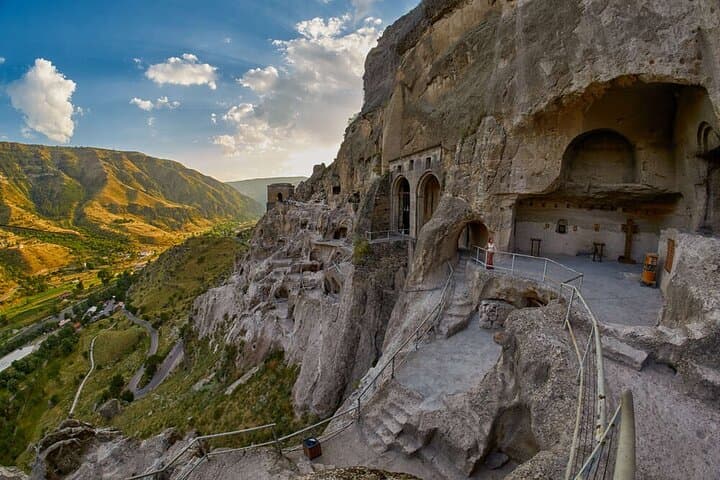
The day culminates at Vardzia, a dramatic 12th–13th century cave monastery commissioned during Queen Tamar’s reign. Passages, refectories and frescoed chapels carve into the cliff face above the Kura River; the rock itself feels like a slow archivist, holding centuries of faith and food stores in its caverns.
Practicalities: the full-day tour is roughly eight hours including road time; expect mostly easy walking with stone steps and some exposed ledges at Vardzia. Bring layers for temperature shifts, a refillable water bottle, sturdy shoes, and prepare to pay for lunch on the road. Guides contextualize geology, medieval history and conservation practices throughout, making this a compact, varied introduction to southern Georgia’s landscapes and culture.
easy.
8 hours.
Suitable for travelers in average shape; involves short walks, stairs and light uneven terrain
Most group day tours include commentary and parking; entrance fees to museums or inner complexes may be excluded—confirm with the operator before booking.
Each leg involves a few hours of driving; round-trip from Tbilisi with stops typically totals about eight hours, depending on traffic and time spent at each site.
The itinerary is generally suitable for families and older travelers, but Vardzia includes many narrow steps and uneven passages that can be challenging for anyone with limited mobility.
Lunch is usually not included; the tour stops at a local restaurant where travelers can buy a meal at their own expense.
Vardzia was carved into the cliff in the 12th–13th centuries under Queen Tamar; Rabati Castle reflects Ottoman, Georgian and Russian influences and was extensively restored in 2011–2012.
Vardzia’s rock-cut complex is sensitive to erosion and visitor pressure—stick to marked paths and avoid touching frescoes. Borjomi’s surrounding national park is actively managed to protect forest habitats and water sources.
Dream Tours operates guided outdoor trips and adventures with an emphasis on safety, stewardship, and memorable experiences.

Morning light slides over Tbilisi as a small minivan pulls out toward the highlands, and the road opens into a landscape that tests how fast a traveler can shift gears — from spa-town leisure to medieval stonework and cliff-carved monasteries.
Morning light slides over Tbilisi as a small minivan pulls out toward the highlands, and the road opens into a landscape that tests how fast a traveler can shift gears — from spa-town leisure to medieval stonework and cliff-carved monasteries.
First stop: Borjomi Central Park, where the town’s sulphate-rich springs have drawn visitors since the 19th century. The mineral water seems to tug at people’s curiosity and thirst alike; under the park’s blue dome visitors sample the famously effervescent draughts and can opt for a short cable-car climb into conifered slopes.
Akhaltsikhe’s Rabati Castle follows — a compact hilltop complex that wears Ottoman, Georgian and Russian layers of history. Renovated in the early 2010s, its restored walls and museum galleries narrate borderland stories that shaped southern Georgia.
The day culminates at Vardzia, a dramatic 12th–13th century cave monastery commissioned during Queen Tamar’s reign. Passages, refectories and frescoed chapels carve into the cliff face above the Kura River; the rock itself feels like a slow archivist, holding centuries of faith and food stores in its caverns.
Practicalities: the full-day tour is roughly eight hours including road time; expect mostly easy walking with stone steps and some exposed ledges at Vardzia. Bring layers for temperature shifts, a refillable water bottle, sturdy shoes, and prepare to pay for lunch on the road. Guides contextualize geology, medieval history and conservation practices throughout, making this a compact, varied introduction to southern Georgia’s landscapes and culture.