THE ADVENTURE COLLECTIVE® · Independent discovery and booking for outdoor travel

Visit Borjomi to taste naturally carbonated mineral water and explore the Romanov-era Likani Palace. This day tour pairs easy park walks with short forest trails and local cultural stops.
Visit Borjomi to taste naturally carbonated mineral water and explore the Romanov-era Likani Palace. This day tour pairs easy park walks with short forest trails and local cultural stops.
Steam rises from the spring-side railings as you step into Borjomi Mineral Water Park, the cold air tasting faintly metallic and alive. Pine slopes loom like watchful neighbors; the river threads through town and seems to dare you to follow it upstream toward alpine meadows and old estates.
Verified experiences and guided adventures in the surrounding area.
Operated by Geoviptours · Borjomi, Samtskhe-Javakheti
Steam rises from the spring-side railings as you step into Borjomi Mineral Water Park, the cold air tasting faintly metallic and alive. Pine slopes loom like watchful neighbors; the river threads through town and seems to dare you to follow it upstream toward alpine meadows and old estates.
This valley has been a crossroads for centuries — a Georgian alpine corridor cut by volcanic activity that left mineral-rich springs bubbling from fissures. In the 19th century the Romanovs made Likani Palace their summer retreat, and the spa culture that followed turned Borjomi into a health destination. Today wooden promenades and shaded kiosks frame the spring outlets; the park’s geology is visible in green-tinged terraces and the iron-scented water.
Culture here is practical and hospitable: local bottlers still collect from source, and market stalls sell small glass bottles for sampling. Outside the park, trails fan into Borjomi-Kharagauli National Park — pine, beech and spruce that shelter deer and bearded vultures.
Practical guidance: plan for a full day if you’re coming from Tbilisi; roads are winding and winter can add travel time. Bring a refillable bottle, a rain layer and good walking shoes — paths range from paved boardwalks to gravel forest tracks. Expect short climbs around viewpoints and modest, well-marked trails. Cash is useful for small purchases at the springs and cafés. Time your visit for morning light on the palace and late afternoon for softer colors in the park; the springs are busiest midday.
easy.
Full day (8–10 hours).
Suitable for most fitness levels; involves short, gentle climbs and paved walking paths
Yes—many organized Borjomi trips include hotel pick-up and are sold as private tours, so book in advance for your preferred date.
Access to public spring outlets is generally free; kiosks may sell bottled samples or guided tastings for a small fee.
By road expect about 2–3 hours each way depending on traffic and season; winter travel can take longer due to weather.
Yes—paths in the Mineral Water Park are stroller-accessible and the tour notes indicate it's suitable for infants and small children.
Borjomi rose to prominence in the 19th century when Russian elites developed the springs; Likani Palace nearby was a Romanov summer residence.
Borjomi-Kharagauli National Park protects regional forests and manages visitor impact; stick to marked trails and avoid single-use plastics.
Geoviptours operates guided outdoor trips and adventures with an emphasis on safety, stewardship, and memorable experiences.
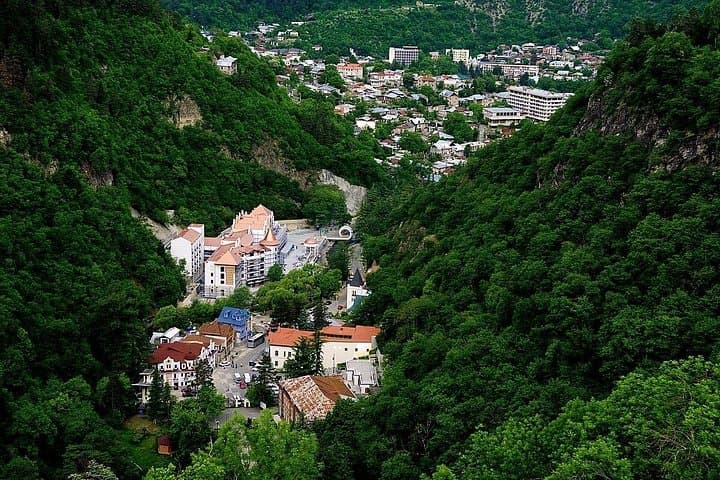
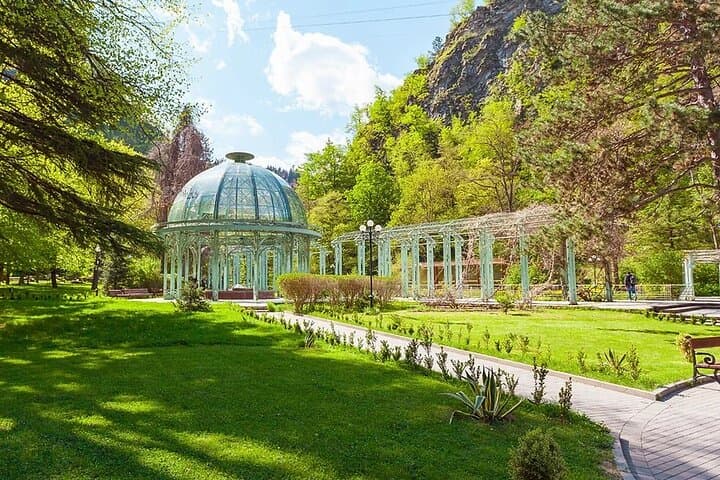
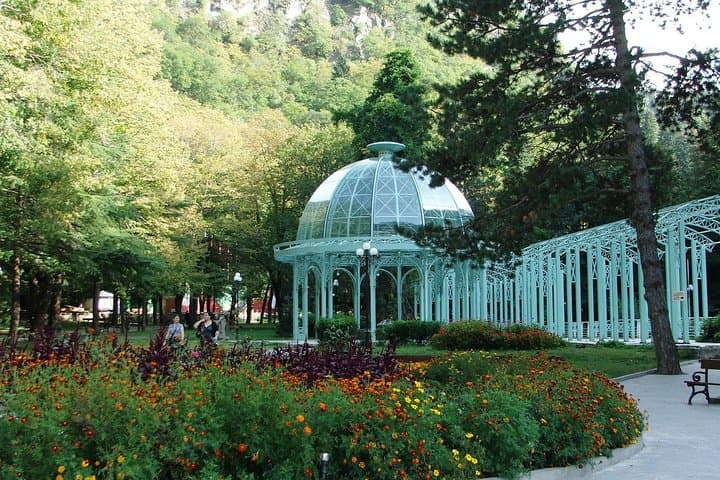
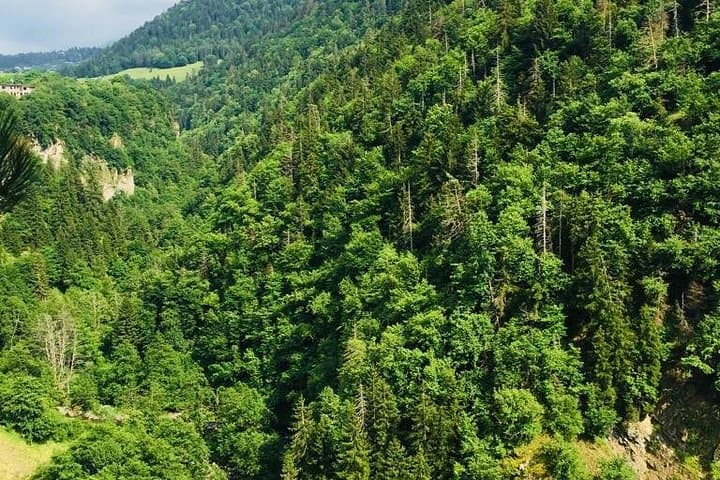
Steam rises from the spring-side railings as you step into Borjomi Mineral Water Park, the cold air tasting faintly metallic and alive. Pine slopes loom like watchful neighbors; the river threads through town and seems to dare you to follow it upstream toward alpine meadows and old estates.
Steam rises from the spring-side railings as you step into Borjomi Mineral Water Park, the cold air tasting faintly metallic and alive. Pine slopes loom like watchful neighbors; the river threads through town and seems to dare you to follow it upstream toward alpine meadows and old estates.
This valley has been a crossroads for centuries — a Georgian alpine corridor cut by volcanic activity that left mineral-rich springs bubbling from fissures. In the 19th century the Romanovs made Likani Palace their summer retreat, and the spa culture that followed turned Borjomi into a health destination. Today wooden promenades and shaded kiosks frame the spring outlets; the park’s geology is visible in green-tinged terraces and the iron-scented water.
Culture here is practical and hospitable: local bottlers still collect from source, and market stalls sell small glass bottles for sampling. Outside the park, trails fan into Borjomi-Kharagauli National Park — pine, beech and spruce that shelter deer and bearded vultures.
Practical guidance: plan for a full day if you’re coming from Tbilisi; roads are winding and winter can add travel time. Bring a refillable bottle, a rain layer and good walking shoes — paths range from paved boardwalks to gravel forest tracks. Expect short climbs around viewpoints and modest, well-marked trails. Cash is useful for small purchases at the springs and cafés. Time your visit for morning light on the palace and late afternoon for softer colors in the park; the springs are busiest midday.