THE ADVENTURE COLLECTIVE® · Independent discovery and booking for outdoor travel

Explore West Iceland’s dramatic junction of lava, glacier and hot springs on a private day trip from Reykjavík. Visit Hraunfossar and Barnafoss, see Deildartunguhver’s boiling flow, and step into Snorri Sturluson’s Reykholt for history and geothermal intrigue.
Explore West Iceland’s dramatic junction of lava, glacier and hot springs on a private day trip from Reykjavík. Visit Hraunfossar and Barnafoss, see Deildartunguhver’s boiling flow, and step into Snorri Sturluson’s Reykholt for history and geothermal intrigue.
A morning in Borgarfjörður opens with a drive across low lava fields toward Hraunfossar, where a dozen clear streams pour out of the basalt like seams in the rock. The Hvítá river edges the canyon and the water seems to dare you forward, throwing light across the mossy banks. Nearby Barnafoss, with its churn and narrow gorge, dramatizes a local tale of children and a broken stone arch.
Verified experiences and guided adventures in the surrounding area.
Operated by Olafur Omarsson · Reykholt, West Iceland
A morning in Borgarfjörður opens with a drive across low lava fields toward Hraunfossar, where a dozen clear streams pour out of the basalt like seams in the rock. The Hvítá river edges the canyon and the water seems to dare you forward, throwing light across the mossy banks. Nearby Barnafoss, with its churn and narrow gorge, dramatizes a local tale of children and a broken stone arch.
Geology here reads like a slow-motion collision between glacier and fire: the falls issue from a lava flow fed by vents under Langjökull, while Deildartunguhver downstream is Iceland’s most powerful hot spring, spitting near-boiling water at roughly 180 liters per second. Reykholt crowns the route with cultural weight — Snorri Sturluson’s Snorrastofa and the man-made Snorralaug pool point to medieval literacy and early geothermal ingenuity.
Practical notes: this is a full-day, private guided loop from Reykjavík that mixes short walks and roadside viewpoints with museum stops and a farmhouse visit. Expect paved pullouts, short staircases and slick rock near water. There’s no public bathing at the archaeological Snorralaug; the hot spring area is for viewing and photography.
Timing, layers and respect are key: go early to avoid crowds at the falls, use waterproof footwear for wet viewpoints, and carry a small pack with snacks and a water bottle. Cameras reward patience — light shifts fast across the black lava and pale water — and speaking with locals at Borgarnes or the countryside stop lends the route its human scale.
easy.
7–9 hours.
Suitable for most fitness levels; involves short, low-impact walks and some stairs.
This private tour runs about 7–9 hours and typically departs from Reykjavík at 09:00 with return by mid- to late afternoon.
Only short, mostly easy walks and stair sections at viewpoints; paths near waterfalls can be wet and uneven so stable shoes are recommended.
No — Snorralaug is a protected archaeological pool and bathing is not permitted; Deildartunguhver is also for viewing, not swimming.
Snorrastofa admission is typically not included in the tour price; some viewpoints are freely accessible while specific museum entry may require a separate fee.
The route weaves natural history with human story: Reykholt was Snorri Sturluson’s home in the 13th century and shaped Icelandic literature and law.
These sites are geologically and archaeologically sensitive—stick to marked paths, avoid taking stones, and don’t bathe in protected pools.
Olafur Omarsson operates guided outdoor trips and adventures with an emphasis on safety, stewardship, and memorable experiences.
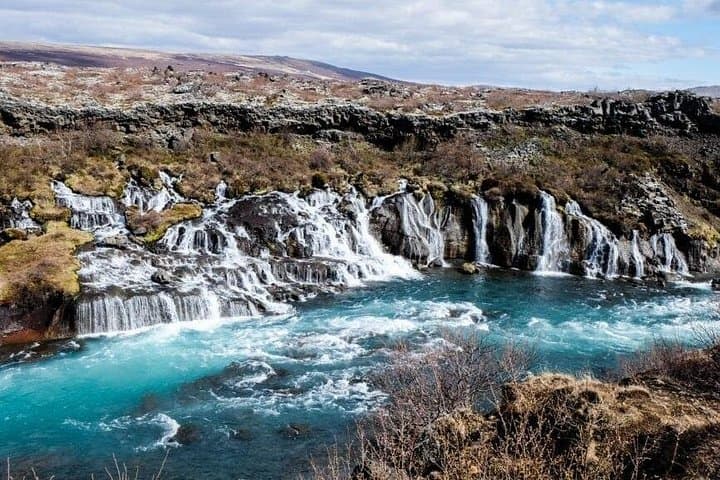
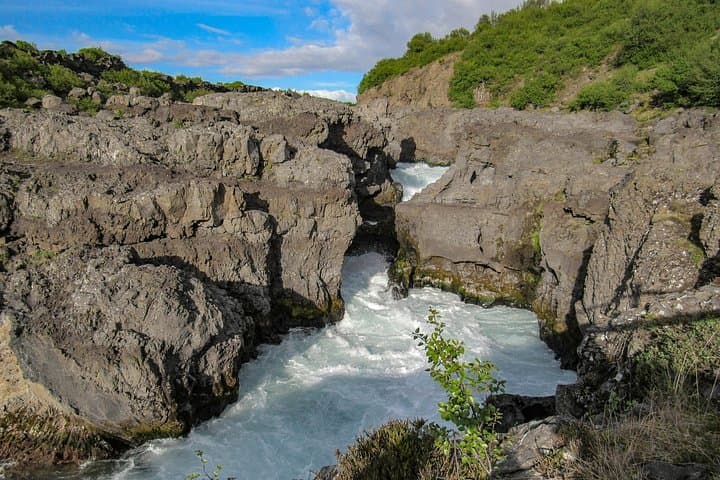
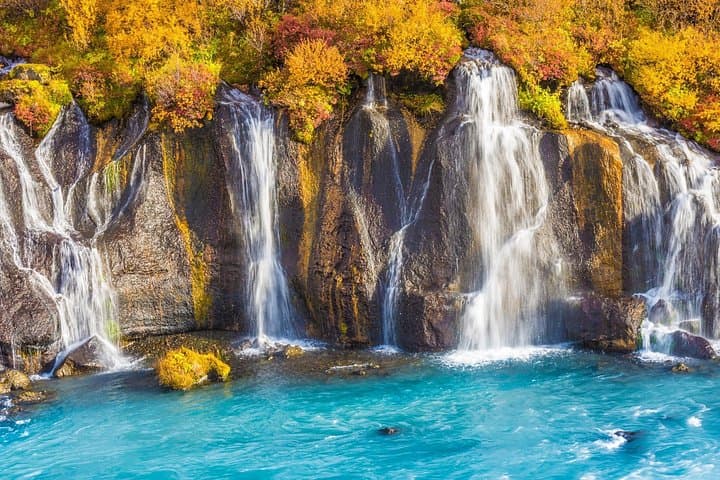
A morning in Borgarfjörður opens with a drive across low lava fields toward Hraunfossar, where a dozen clear streams pour out of the basalt like seams in the rock. The Hvítá river edges the canyon and the water seems to dare you forward, throwing light across the mossy banks. Nearby Barnafoss, with its churn and narrow gorge, dramatizes a local tale of children and a broken stone arch.
A morning in Borgarfjörður opens with a drive across low lava fields toward Hraunfossar, where a dozen clear streams pour out of the basalt like seams in the rock. The Hvítá river edges the canyon and the water seems to dare you forward, throwing light across the mossy banks. Nearby Barnafoss, with its churn and narrow gorge, dramatizes a local tale of children and a broken stone arch.
Geology here reads like a slow-motion collision between glacier and fire: the falls issue from a lava flow fed by vents under Langjökull, while Deildartunguhver downstream is Iceland’s most powerful hot spring, spitting near-boiling water at roughly 180 liters per second. Reykholt crowns the route with cultural weight — Snorri Sturluson’s Snorrastofa and the man-made Snorralaug pool point to medieval literacy and early geothermal ingenuity.
Practical notes: this is a full-day, private guided loop from Reykjavík that mixes short walks and roadside viewpoints with museum stops and a farmhouse visit. Expect paved pullouts, short staircases and slick rock near water. There’s no public bathing at the archaeological Snorralaug; the hot spring area is for viewing and photography.
Timing, layers and respect are key: go early to avoid crowds at the falls, use waterproof footwear for wet viewpoints, and carry a small pack with snacks and a water bottle. Cameras reward patience — light shifts fast across the black lava and pale water — and speaking with locals at Borgarnes or the countryside stop lends the route its human scale.