THE ADVENTURE COLLECTIVE® · Independent discovery and booking for outdoor travel

Get offshore from Kralendijk for a four-hour private trolling charter that targets blackfin and skipjack tuna, barracuda, and—if luck is on your side—mahi-mahi or wahoo. Perfect for families and first-timers, the trip pairs local expertise with easy-access fishing in Bonaire’s clear, deep waters.
Get offshore from Kralendijk for a four-hour private trolling charter that targets blackfin and skipjack tuna, barracuda, and—if luck is on your side—mahi-mahi or wahoo. Perfect for families and first-timers, the trip pairs local expertise with easy-access fishing in Bonaire’s clear, deep waters.
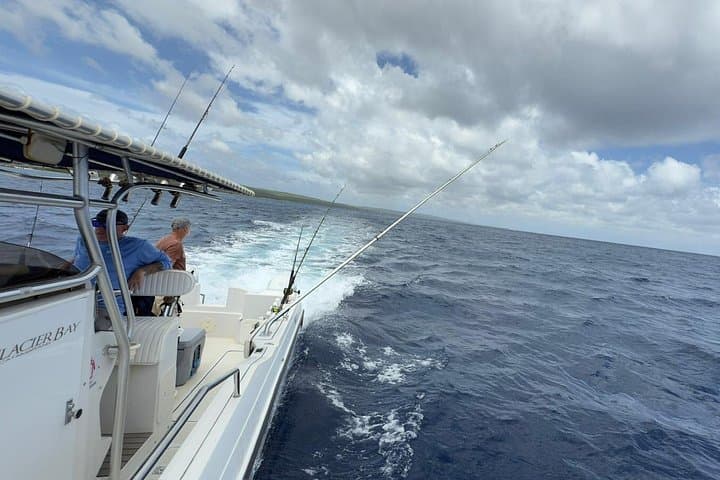
Heaving off Kralendijk just after first light, the island slides aft in a band of coral and pastel houses while the open Caribbean waits beyond the drop-off. Lines arc from the stern like antennae searching the blue; the captain trims lures, eyes scanning for the telltale flash that means a pelagic has found your offering. A half-day here is kinetic and quiet at once — engines hum, gulls wheel, and the water dares you to bait its hidden speed.
Verified experiences and guided adventures in the surrounding area.
Operated by Aqua Fun Bonaire · Kralendijk, Bonaire
Heaving off Kralendijk just after first light, the island slides aft in a band of coral and pastel houses while the open Caribbean waits beyond the drop-off. Lines arc from the stern like antennae searching the blue; the captain trims lures, eyes scanning for the telltale flash that means a pelagic has found your offering. A half-day here is kinetic and quiet at once — engines hum, gulls wheel, and the water dares you to bait its hidden speed.
Bonaire’s coastline is not a gentle slope. The fringing reef holds clear shallows close to shore, then the seafloor falls away fast — a geological edge that funnels nutrient-rich currents and attracts fast-swimming predators. Indigenous Caiquetio people once fished these waters; later, European salt works and small-scale commercial fisheries shaped the island’s relationship with the sea. Today sport charters balance tradition and tourism, with captains passing down local knowledge about currents, birds that mark bait schools, and the seasonal habits of tuna and mahi-mahi.
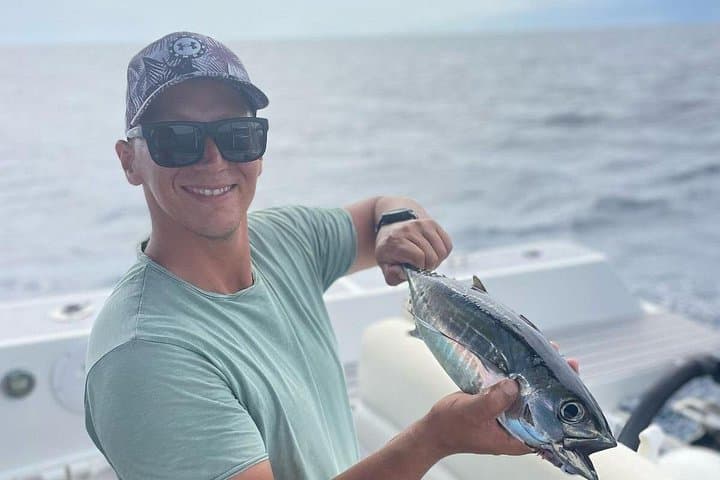
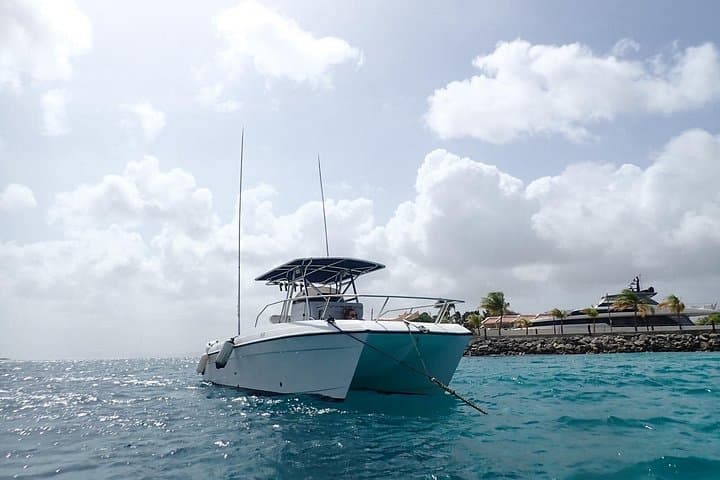
The boat in these half-day trips is outfitted for comfort and safety, built to sprint to the blue where blackfin and skipjack tuna court the surface. Trolling artificial lures is standard: you don’t need to bait hooks or cast, but you do need patience and a willingness to fight a powerful, unpredictable fish. Expect barracuda near structure, and flashes of dorado (mahi-mahi) or wahoo when the water and season align.
Practicalities are straightforward. Book a private charter for up to six people to keep lines manageable; most trips last four hours and depart from Kralendijk or the port. Morning runs catch cooler seas and active fish; late afternoons can be equally productive as the sun slants and bait moves. Bring reef-safe, high-SPF sunscreen, a hat, polarized sunglasses, and a light windbreaker for spray and shade. If you get seasick, take medication before boarding and sit in the center of the boat.
Captains supply rods, reels, tackle, snacks and beverages, and will coach beginners through hookup and landing. Respect local fishing rules: practice selective harvesting, ask about size limits, and consider catch-and-release for larger breeding fish. For families, the trip balances excitement with safety — life vests are provided and the crew keeps kids involved.
A half-day aboard a Bonaire fishing charter delivers more than a trophy shot; it hands you a short, sharp education in the ocean’s moods. You’ll come back with salt in your hair, a better sense of currents and bait behavior, and stories of the one that took the lure and refused to give up.
easy.
4 hours.
Moderate: minimal hiking or lifting, but you should be able to stand for periods and handle short bursts of exertion when fighting fish.
No — the crew provides gear and coaching; anglers of all levels are welcome on this private charter.
The trip accommodates up to six people, making it ideal for families or small groups.
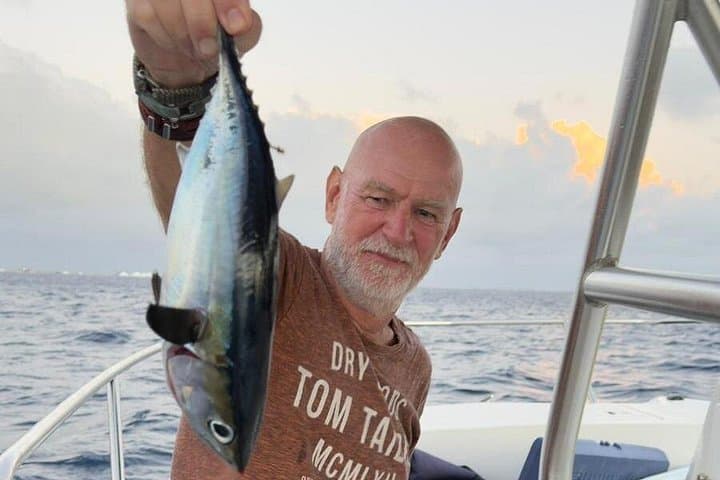
Expect blackfin and skipjack tuna, barracuda, and seasonally mahi-mahi or wahoo depending on currents and temperature.
Yes — children are welcome, but infants must sit on an adult’s lap and parents should inform the operator of ages during booking.
No fishing license is required for passengers on licensed charter trips; the operator handles legal compliance.
Pickup from the port is available; communicate your ship name, docking and departure times when booking to coordinate logistics.
Bonaire’s waters have long supported indigenous subsistence fishing and later small-scale commercial fleets; the island’s salt pans and maritime culture shaped local coastal livelihoods.
Charters on Bonaire often promote catch-and-release and use reef-safe products; support operators who follow size limits and avoid stressing spawning aggregations.
Aqua Fun Bonaire operates guided outdoor trips and adventures with an emphasis on safety, stewardship, and memorable experiences.
Heaving off Kralendijk just after first light, the island slides aft in a band of coral and pastel houses while the open Caribbean waits beyond the drop-off. Lines arc from the stern like antennae searching the blue; the captain trims lures, eyes scanning for the telltale flash that means a pelagic has found your offering. A half-day here is kinetic and quiet at once — engines hum, gulls wheel, and the water dares you to bait its hidden speed.
Heaving off Kralendijk just after first light, the island slides aft in a band of coral and pastel houses while the open Caribbean waits beyond the drop-off. Lines arc from the stern like antennae searching the blue; the captain trims lures, eyes scanning for the telltale flash that means a pelagic has found your offering. A half-day here is kinetic and quiet at once — engines hum, gulls wheel, and the water dares you to bait its hidden speed.
Bonaire’s coastline is not a gentle slope. The fringing reef holds clear shallows close to shore, then the seafloor falls away fast — a geological edge that funnels nutrient-rich currents and attracts fast-swimming predators. Indigenous Caiquetio people once fished these waters; later, European salt works and small-scale commercial fisheries shaped the island’s relationship with the sea. Today sport charters balance tradition and tourism, with captains passing down local knowledge about currents, birds that mark bait schools, and the seasonal habits of tuna and mahi-mahi.
The boat in these half-day trips is outfitted for comfort and safety, built to sprint to the blue where blackfin and skipjack tuna court the surface. Trolling artificial lures is standard: you don’t need to bait hooks or cast, but you do need patience and a willingness to fight a powerful, unpredictable fish. Expect barracuda near structure, and flashes of dorado (mahi-mahi) or wahoo when the water and season align.
Practicalities are straightforward. Book a private charter for up to six people to keep lines manageable; most trips last four hours and depart from Kralendijk or the port. Morning runs catch cooler seas and active fish; late afternoons can be equally productive as the sun slants and bait moves. Bring reef-safe, high-SPF sunscreen, a hat, polarized sunglasses, and a light windbreaker for spray and shade. If you get seasick, take medication before boarding and sit in the center of the boat.
Captains supply rods, reels, tackle, snacks and beverages, and will coach beginners through hookup and landing. Respect local fishing rules: practice selective harvesting, ask about size limits, and consider catch-and-release for larger breeding fish. For families, the trip balances excitement with safety — life vests are provided and the crew keeps kids involved.
A half-day aboard a Bonaire fishing charter delivers more than a trophy shot; it hands you a short, sharp education in the ocean’s moods. You’ll come back with salt in your hair, a better sense of currents and bait behavior, and stories of the one that took the lure and refused to give up.