THE ADVENTURE COLLECTIVE® · Independent discovery and booking for outdoor travel

Learn to stand up paddle board in the calm backwaters of Bon Secour National Wildlife Refuge. This 75-minute lesson-plus-tour blends hands-on instruction with close wildlife viewing on protected Alabama coastal waters.
Learn to stand up paddle board in the calm backwaters of Bon Secour National Wildlife Refuge. This 75-minute lesson-plus-tour blends hands-on instruction with close wildlife viewing on protected Alabama coastal waters.
Dawn lifts off the horizon in a band of pale coral as you push from a sandbar into glassy water. The paddle clicks, the board answers, and the inlet narrows into a ribbon of tidal creek framed by salt grass and low mangrove-like scrub. A guide at your shoulder demonstrates a sweep stroke; you mirror it, feel the board track straight, and for a heartbeat the rest of the world is simply the rhythm of paddle and tide.
Verified experiences and guided adventures in the surrounding area.
Operated by Pure Aloha Adventures · Gulf Shores, Alabama
Dawn lifts off the horizon in a band of pale coral as you push from a sandbar into glassy water. The paddle clicks, the board answers, and the inlet narrows into a ribbon of tidal creek framed by salt grass and low mangrove-like scrub. A guide at your shoulder demonstrates a sweep stroke; you mirror it, feel the board track straight, and for a heartbeat the rest of the world is simply the rhythm of paddle and tide.
This is Bon Secour National Wildlife Refuge, an unhurried stretch of Alabama coast set aside in the late 20th century to protect nesting shorebirds and coastal marsh habitat. The refuge occupies a barrier-island system shaped by Gulf currents and seasonally shifting sand, where shallow bays, oyster bars and tidal creeks create a mosaic of calm water ideal for first-time paddlers.
Culturally the area bears the imprint of Gulf fishing towns — trap lines, small boat yards and a diet built on shrimp and oysters — and the refuge itself is a reminder of the compromise between coastal development and habitat protection. Geology is visible underfoot: you’ll glide over silty flats, past submerged seagrass beds that foster juvenile fish and feed migratory birds.
Practicalities are straightforward. The experience begins with a land lesson covering stance, basic strokes and how to recover from a fall. From there, a roughly 60-minute guided circuit takes you through protected waters where ospreys and wading birds peer down from perches. Expect flat water, a gentle current and close-up wildlife viewing rather than ocean surf. The operator supplies board, paddle, leash and life jacket; the tour is family-friendly (minimum age 4) and rated easy for all fitness levels.
Key planning notes: mornings are best — winds typically pick up midafternoon — and tides affect how much shoreline and mudflat you’ll see. Wear reef shoes or quick-dry sandals, sun protection and bring water in a secure bottle. Parking directions from the operator are specific: pull straight in and park on the left near the white truck to reach the launch, not the trailhead. The tour runs about 75 minutes and groups are kept small so guides can point out birds, explain local ecology and tailor instruction to beginners.
For travelers wanting a compact, low-stress introduction to stand up paddle boarding, this refuge tour pairs skill-building with meaningful nature time. It’s the kind of outing that leaves you more confident with a paddle in hand and a keener eye for how these shallow shorelines support the Gulf’s food web.
easy.
1–1.5 hours.
Suitable for beginners and families; should be able to stand and lift a board for short distances.
No — the tour includes a land-based lesson covering stance, strokes and basic recovery; guides work with beginners throughout the session.
Minimum age is 4 years old; children should be accompanied by an adult and will use appropriately sized equipment.
Tours are cancelled for poor weather; the operator requires cancellation 24 hours in advance for a full refund and may reschedule if winds or storms make launch unsafe.
Yes — all necessary equipment including lifejackets, boards, paddles and leashes are supplied as part of the booking.
Follow operator directions: pull straight in and park on the left near the white truck at the launch area, not the trailhead parking signs.
You can bring waterproof cases or drybags for phones; guides recommend securing devices to avoid dropping them in shallow water.
Bon Secour National Wildlife Refuge was established to conserve critical habitat for nesting shorebirds and coastal species, protecting the barrier island's fragile shoreline from development pressures.
Stay on water channels and avoid landing on marked nesting islands; the operator enforces no-landing rules to protect nesting birds and fragile marshes.
Pure Aloha Adventures operates guided outdoor trips and adventures with an emphasis on safety, stewardship, and memorable experiences.
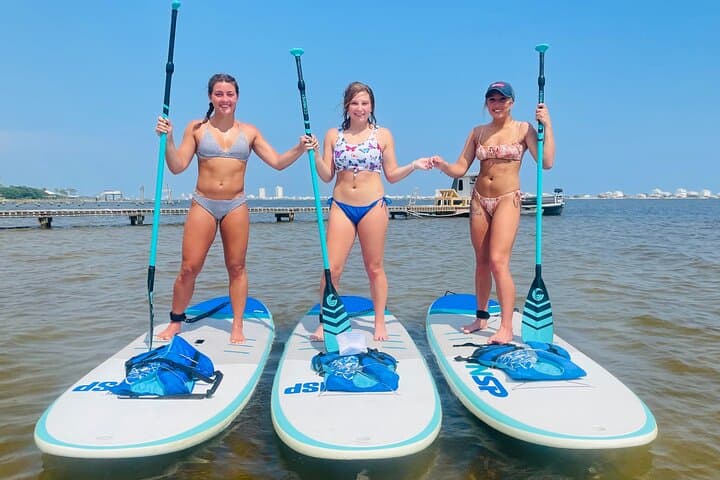
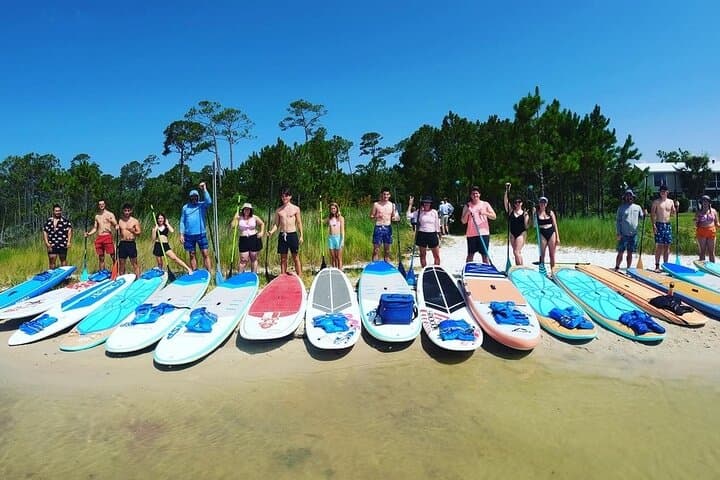
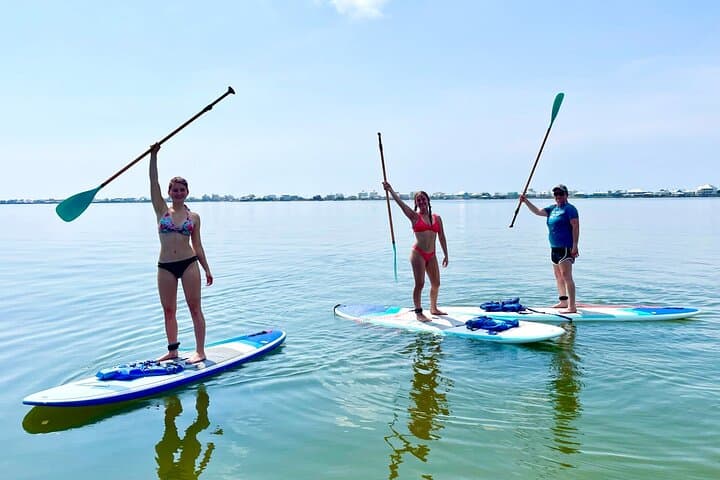
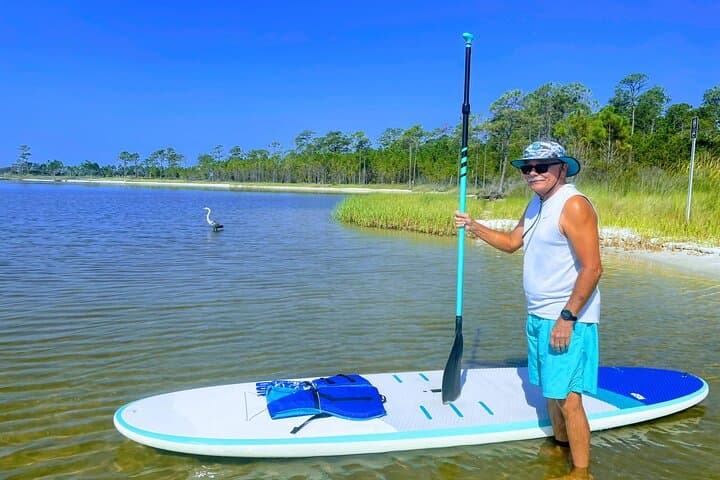
Dawn lifts off the horizon in a band of pale coral as you push from a sandbar into glassy water. The paddle clicks, the board answers, and the inlet narrows into a ribbon of tidal creek framed by salt grass and low mangrove-like scrub. A guide at your shoulder demonstrates a sweep stroke; you mirror it, feel the board track straight, and for a heartbeat the rest of the world is simply the rhythm of paddle and tide.
Dawn lifts off the horizon in a band of pale coral as you push from a sandbar into glassy water. The paddle clicks, the board answers, and the inlet narrows into a ribbon of tidal creek framed by salt grass and low mangrove-like scrub. A guide at your shoulder demonstrates a sweep stroke; you mirror it, feel the board track straight, and for a heartbeat the rest of the world is simply the rhythm of paddle and tide.
This is Bon Secour National Wildlife Refuge, an unhurried stretch of Alabama coast set aside in the late 20th century to protect nesting shorebirds and coastal marsh habitat. The refuge occupies a barrier-island system shaped by Gulf currents and seasonally shifting sand, where shallow bays, oyster bars and tidal creeks create a mosaic of calm water ideal for first-time paddlers.
Culturally the area bears the imprint of Gulf fishing towns — trap lines, small boat yards and a diet built on shrimp and oysters — and the refuge itself is a reminder of the compromise between coastal development and habitat protection. Geology is visible underfoot: you’ll glide over silty flats, past submerged seagrass beds that foster juvenile fish and feed migratory birds.
Practicalities are straightforward. The experience begins with a land lesson covering stance, basic strokes and how to recover from a fall. From there, a roughly 60-minute guided circuit takes you through protected waters where ospreys and wading birds peer down from perches. Expect flat water, a gentle current and close-up wildlife viewing rather than ocean surf. The operator supplies board, paddle, leash and life jacket; the tour is family-friendly (minimum age 4) and rated easy for all fitness levels.
Key planning notes: mornings are best — winds typically pick up midafternoon — and tides affect how much shoreline and mudflat you’ll see. Wear reef shoes or quick-dry sandals, sun protection and bring water in a secure bottle. Parking directions from the operator are specific: pull straight in and park on the left near the white truck to reach the launch, not the trailhead. The tour runs about 75 minutes and groups are kept small so guides can point out birds, explain local ecology and tailor instruction to beginners.
For travelers wanting a compact, low-stress introduction to stand up paddle boarding, this refuge tour pairs skill-building with meaningful nature time. It’s the kind of outing that leaves you more confident with a paddle in hand and a keener eye for how these shallow shorelines support the Gulf’s food web.