THE ADVENTURE COLLECTIVE® · Independent discovery and booking for outdoor travel

Solve clues through Bologna’s medieval streets with a self-guided audio scavenger hunt that visits the Two Towers and key historic sites. Walk 2.4 km at your own pace while learning local history and testing observation skills.
Solve clues through Bologna’s medieval streets with a self-guided audio scavenger hunt that visits the Two Towers and key historic sites. Walk 2.4 km at your own pace while learning local history and testing observation skills.
You step out from under a long arcade into a limestone square, the Two Towers cutting a vertical line against the sky while cobbles hum underfoot. The scavenger hunt begins here—an app leading you through narrow streets, an audio guide narrating legends as you solve a riddle and move on.
Verified experiences and guided adventures in the surrounding area.
Operated by World City Trail · Bologna, Emilia-Romagna
You step out from under a long arcade into a limestone square, the Two Towers cutting a vertical line against the sky while cobbles hum underfoot. The scavenger hunt begins here—an app leading you through narrow streets, an audio guide narrating legends as you solve a riddle and move on.
Bologna's urban fabric dates to Etruscan and Roman grids, then layered with medieval towers and porticoes added as the city grew. The Two Towers are a visible reminder of the civic rivalries of the 12th century; the University of Bologna, founded in 1088, gives the city a scholarly pulse. The geology is local limestone and clay, shaping narrow alleys and shallow basements; architecture is red-brick, sometimes plastered, and punctuated by church façades and market stalls.
Culture here is lived outdoors: markets hum in the morning, cafés spill onto corners at noon, and artisans still work behind unassuming doors. The tour visits a string of civic and religious landmarks but stays outside, so you’ll experience façades, arcades and public squares rather than interiors.
Practically: expect roughly 2.4 km of walking (about 30–45 minutes moving time) stretched across about two hours to allow for puzzles, photos and coffee stops. Cobblestones and porticoes mean flat-soled comfort and layers for changing weather. Bring charged phone, data, and headphones—the self-guided app is the route. Move at your own pace, pause the game to eat, and pick up local insights as you go.
easy.
2 hours.
Suitable for most fitness levels; you should be able to walk 2–3 km over cobbled and paved surfaces.
No—this scavenger hunt uses outdoor clues, so entering buildings is optional and any paid entrances are at your discretion.
Yes—it's designed for families, teams, and small groups; puzzles can be done collaboratively and the pace is self-directed.
The app offers English, German, French, Dutch, Italian and Spanish audio tracks for the narration and clues.
Yes—the activity requires an internet connection for navigation and audio playback, so ensure mobile data or local Wi‑Fi access.
Bologna grew wealthy in the Middle Ages; its medieval towers and the University of Bologna (est. 1088) shaped the city's civic and scholarly identity.
Walking tours are low-impact—stay on public paths, avoid touching frescoes or stonework, and carry out any trash to protect historic surfaces.
World City Trail operates guided outdoor trips and adventures with an emphasis on safety, stewardship, and memorable experiences.
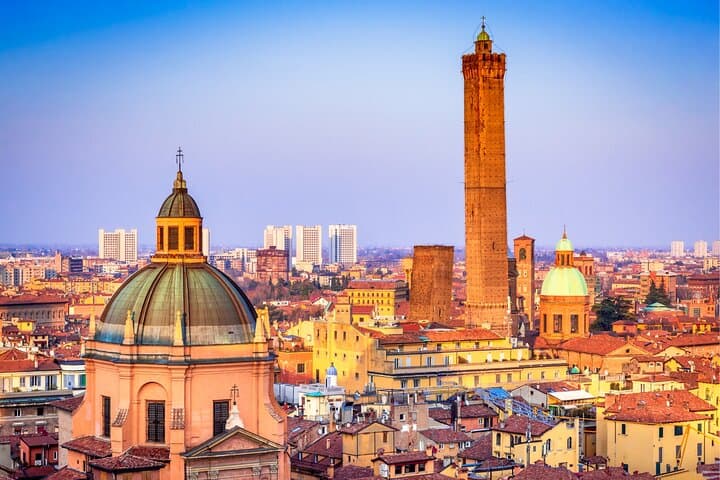
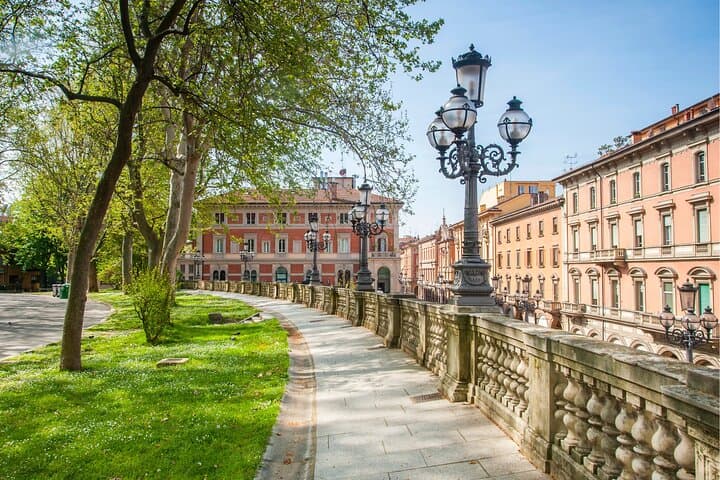
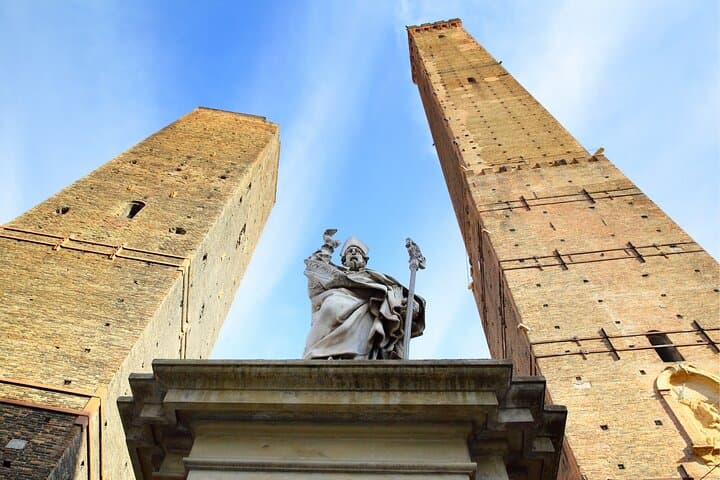
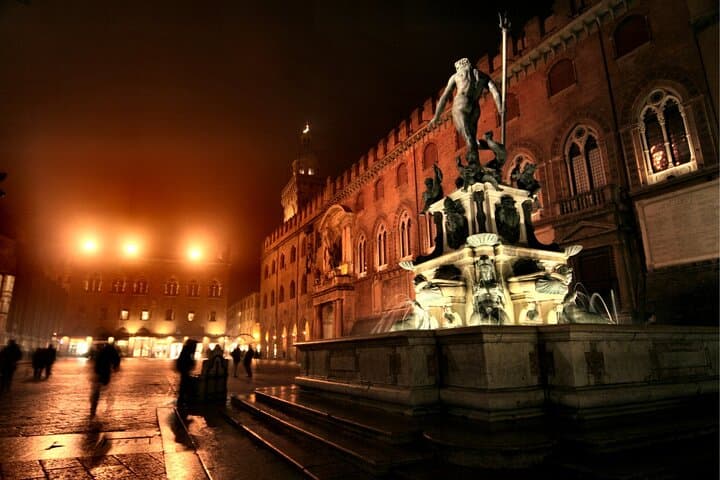
You step out from under a long arcade into a limestone square, the Two Towers cutting a vertical line against the sky while cobbles hum underfoot. The scavenger hunt begins here—an app leading you through narrow streets, an audio guide narrating legends as you solve a riddle and move on.
You step out from under a long arcade into a limestone square, the Two Towers cutting a vertical line against the sky while cobbles hum underfoot. The scavenger hunt begins here—an app leading you through narrow streets, an audio guide narrating legends as you solve a riddle and move on.
Bologna's urban fabric dates to Etruscan and Roman grids, then layered with medieval towers and porticoes added as the city grew. The Two Towers are a visible reminder of the civic rivalries of the 12th century; the University of Bologna, founded in 1088, gives the city a scholarly pulse. The geology is local limestone and clay, shaping narrow alleys and shallow basements; architecture is red-brick, sometimes plastered, and punctuated by church façades and market stalls.
Culture here is lived outdoors: markets hum in the morning, cafés spill onto corners at noon, and artisans still work behind unassuming doors. The tour visits a string of civic and religious landmarks but stays outside, so you’ll experience façades, arcades and public squares rather than interiors.
Practically: expect roughly 2.4 km of walking (about 30–45 minutes moving time) stretched across about two hours to allow for puzzles, photos and coffee stops. Cobblestones and porticoes mean flat-soled comfort and layers for changing weather. Bring charged phone, data, and headphones—the self-guided app is the route. Move at your own pace, pause the game to eat, and pick up local insights as you go.