THE ADVENTURE COLLECTIVE® · Independent discovery and booking for outdoor travel

Explore Bolnisi’s layered history on a full-day cultural tour that pairs a fifth-century Georgian basilica with the German-founded Katharinenfeld. Walk village lanes, visit wine cellars and a local museum while learning how two cultures lived side-by-side.
Explore Bolnisi’s layered history on a full-day cultural tour that pairs a fifth-century Georgian basilica with the German-founded Katharinenfeld. Walk village lanes, visit wine cellars and a local museum while learning how two cultures lived side-by-side.
You arrive from Tbilisi with the road unwinding through low, sun-baked plains; wind-tanned poplars line the route and the air carries the dry, mineral scent of Kvemo Kartli. In Bolnisi the stone church of Sioni rises patient and plain, its fifth-century ashlar and the famed asomtavruli inscription anchoring the present to an early Georgian alphabet.
Verified experiences and guided adventures in the surrounding area.
Operated by TripsInGeo · Bolnisi, Kvemo Kartli
You arrive from Tbilisi with the road unwinding through low, sun-baked plains; wind-tanned poplars line the route and the air carries the dry, mineral scent of Kvemo Kartli. In Bolnisi the stone church of Sioni rises patient and plain, its fifth-century ashlar and the famed asomtavruli inscription anchoring the present to an early Georgian alphabet.
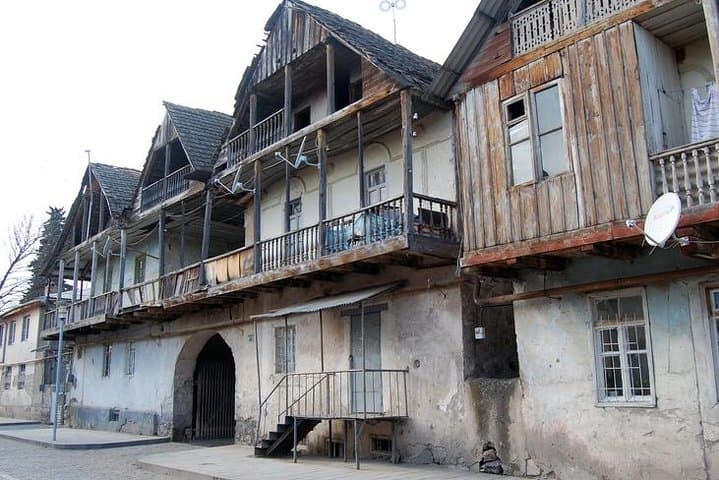
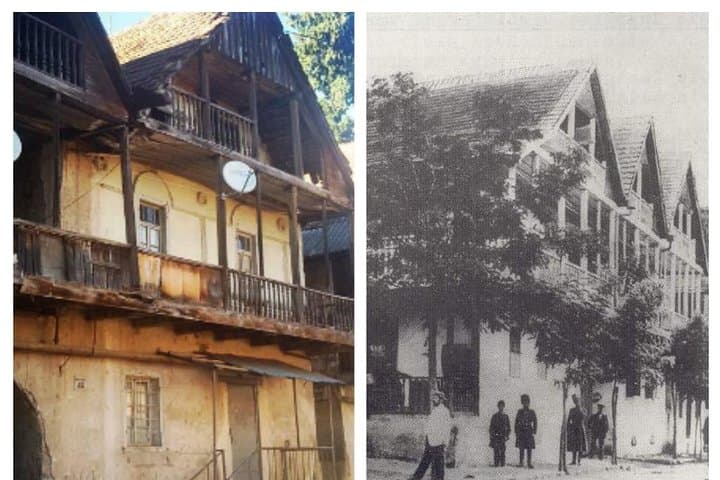
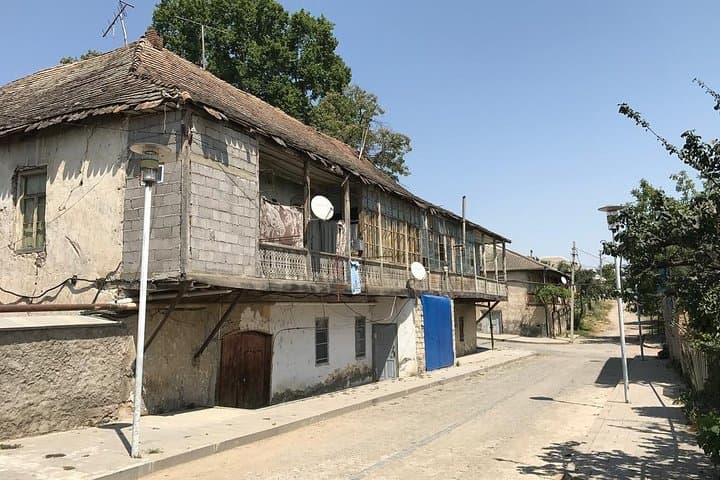
This day tour threads together two overlapping stories: the deep Georgian past visible in medieval churches and inscriptions, and the later, quieter German chapter when settlers founded Katharinenfeld and built cellars, mills and homes that still shape the townscape. Geologically the area sits on gentle foothills and alluvial plains cut by small streams; soils favor vineyards and the old German wine cellars speak to that agricultural history. Culturally, you’ll see how German craftsmanship — from masonry to millworks — mixed with Georgian religious life rather than erased it.
Expect mostly short walks between sites on village lanes and uneven churchyard paths; the schedule covers about 8–9 hours with stops at Bolnisi Sioni, Peter and Paul Church on Mount Elias, the local history museum and surviving Katharinenfeld structures. Practical notes: bring sturdy walking shoes for gravel and stone, dress modestly in churches, carry cash for small museum donations or local snacks, and plan for strong sun in summer or variable winds in shoulder seasons. Guides typically provide bottled water and transport with onboard Wi‑Fi and air conditioning. The tour is compact but rich — a gentle cultural walk through layered histories and visible traces of two peoples shaping one landscape.
easy.
8–9 hours.
Suitable for most fitness levels; requires ability to walk short distances on uneven ground several times during the day
The tour runs approximately 8–9 hours (480–540 minutes), typically as a private day trip from Tbilisi with hotel pickup and drop-off.
Visits to Bolnisi Sioni and other churches are included; modest dress is required and individual donations may be requested.
Yes — the tour is rated easy with short walks; however, some cobbled or sloped areas can be tricky for strollers or limited mobility without assistance.
Guides commonly speak English and Georgian; confirm language needs when booking to ensure your guide is appropriate.
Bolnisi preserves a rare fusion: a fifth-century Georgian basilica with one of the earliest asomtavruli inscriptions, alongside a 19th–20th-century German-settler legacy in Katharinenfeld.
Visitors are encouraged to stick to marked paths around archaeological sites and to avoid disturbing fragile stonework; small donations to local museums help preserve artifacts and conservation efforts.
TripsInGeo operates guided outdoor trips and adventures with an emphasis on safety, stewardship, and memorable experiences.
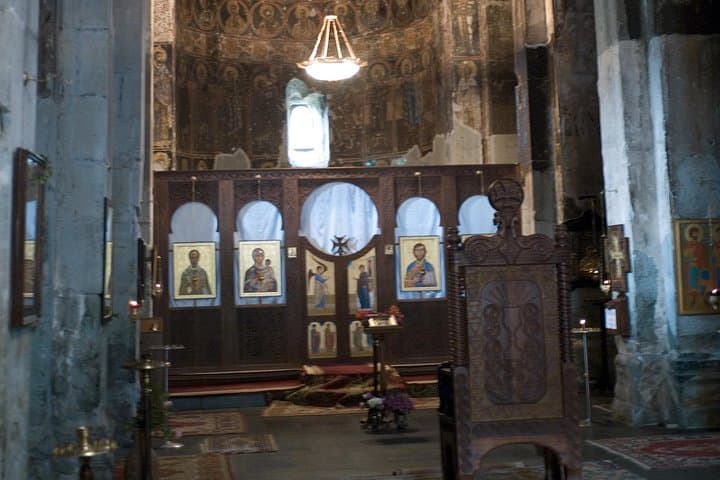
You arrive from Tbilisi with the road unwinding through low, sun-baked plains; wind-tanned poplars line the route and the air carries the dry, mineral scent of Kvemo Kartli. In Bolnisi the stone church of Sioni rises patient and plain, its fifth-century ashlar and the famed asomtavruli inscription anchoring the present to an early Georgian alphabet.
You arrive from Tbilisi with the road unwinding through low, sun-baked plains; wind-tanned poplars line the route and the air carries the dry, mineral scent of Kvemo Kartli. In Bolnisi the stone church of Sioni rises patient and plain, its fifth-century ashlar and the famed asomtavruli inscription anchoring the present to an early Georgian alphabet.
This day tour threads together two overlapping stories: the deep Georgian past visible in medieval churches and inscriptions, and the later, quieter German chapter when settlers founded Katharinenfeld and built cellars, mills and homes that still shape the townscape. Geologically the area sits on gentle foothills and alluvial plains cut by small streams; soils favor vineyards and the old German wine cellars speak to that agricultural history. Culturally, you’ll see how German craftsmanship — from masonry to millworks — mixed with Georgian religious life rather than erased it.
Expect mostly short walks between sites on village lanes and uneven churchyard paths; the schedule covers about 8–9 hours with stops at Bolnisi Sioni, Peter and Paul Church on Mount Elias, the local history museum and surviving Katharinenfeld structures. Practical notes: bring sturdy walking shoes for gravel and stone, dress modestly in churches, carry cash for small museum donations or local snacks, and plan for strong sun in summer or variable winds in shoulder seasons. Guides typically provide bottled water and transport with onboard Wi‑Fi and air conditioning. The tour is compact but rich — a gentle cultural walk through layered histories and visible traces of two peoples shaping one landscape.