THE ADVENTURE COLLECTIVE® · Independent discovery and booking for outdoor travel

Float above the Bolivar Peninsula in an open-cockpit biplane for a close look at one of Texas’s two iron lighthouses and the busy Ship Channel. This short, 40-minute experience pairs low-level coastal views with practical prep—weight limits, weather sensitivity, and what to bring.
Float above the Bolivar Peninsula in an open-cockpit biplane for a close look at one of Texas’s two iron lighthouses and the busy Ship Channel. This short, 40-minute experience pairs low-level coastal views with practical prep—weight limits, weather sensitivity, and what to bring.
You climb into an open-cockpit biplane, the engine’s rhythm setting the pace, and the Gulf of Mexico widens beneath you like a restless sheet of silver. The pilot lifts off from Galveston and the shoreline unspools: East Beach and Stewart Beach shrink into stripes while the Ship Channel ferries container giants like slow, deliberate beasts. The Bolivar Point Lighthouse — an iron structure first lit in 1872 and one of only two iron lighthouses in Texas — comes into view as you circle the peninsula, sluicing historic light over mudflats and marsh.
Verified experiences and guided adventures in the surrounding area.
Operated by Scallywag Air Biplane Rides · Galveston, Texas
You climb into an open-cockpit biplane, the engine’s rhythm setting the pace, and the Gulf of Mexico widens beneath you like a restless sheet of silver. The pilot lifts off from Galveston and the shoreline unspools: East Beach and Stewart Beach shrink into stripes while the Ship Channel ferries container giants like slow, deliberate beasts. The Bolivar Point Lighthouse — an iron structure first lit in 1872 and one of only two iron lighthouses in Texas — comes into view as you circle the peninsula, sluicing historic light over mudflats and marsh.
Geology here is honest and immediate: sandy spits, tidal flats, and barrier beaches built by wind and current. Culturally, Galveston and the Bolivar Peninsula are defined by maritime trade, coastal fishing, and island-town resilience after storms. From the air you’ll see how human infrastructure and shifting coastline negotiate space — jetties, ship traffic, and the hawkish arcs of shorebirds.
Practically: the full experience runs about 35–40 minutes with roughly 22–25 minutes airborne. Rides are for up to two passengers with a combined weight limit of 400 lbs; riders age 6+ are permitted (minors require a guardian-signed waiver). Retro flying caps and goggles are provided, but bring a windproof layer and secure camera gear. The operator cancels in unsafe weather—arrive early, bring ID, and confirm weight and health restrictions on booking. Expect wind, salt spray, and spectacular low-level views; this is a short, high-impact flight that rewards clear skies and a readiness for wind and exposure.
easy.
35–40 minutes.
No special fitness required, but passengers must meet weight and basic health restrictions; not recommended for those with spinal, pregnancy, or serious heart conditions.
Expect approximately 22–25 minutes in the air within a 35–40 minute overall experience including briefing and boarding.
Riders must be at least 6 years old; younger passengers (6–15) require an accompanying adult and minors need a guardian-signed waiver. Maximum combined passenger weight is 400 lbs.
Flights are canceled for unsafe weather; the operator offers a full refund if you cancel at least 24 hours before the scheduled time or will cancel and rebook/refund if conditions prevent safe flying.
Yes—retro flying caps and goggles are provided as part of the experience; bring layered clothing for warmth and comfort.
Bolivar Point Lighthouse was first lit in 1872 and is notable as one of only two iron lighthouses in Texas, marking the entrance to Galveston Bay and the Ship Channel.
Coastal habitats here are fragile; avoid disturbing shorebirds and follow local guidance. Operators follow FAA rules—choose flights that maintain respectful altitudes over wildlife areas.
Scallywag Air Biplane Rides operates guided outdoor trips and adventures with an emphasis on safety, stewardship, and memorable experiences.
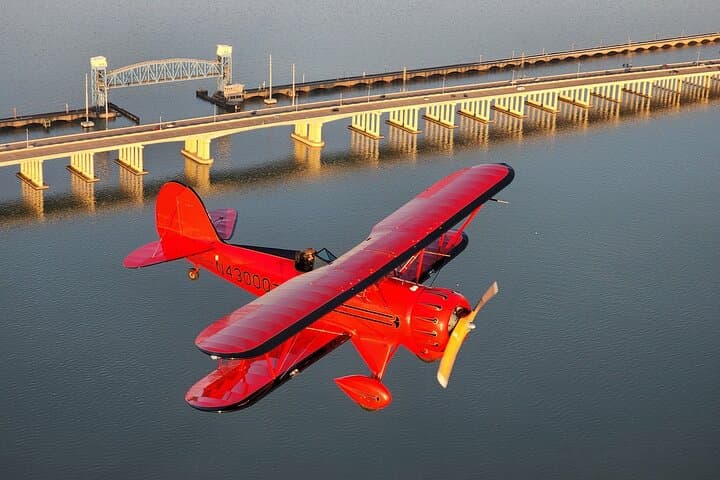
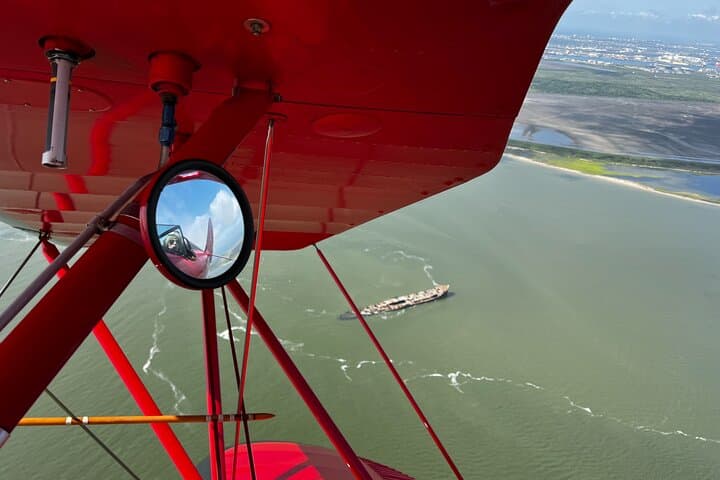
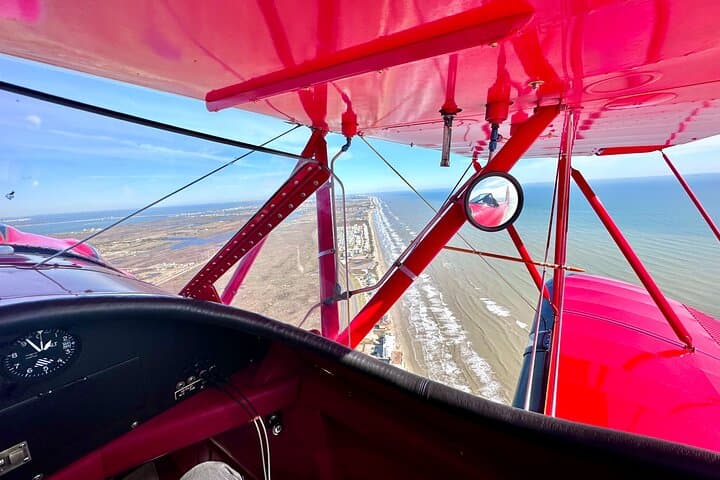
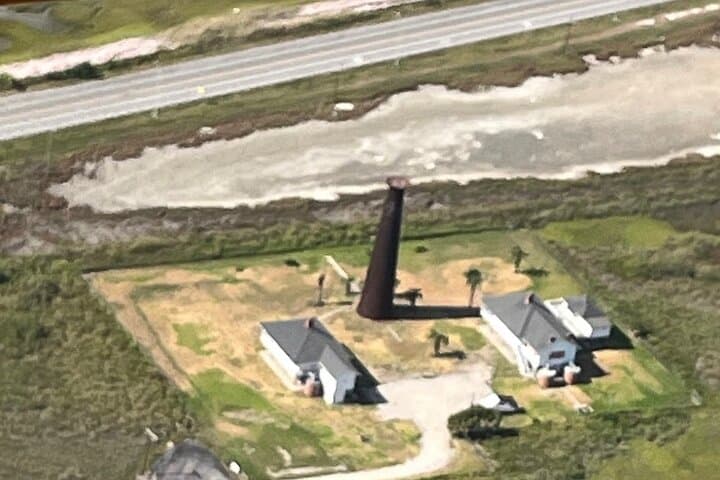
You climb into an open-cockpit biplane, the engine’s rhythm setting the pace, and the Gulf of Mexico widens beneath you like a restless sheet of silver. The pilot lifts off from Galveston and the shoreline unspools: East Beach and Stewart Beach shrink into stripes while the Ship Channel ferries container giants like slow, deliberate beasts. The Bolivar Point Lighthouse — an iron structure first lit in 1872 and one of only two iron lighthouses in Texas — comes into view as you circle the peninsula, sluicing historic light over mudflats and marsh.
You climb into an open-cockpit biplane, the engine’s rhythm setting the pace, and the Gulf of Mexico widens beneath you like a restless sheet of silver. The pilot lifts off from Galveston and the shoreline unspools: East Beach and Stewart Beach shrink into stripes while the Ship Channel ferries container giants like slow, deliberate beasts. The Bolivar Point Lighthouse — an iron structure first lit in 1872 and one of only two iron lighthouses in Texas — comes into view as you circle the peninsula, sluicing historic light over mudflats and marsh.
Geology here is honest and immediate: sandy spits, tidal flats, and barrier beaches built by wind and current. Culturally, Galveston and the Bolivar Peninsula are defined by maritime trade, coastal fishing, and island-town resilience after storms. From the air you’ll see how human infrastructure and shifting coastline negotiate space — jetties, ship traffic, and the hawkish arcs of shorebirds.
Practically: the full experience runs about 35–40 minutes with roughly 22–25 minutes airborne. Rides are for up to two passengers with a combined weight limit of 400 lbs; riders age 6+ are permitted (minors require a guardian-signed waiver). Retro flying caps and goggles are provided, but bring a windproof layer and secure camera gear. The operator cancels in unsafe weather—arrive early, bring ID, and confirm weight and health restrictions on booking. Expect wind, salt spray, and spectacular low-level views; this is a short, high-impact flight that rewards clear skies and a readiness for wind and exposure.