THE ADVENTURE COLLECTIVE® · Independent discovery and booking for outdoor travel

Drive up from Kampot into cool hill air to explore Popokvil Waterfall, Wat Sampov Pram, the Lok Yeay Mao Monument and the abandoned Old Catholic Church. This 4–5 hour day tour combines short walks, cultural sites and sweeping viewpoints with minimal hiking.
Drive up from Kampot into cool hill air to explore Popokvil Waterfall, Wat Sampov Pram, the Lok Yeay Mao Monument and the abandoned Old Catholic Church. This 4–5 hour day tour combines short walks, cultural sites and sweeping viewpoints with minimal hiking.
A ribbon of asphalt climbs out of Kampot and the lowland rice paddies give way to cool, green slopes; the road to Bokor National Park opens like a stage. By the time you crest the hill, mist brushes the abandoned French hill station and the air smells of damp earth and eucalyptus. Lok Yeay Mao’s carved figure presides over the viewpoint while the ruined Old Catholic Church crouches behind a scatter of tropical growth.
Verified experiences and guided adventures in the surrounding area.
Operated by Cambodia Tourist Car · Kampot, Kampot Province
A ribbon of asphalt climbs out of Kampot and the lowland rice paddies give way to cool, green slopes; the road to Bokor National Park opens like a stage. By the time you crest the hill, mist brushes the abandoned French hill station and the air smells of damp earth and eucalyptus. Lok Yeay Mao’s carved figure presides over the viewpoint while the ruined Old Catholic Church crouches behind a scatter of tropical growth.
Bokor’s story is as layered as its limestone ridges: once a French colonial retreat in the 1920s, then an eerie post-war ruin, and today a protected national park that mixes cultural relics with monsoon-fed waterfalls. Geologically the park is a coastal plateau of sandstone and long-steeped limestone, eroded into streams, cliffs and pockets of evergreen forest. Local belief in protective spirits like Yeay Mao threads through the shrines and hilltop temples you’ll visit.
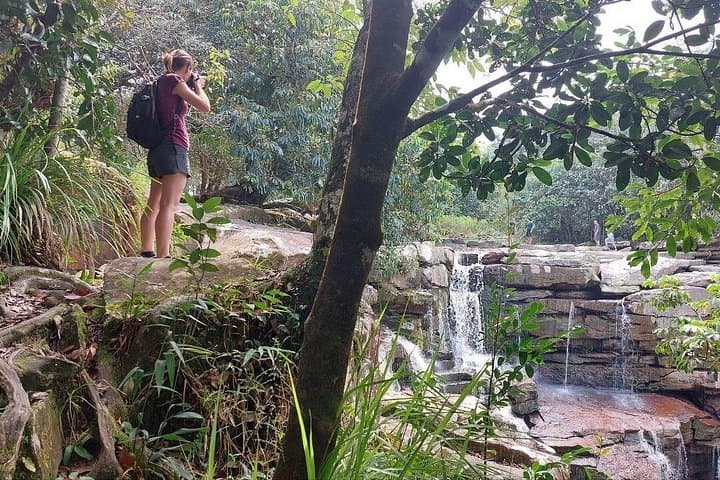
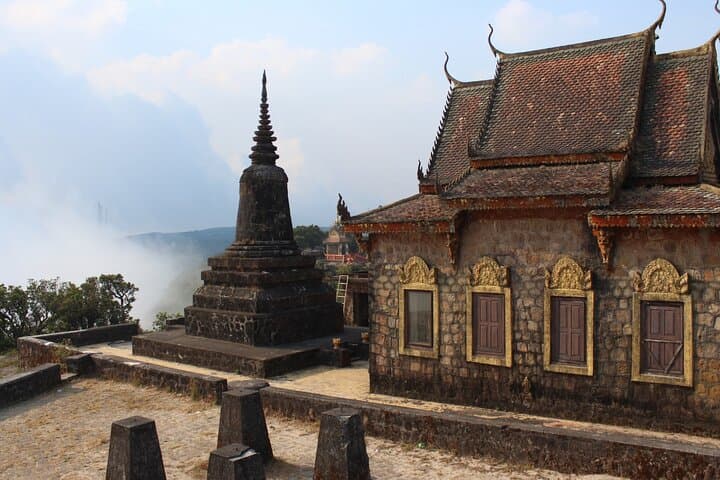
Expect short walks rather than long hikes: a 10–20 minute stroll to viewpoints, stepped climbs at Wat Sampov Pram and a roughly 15–30 minute approach at Popokvil Waterfall; surfaces range from paved viewpoints to muddy trails and slick rock near pools. The tour’s tempo favors photography and pause—bring layers for sudden wind and a rain layer in wet season.
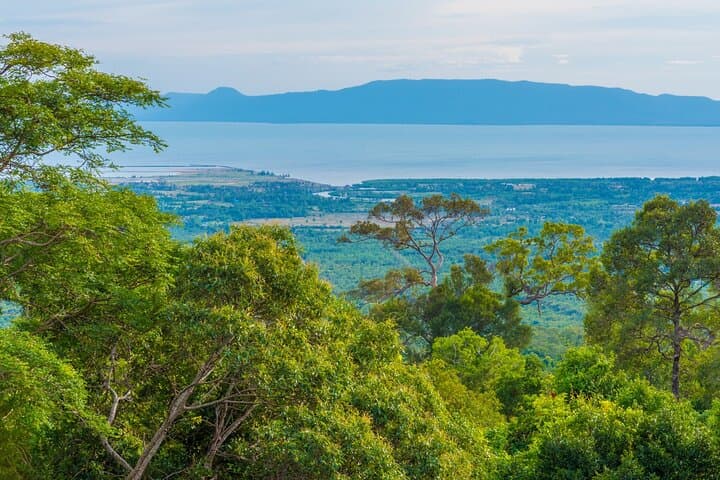
Practical notes: plan for 4–5 hours round-trip from Kampot, keep reusable water and sun protection handy, and leave time to explore the hill-station ruins safely. The route rewards curiosity—quiet pagodas, a cool plunge at Popokvil, and weathered concrete ghosts that frame the Gulf beyond.
easy.
4–5 hours.
Suitable for most fitness levels; expect several short walks, stairs at temples, and short uneven stretches.
The tour generally runs 4–5 hours, including travel time to and from Kampot and short stops at each site.
Yes—most stops require only brief walks, but there are stairs and uneven ground; mobility limitations should be discussed with the operator.
Typical packages include park entrance fees and tuk‑tuk transportation; confirm details with your booking as inclusions vary.
Late rainy season and early dry season (September–December) usually give the fullest falls and greener surrounding forest, but access is year-round.
Bokor was developed as a French hill station in the 1920s, leaving behind churches and casino ruins that reflect colonial-era architecture.
The park is a protected area—stay on trails, avoid feeding wildlife, and bring out any trash; tourism revenue helps fund local conservation efforts.
Cambodia Tourist Car operates guided outdoor trips and adventures with an emphasis on safety, stewardship, and memorable experiences.
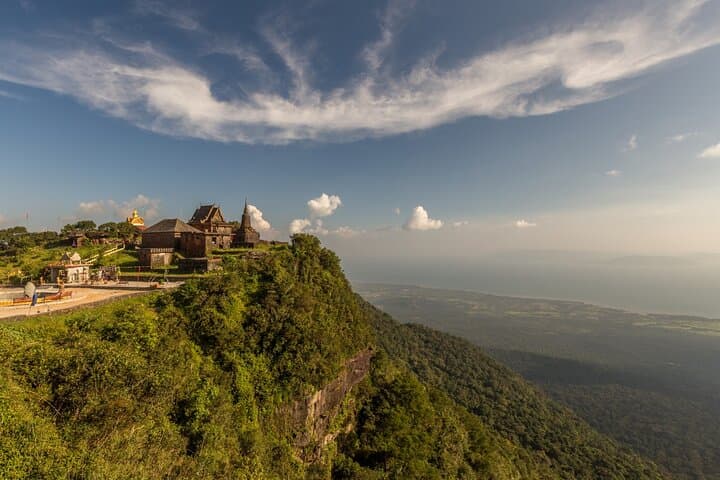
A ribbon of asphalt climbs out of Kampot and the lowland rice paddies give way to cool, green slopes; the road to Bokor National Park opens like a stage. By the time you crest the hill, mist brushes the abandoned French hill station and the air smells of damp earth and eucalyptus. Lok Yeay Mao’s carved figure presides over the viewpoint while the ruined Old Catholic Church crouches behind a scatter of tropical growth.
A ribbon of asphalt climbs out of Kampot and the lowland rice paddies give way to cool, green slopes; the road to Bokor National Park opens like a stage. By the time you crest the hill, mist brushes the abandoned French hill station and the air smells of damp earth and eucalyptus. Lok Yeay Mao’s carved figure presides over the viewpoint while the ruined Old Catholic Church crouches behind a scatter of tropical growth.
Bokor’s story is as layered as its limestone ridges: once a French colonial retreat in the 1920s, then an eerie post-war ruin, and today a protected national park that mixes cultural relics with monsoon-fed waterfalls. Geologically the park is a coastal plateau of sandstone and long-steeped limestone, eroded into streams, cliffs and pockets of evergreen forest. Local belief in protective spirits like Yeay Mao threads through the shrines and hilltop temples you’ll visit.
Expect short walks rather than long hikes: a 10–20 minute stroll to viewpoints, stepped climbs at Wat Sampov Pram and a roughly 15–30 minute approach at Popokvil Waterfall; surfaces range from paved viewpoints to muddy trails and slick rock near pools. The tour’s tempo favors photography and pause—bring layers for sudden wind and a rain layer in wet season.
Practical notes: plan for 4–5 hours round-trip from Kampot, keep reusable water and sun protection handy, and leave time to explore the hill-station ruins safely. The route rewards curiosity—quiet pagodas, a cool plunge at Popokvil, and weathered concrete ghosts that frame the Gulf beyond.