THE ADVENTURE COLLECTIVE® · Independent discovery and booking for outdoor travel

Walk from the Guildhall into the Bogside to trace the footsteps of Bloody Sunday, pass the iconic murals and finish at the Bloody Sunday monument. This 90‑minute guided tour combines survivor testimony, civic history and cultural landmarks for a clear-eyed look at Derry’s recent past.
Walk from the Guildhall into the Bogside to trace the footsteps of Bloody Sunday, pass the iconic murals and finish at the Bloody Sunday monument. This 90‑minute guided tour combines survivor testimony, civic history and cultural landmarks for a clear-eyed look at Derry’s recent past.
You step out from the Guildhall into a city where stone walls keep close company with modern life, the River Foyle murmuring a few blocks away as guide and group fall into step. The walking Bogside History Tour moves from the civic calm of the walls and drops into streets where paint and memory meet—mural faces watching as you pass, voices of survivors punctuating the route.
Verified experiences and guided adventures in the surrounding area.
Operated by Bogside History Tours · Derry / Londonderry, Northern Ireland
You step out from the Guildhall into a city where stone walls keep close company with modern life, the River Foyle murmuring a few blocks away as guide and group fall into step. The walking Bogside History Tour moves from the civic calm of the walls and drops into streets where paint and memory meet—mural faces watching as you pass, voices of survivors punctuating the route.
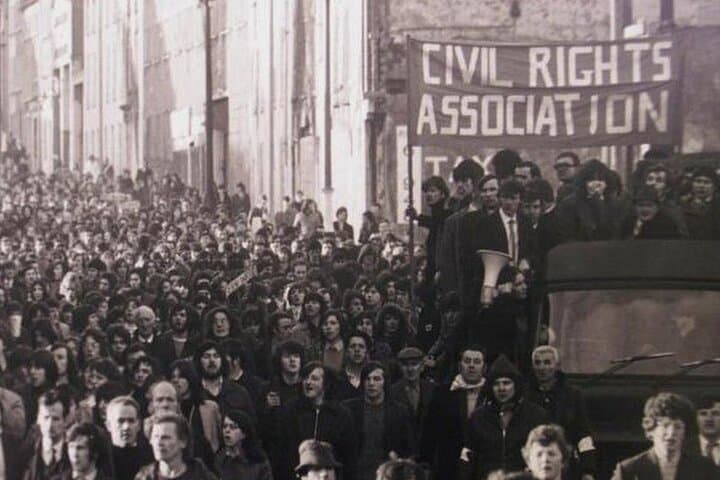
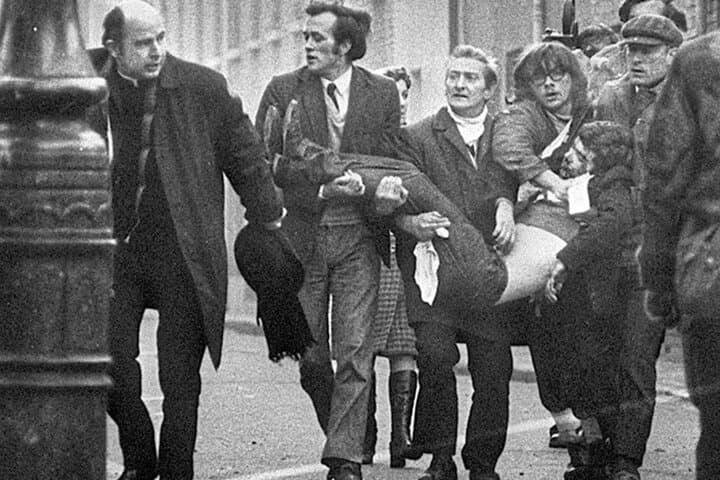
The tour threads history and place: the Battle of the Bogside in 1969, the escalation known as the Troubles, and the events of Bloody Sunday in 1972 that shaped local and international politics. Geologically, the low-lying Bogside sits near the Foyle floodplain, its streets laid over post-glacial alluvium that contrasts with the sandstone ramparts of the walled city. Culturally the area is a locus for community memory — the Bogside Murals and Free Derry Corner offer visual narratives that local artists and residents have guarded and explained for decades.
Expect a 90-minute, largely level walk with cobbles and occasional uneven pavements; the route pauses at the Museum of Free Derry, the murals, Free Derry Corner and ends at the Bloody Sunday monument on Rossville Street. Guides will include first-hand testimony at times; listening respectfully is essential.
Practical notes: bring weatherproof layers and sturdy shoes, allow time for photography and to visit the museum separately, and plan your arrival to the Guildhall a few minutes early. This is a sober, educational walk — pace yourself, hydrate, and be prepared to engage with difficult history.
easy.
1–1.5 hours.
Suitable for most fitness levels; requires standing and walking for up to 90 minutes over uneven surfaces.
The tour runs approximately 90 minutes and covers the Bogside area between the Guildhall and Rossville Street.
The operator notes wheelchair accessibility for major surfaces, but some streets include cobbles—contact the operator with specific requirements before booking.
The tour begins at Derry’s Guildhall in the city center and concludes at the Bloody Sunday monument on Rossville Street near Free Derry Corner.
Yes—children are welcome, but content covers difficult and sensitive historical events; consider age-appropriate preparation.
The Bogside was a flashpoint during the Troubles—most notably the 1969 Battle of the Bogside and Bloody Sunday in 1972, events that influenced decades of political change.
Local groups maintain murals and memorials; visitors are encouraged to stay on paths, avoid touching painted surfaces and support the Museum of Free Derry for preservation efforts.
Bogside History Tours operates guided outdoor trips and adventures with an emphasis on safety, stewardship, and memorable experiences.
You step out from the Guildhall into a city where stone walls keep close company with modern life, the River Foyle murmuring a few blocks away as guide and group fall into step. The walking Bogside History Tour moves from the civic calm of the walls and drops into streets where paint and memory meet—mural faces watching as you pass, voices of survivors punctuating the route.
You step out from the Guildhall into a city where stone walls keep close company with modern life, the River Foyle murmuring a few blocks away as guide and group fall into step. The walking Bogside History Tour moves from the civic calm of the walls and drops into streets where paint and memory meet—mural faces watching as you pass, voices of survivors punctuating the route.
The tour threads history and place: the Battle of the Bogside in 1969, the escalation known as the Troubles, and the events of Bloody Sunday in 1972 that shaped local and international politics. Geologically, the low-lying Bogside sits near the Foyle floodplain, its streets laid over post-glacial alluvium that contrasts with the sandstone ramparts of the walled city. Culturally the area is a locus for community memory — the Bogside Murals and Free Derry Corner offer visual narratives that local artists and residents have guarded and explained for decades.
Expect a 90-minute, largely level walk with cobbles and occasional uneven pavements; the route pauses at the Museum of Free Derry, the murals, Free Derry Corner and ends at the Bloody Sunday monument on Rossville Street. Guides will include first-hand testimony at times; listening respectfully is essential.
Practical notes: bring weatherproof layers and sturdy shoes, allow time for photography and to visit the museum separately, and plan your arrival to the Guildhall a few minutes early. This is a sober, educational walk — pace yourself, hydrate, and be prepared to engage with difficult history.