THE ADVENTURE COLLECTIVE® · Independent discovery and booking for outdoor travel

Learn salsa, casino, and basic kizomba in a 90-minute lesson at the "Without Visa" cultural house in Bogotá. Enjoy a welcome coffee, hands-on instruction, and local nightlife tips that get you ready for the city’s dance floors.
Learn salsa, casino, and basic kizomba in a 90-minute lesson at the "Without Visa" cultural house in Bogotá. Enjoy a welcome coffee, hands-on instruction, and local nightlife tips that get you ready for the city’s dance floors.
You step through a bright doorway into "Without Visa," a cultural house that channels mid-century Latin America — warm wood floors, a small coffee bar, and the low thrum of a rehearsal. The instructor greets you with a grin and a cup of Colombian coffee; the city’s high-altitude air seems to sharpen each step as the group gathers for introductions.
Verified experiences and guided adventures in the surrounding area.
Operated by Academia Son De Habana · Bogotá, Bogotá D.C.
You step through a bright doorway into "Without Visa," a cultural house that channels mid-century Latin America — warm wood floors, a small coffee bar, and the low thrum of a rehearsal. The instructor greets you with a grin and a cup of Colombian coffee; the city’s high-altitude air seems to sharpen each step as the group gathers for introductions.
Bogotá’s dance scene reflects Colombia’s layered cultural history: Caribbean salsa rhythms met Bogotá’s urban pulse during the 20th century, and venues across La Candelaria and Chapinero grew into social engines for music and movement. The studio’s 1950s decor recalls that era of cross-regional exchange and live bands. Though the city sits on a high plateau rather than a coastline, its people carry coastal grooves inland — you’ll feel that mix in the music choices and partner work.
Practical guidance is straightforward. The experience runs 90 minutes: roughly 30 minutes of welcome and orientation and 60 minutes of instruction focusing on basic salsa (Colombian and casino), line steps, and options like kizomba. Classes accommodate up to 10 guests and are suitable for travelers with moderate fitness; not recommended for people with spinal, heart conditions, or pregnancy. Wear flexible, non-marking shoes and breathable layers — Bogotá’s temperatures change quickly. Bring water, arrive 10–15 minutes early, and accept that stepping on toes is part of the learning curve.
Instructors often share local nightlife tips and restaurants if you want to test new moves after the lesson. The class is both a practical primer for going out dancing and a compact cultural introduction to Bogotá’s contemporary social life.
moderate.
1.5 hours.
Suitable for travelers with moderate fitness who can stand, pivot, and move rhythmically for short intervals.
The experience is 90 minutes total—about 30 minutes for welcome and orientation and 60 minutes of dance instruction.
No; instructors pair students during class. You can attend solo or with a partner; social rotation is typical.
Classes focus on salsa (Colombian, casino), line steps, and may include basic kizomba depending on group interest.
Not recommended for travelers with spinal injuries, serious heart conditions, or pregnancy. Cancel at least 24 hours before for a full refund.
Bogotá’s dance culture absorbed Caribbean rhythms during the 20th century; social clubs and studios helped adapt coastal styles to the highland capital.
Support small cultural houses by avoiding single-use plastics, respecting noise rules in residential areas, and booking through local operators to keep revenue in the community.
Academia Son De Habana operates guided outdoor trips and adventures with an emphasis on safety, stewardship, and memorable experiences.
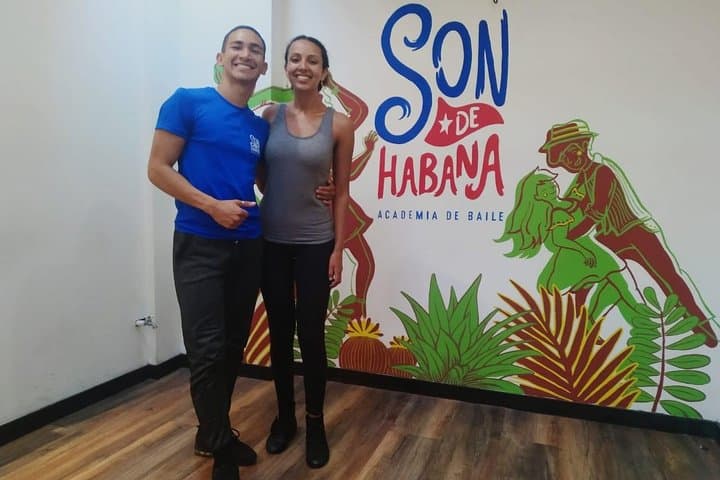


You step through a bright doorway into "Without Visa," a cultural house that channels mid-century Latin America — warm wood floors, a small coffee bar, and the low thrum of a rehearsal. The instructor greets you with a grin and a cup of Colombian coffee; the city’s high-altitude air seems to sharpen each step as the group gathers for introductions.
You step through a bright doorway into "Without Visa," a cultural house that channels mid-century Latin America — warm wood floors, a small coffee bar, and the low thrum of a rehearsal. The instructor greets you with a grin and a cup of Colombian coffee; the city’s high-altitude air seems to sharpen each step as the group gathers for introductions.
Bogotá’s dance scene reflects Colombia’s layered cultural history: Caribbean salsa rhythms met Bogotá’s urban pulse during the 20th century, and venues across La Candelaria and Chapinero grew into social engines for music and movement. The studio’s 1950s decor recalls that era of cross-regional exchange and live bands. Though the city sits on a high plateau rather than a coastline, its people carry coastal grooves inland — you’ll feel that mix in the music choices and partner work.
Practical guidance is straightforward. The experience runs 90 minutes: roughly 30 minutes of welcome and orientation and 60 minutes of instruction focusing on basic salsa (Colombian and casino), line steps, and options like kizomba. Classes accommodate up to 10 guests and are suitable for travelers with moderate fitness; not recommended for people with spinal, heart conditions, or pregnancy. Wear flexible, non-marking shoes and breathable layers — Bogotá’s temperatures change quickly. Bring water, arrive 10–15 minutes early, and accept that stepping on toes is part of the learning curve.
Instructors often share local nightlife tips and restaurants if you want to test new moves after the lesson. The class is both a practical primer for going out dancing and a compact cultural introduction to Bogotá’s contemporary social life.