THE ADVENTURE COLLECTIVE® · Independent discovery and booking for outdoor travel

Walk La Candelaria with a private local guide on a five-hour tour that blends colonial history, street art, and sweeping views from Monserrate. Practical tips on museums, altitude, and what to pack keep this immersive urban experience manageable and memorable.
Walk La Candelaria with a private local guide on a five-hour tour that blends colonial history, street art, and sweeping views from Monserrate. Practical tips on museums, altitude, and what to pack keep this immersive urban experience manageable and memorable.
You push through a low arch of colonial shadow and the city's altitude hits you—a thin, bright air that nudges your pace as you step into La Candelaria's narrow streets. Clay-tiled roofs and painted façades slip past like pages; vendors call gently; the cable car hums on the hillside above, promising a view that pulls the whole city into focus.
Verified experiences and guided adventures in the surrounding area.
Operated by Class Adventure Travel · Bogotá, Bogotá D.C.
You push through a low arch of colonial shadow and the city's altitude hits you—a thin, bright air that nudges your pace as you step into La Candelaria's narrow streets. Clay-tiled roofs and painted façades slip past like pages; vendors call gently; the cable car hums on the hillside above, promising a view that pulls the whole city into focus.
This private five-hour walk threads history and present. La Candelaria is Bogotá's oldest quarter, founded in 1538; its stone streets sit on the high Andean plateau (≈2,640 m), carved by tectonic uplift and volcanic soils that give the surrounding hills their abrupt geometry. You’ll pass Chorro de Quevedo—the legendary founding well—Botero’s corpulent figures at Museo Botero, and the gold-saturated halls of the Gold Museum. At Monserrate the city stretches below, a mosaic of neighborhoods, offices, and green ridgelines.
Culturally the tour favors local life: coffee shops where residents linger, university students sketching murals, and market sellers who have watched the district change. Guides often explain the mix of Indigenous, Spanish and modern influences visible in architecture, food, and public art.
Practical notes: expect five hours of mostly flat walking with some cobbles and short inclines; bring layers for rapid temperature shifts and sun protection—the sun is sharp at altitude. Museum entry and cable car tickets are typically not included and some sites close certain weekdays (Gold Museum closed Mondays, Botero closed Tuesdays). Carry small bills for transit and a charged phone for photos and maps. This is a relaxed urban trek for curious travelers who prefer local conversation to rote sightseeing.
easy.
5 hours.
Light to moderate fitness; suitable for most travelers comfortable with 3–5 miles of walking and occasional cobbles
Most museum admissions are not included; the tour notes specify some exceptions like Quinta de Bolívar—confirm with your operator before booking.
The operator lists stroller access for infants and small children, but expect cobblestones and some stairs; contact the guide about specific mobility needs.
You can take the funicular or cable car to Monserrate; the tour includes that option but the fare is generally not included in the base price.
Guides will adjust the itinerary to other cultural sites or neighborhoods; check weekday closures when planning to prioritize these visits.
Bogotá was founded by Spanish conquistadors in 1538 on an Andean plateau; La Candelaria preserves the colonial grid and many early civic buildings.
The historic center faces wear from heavy pedestrian traffic; stick to marked paths, avoid touching fragile artifacts, and support local conservation efforts by choosing licensed guides.
Class Adventure Travel operates guided outdoor trips and adventures with an emphasis on safety, stewardship, and memorable experiences.

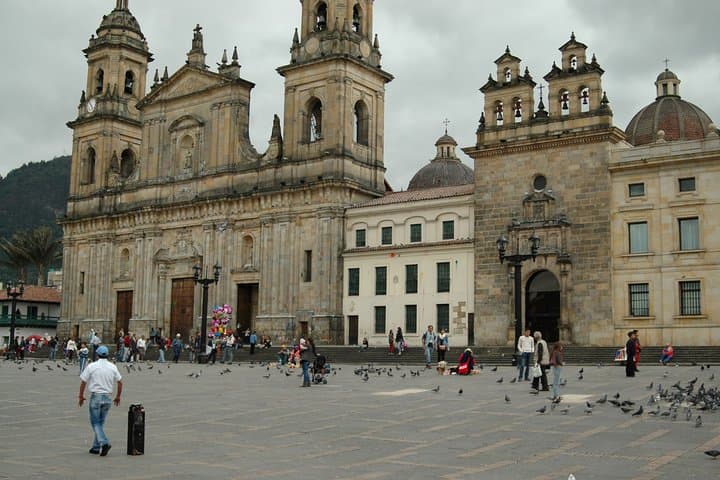


You push through a low arch of colonial shadow and the city's altitude hits you—a thin, bright air that nudges your pace as you step into La Candelaria's narrow streets. Clay-tiled roofs and painted façades slip past like pages; vendors call gently; the cable car hums on the hillside above, promising a view that pulls the whole city into focus.
You push through a low arch of colonial shadow and the city's altitude hits you—a thin, bright air that nudges your pace as you step into La Candelaria's narrow streets. Clay-tiled roofs and painted façades slip past like pages; vendors call gently; the cable car hums on the hillside above, promising a view that pulls the whole city into focus.
This private five-hour walk threads history and present. La Candelaria is Bogotá's oldest quarter, founded in 1538; its stone streets sit on the high Andean plateau (≈2,640 m), carved by tectonic uplift and volcanic soils that give the surrounding hills their abrupt geometry. You’ll pass Chorro de Quevedo—the legendary founding well—Botero’s corpulent figures at Museo Botero, and the gold-saturated halls of the Gold Museum. At Monserrate the city stretches below, a mosaic of neighborhoods, offices, and green ridgelines.
Culturally the tour favors local life: coffee shops where residents linger, university students sketching murals, and market sellers who have watched the district change. Guides often explain the mix of Indigenous, Spanish and modern influences visible in architecture, food, and public art.
Practical notes: expect five hours of mostly flat walking with some cobbles and short inclines; bring layers for rapid temperature shifts and sun protection—the sun is sharp at altitude. Museum entry and cable car tickets are typically not included and some sites close certain weekdays (Gold Museum closed Mondays, Botero closed Tuesdays). Carry small bills for transit and a charged phone for photos and maps. This is a relaxed urban trek for curious travelers who prefer local conversation to rote sightseeing.