THE ADVENTURE COLLECTIVE® · Independent discovery and booking for outdoor travel

Walk a windswept loop around Bodega Head with an offline audio guide that points out whale spouts, the San Andreas Fault, and hidden tidepools. This 45–60 minute self-guided tour blends coastal geology, native history, and practical route directions for independent explorers.
Walk a windswept loop around Bodega Head with an offline audio guide that points out whale spouts, the San Andreas Fault, and hidden tidepools. This 45–60 minute self-guided tour blends coastal geology, native history, and practical route directions for independent explorers.
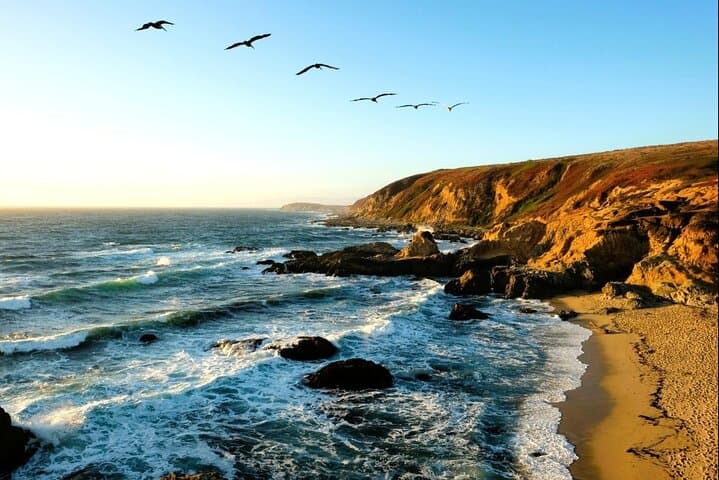
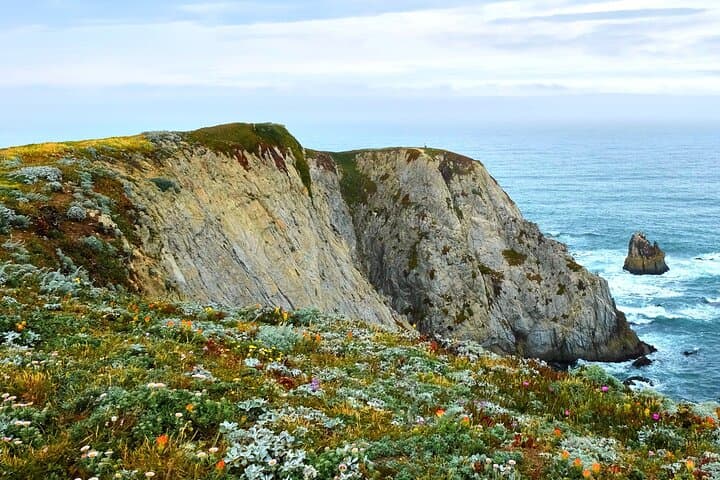
You step out of the wind and onto a basalt edge where the Pacific pulls at the cliff like a persistent question. Waves hurl themselves at rock faces below; spray and salt mix with the sharp sweetness of coastal wildflowers. Over the next 45–60 minutes a recorded guide walks with you — not beside you — pointing out whale spouts on the horizon, the water-filled crater called the "Hole in the Head," and a sheltered cove where tidepools wait.
Verified experiences and guided adventures in the surrounding area.
Operated by VoiceMap Audio Tours · Bodega Bay, California
You step out of the wind and onto a basalt edge where the Pacific pulls at the cliff like a persistent question. Waves hurl themselves at rock faces below; spray and salt mix with the sharp sweetness of coastal wildflowers. Over the next 45–60 minutes a recorded guide walks with you — not beside you — pointing out whale spouts on the horizon, the water-filled crater called the "Hole in the Head," and a sheltered cove where tidepools wait.
Geology here is literal history: the San Andreas Fault runs nearby, carving the headland and creating the dramatic escarpments you follow. People have lived and traveled these bluffs for millennia — Coast Miwok communities for roughly 8,000 years, later Russian fishermen and small commercial operations at Spud Point. In the 1960s a grassroots fight stopped plans for a nuclear reactor here, preserving Bodega Head as public coastline.
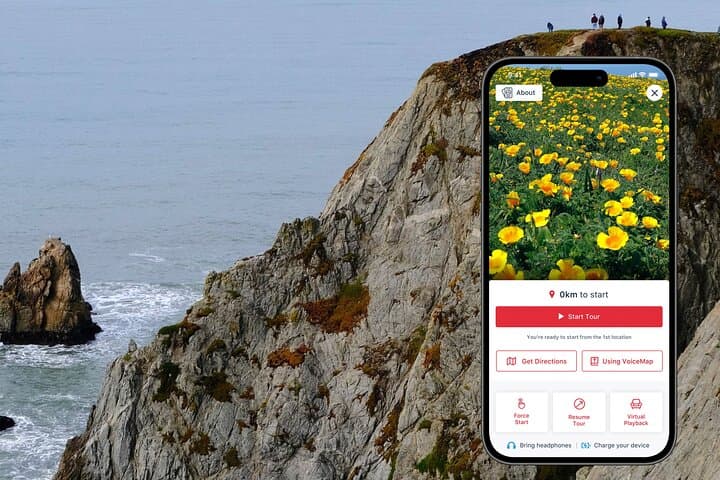
Practically speaking, the route is a short loop of packed dirt and gravel with only modest elevation change, best tackled with layered clothing against wind and fog. The VoiceMap app provides turn-by-turn audio and offline maps; download the tour and redeem the code before arrival. Park at the north-side picnic lot, start at the marked trailhead, and keep to the path — cliff edges are steep and unstable.
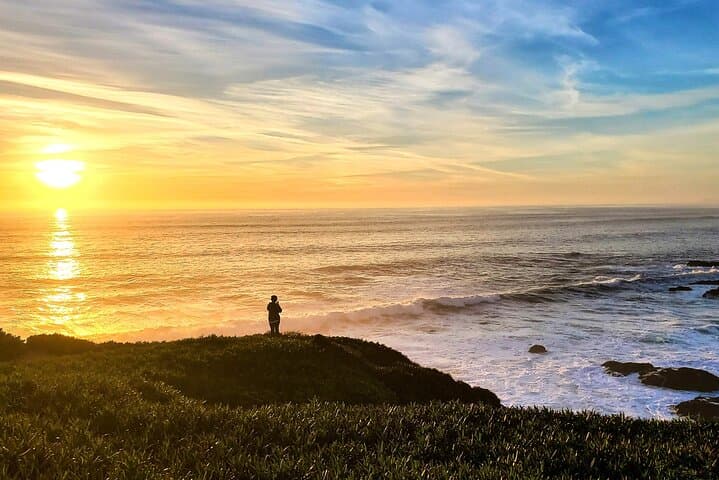
Expect seabirds and migrating gray whales in season, vibrant spring superblooms after wet winters, and tidepool life at low tide. Bring wind protection, water, and binoculars for long-range viewing, and aim for morning or late afternoon for calmer seas and better light.
easy.
45–60 minutes.
Suitable for most fitness levels; short walking loop on packed dirt with modest elevation changes
The tour runs approximately 45–60 minutes and follows a defined loop around the headland with turn-by-turn directions.
No — the booking includes offline access to audio, maps, and geodata; download the tour in the VoiceMap app before you leave cell range.
Service animals are allowed; for non-service pets check local park regulations and leash rules before visiting.
Gray whale migration is most visible in winter through spring (roughly December–April), though sightings can occur outside that range.
Coast Miwok people occupied these shores for thousands of years; later Russian fishermen and small commercial settlements shaped Spud Point. A 1960s campaign prevented a planned nuclear project, preserving the headland.
Bodega Head is part of protected coastal habitat; stay on trails, avoid disturbing nesting birds and tidepool creatures, and pack out all trash to reduce human impact.
VoiceMap Audio Tours operates guided outdoor trips and adventures with an emphasis on safety, stewardship, and memorable experiences.
You step out of the wind and onto a basalt edge where the Pacific pulls at the cliff like a persistent question. Waves hurl themselves at rock faces below; spray and salt mix with the sharp sweetness of coastal wildflowers. Over the next 45–60 minutes a recorded guide walks with you — not beside you — pointing out whale spouts on the horizon, the water-filled crater called the "Hole in the Head," and a sheltered cove where tidepools wait.
You step out of the wind and onto a basalt edge where the Pacific pulls at the cliff like a persistent question. Waves hurl themselves at rock faces below; spray and salt mix with the sharp sweetness of coastal wildflowers. Over the next 45–60 minutes a recorded guide walks with you — not beside you — pointing out whale spouts on the horizon, the water-filled crater called the "Hole in the Head," and a sheltered cove where tidepools wait.
Geology here is literal history: the San Andreas Fault runs nearby, carving the headland and creating the dramatic escarpments you follow. People have lived and traveled these bluffs for millennia — Coast Miwok communities for roughly 8,000 years, later Russian fishermen and small commercial operations at Spud Point. In the 1960s a grassroots fight stopped plans for a nuclear reactor here, preserving Bodega Head as public coastline.
Practically speaking, the route is a short loop of packed dirt and gravel with only modest elevation change, best tackled with layered clothing against wind and fog. The VoiceMap app provides turn-by-turn audio and offline maps; download the tour and redeem the code before arrival. Park at the north-side picnic lot, start at the marked trailhead, and keep to the path — cliff edges are steep and unstable.
Expect seabirds and migrating gray whales in season, vibrant spring superblooms after wet winters, and tidepool life at low tide. Bring wind protection, water, and binoculars for long-range viewing, and aim for morning or late afternoon for calmer seas and better light.