THE ADVENTURE COLLECTIVE® · Independent discovery and booking for outdoor travel

A focused, three-hour private tour through west Belfast’s republican landmarks—Falls Road, Ballymurphy and Milltown Cemetery—revealing the local stories behind the Troubles and the 1981 hunger strike.
A focused, three-hour private tour through west Belfast’s republican landmarks—Falls Road, Ballymurphy and Milltown Cemetery—revealing the local stories behind the Troubles and the 1981 hunger strike.
You step off the van and the air tastes like Atlantic rain and coal smoke—Belfast’s west side opens with muraled terraces and the muffled hum of a city remaking itself.
Verified experiences and guided adventures in the surrounding area.
Operated by Belfast famous black taxi tours · Belfast, Northern Ireland
You step off the van and the air tastes like Atlantic rain and coal smoke—Belfast’s west side opens with muraled terraces and the muffled hum of a city remaking itself.
This three-hour private tour threads the Falls Road, Ballymurphy and Milltown Cemetery, centering on the republican story that shaped modern Northern Ireland. Guides who lived through the Troubles describe a chronicle that runs from medieval plantation-era conflict through 20th-century sectarian division to the 1981 hunger strike that made Bobby Sands a global name. Geology here is modest—glacial drumlins and reclaimed river flats—but the city’s industrial past is written in red brick mills like Conway Mill and the shipyard scars across the Lagan.
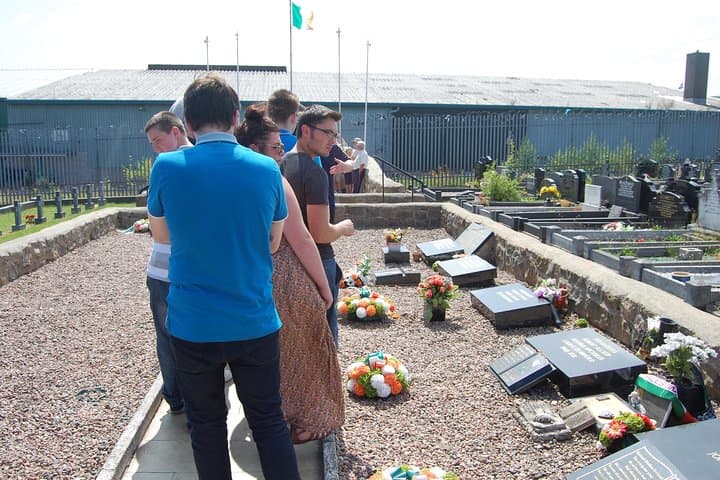
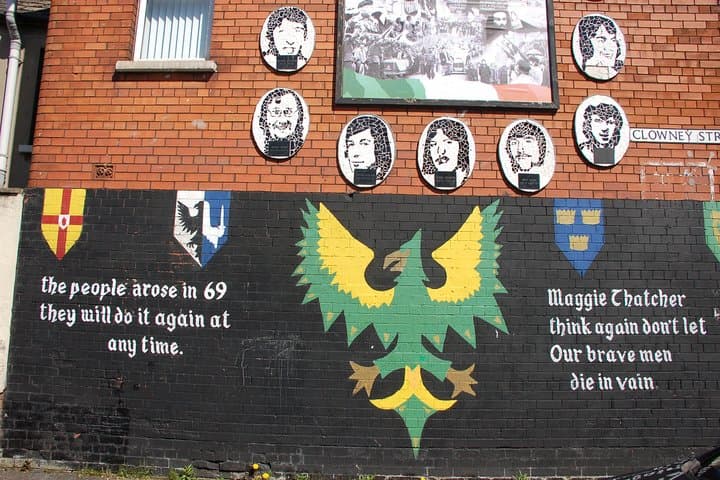
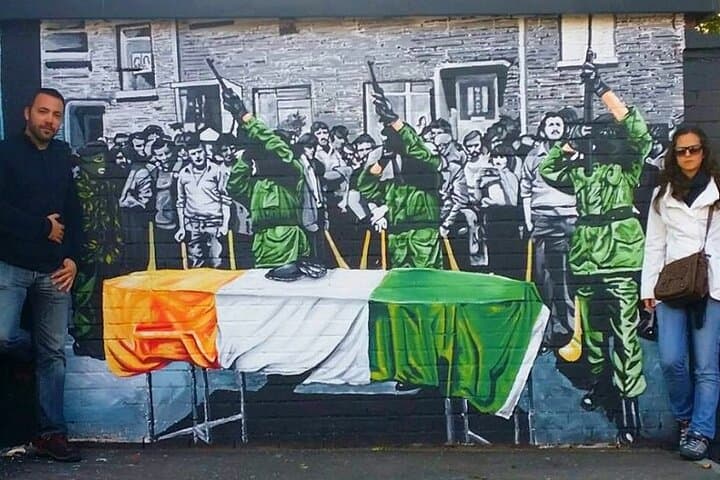
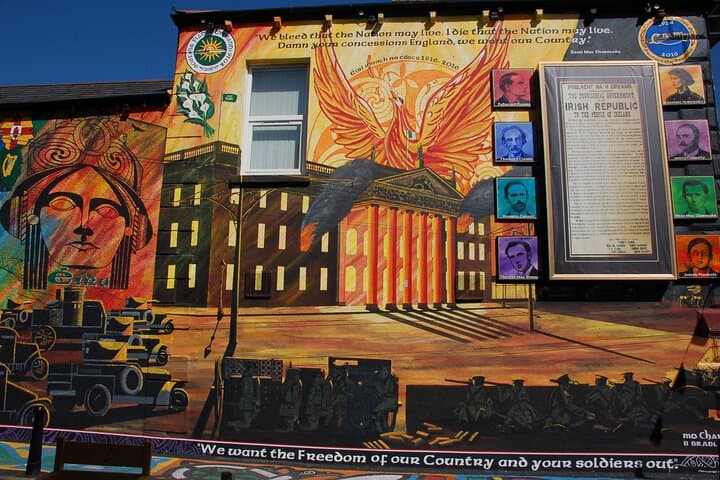
Culturally the route moves between memorial space and everyday life: murals that mark loss and identity, small gardens of remembrance, and a Republican Museum that houses century-old artifacts and political ephemera. Expect close-up views of peace walls and neighborhood streets where stories of street clashes and community resilience remain vivid.
Practical guidance: the tour is mainly in a small vehicle with short, respectful walks—bring sturdy shoes for uneven paving and a waterproof layer. Photography is common but be mindful at graves and memorials; follow your guide’s direction. Pickup is within 1 km of Belfast City Hall; confirm your exact point. The tour suits most fitness levels, runs year-round, and pairs well with a broader day of exploring the Cathedral Quarter or a post-tour visit to the Titanic Belfast museum for industrial context.
easy.
3 hours.
Suitable for most fitness levels; involves short walks and standing during cemetery visits.
The tour lasts approximately three hours, combining vehicle travel with short guided walks at key sites.
Pickup is offered from Belfast city centre within a 1 km radius of Belfast City Hall; confirm the exact meeting spot when booking.
Children are welcome but must be accompanied by an adult; the tour is classified as physically easy but some cemetery paths and street pavements can be uneven—contact the operator for specific accessibility needs.
Yes, photography is generally allowed, but be respectful at graves and memorials and follow your guide’s directions.
The tour focuses on republican history including the 1981 hunger strike and republican community responses during the Troubles, and spans local histories tied to British-Irish conflict across centuries.
These sites are active places of memory—follow local guidance, avoid leaving offerings that damage graves, and support community-run museums to help preserve oral histories.
Belfast famous black taxi tours operates guided outdoor trips and adventures with an emphasis on safety, stewardship, and memorable experiences.
You step off the van and the air tastes like Atlantic rain and coal smoke—Belfast’s west side opens with muraled terraces and the muffled hum of a city remaking itself.
You step off the van and the air tastes like Atlantic rain and coal smoke—Belfast’s west side opens with muraled terraces and the muffled hum of a city remaking itself.
This three-hour private tour threads the Falls Road, Ballymurphy and Milltown Cemetery, centering on the republican story that shaped modern Northern Ireland. Guides who lived through the Troubles describe a chronicle that runs from medieval plantation-era conflict through 20th-century sectarian division to the 1981 hunger strike that made Bobby Sands a global name. Geology here is modest—glacial drumlins and reclaimed river flats—but the city’s industrial past is written in red brick mills like Conway Mill and the shipyard scars across the Lagan.
Culturally the route moves between memorial space and everyday life: murals that mark loss and identity, small gardens of remembrance, and a Republican Museum that houses century-old artifacts and political ephemera. Expect close-up views of peace walls and neighborhood streets where stories of street clashes and community resilience remain vivid.
Practical guidance: the tour is mainly in a small vehicle with short, respectful walks—bring sturdy shoes for uneven paving and a waterproof layer. Photography is common but be mindful at graves and memorials; follow your guide’s direction. Pickup is within 1 km of Belfast City Hall; confirm your exact point. The tour suits most fitness levels, runs year-round, and pairs well with a broader day of exploring the Cathedral Quarter or a post-tour visit to the Titanic Belfast museum for industrial context.