THE ADVENTURE COLLECTIVE® · Independent discovery and booking for outdoor travel

Drive a 1000cc buggy across Boa Vista’s so-called Death Valley, crossing dunes, a central oasis and stops at Fonte Vicente and a baobab. This two-hour guided route is rugged, photogenic and suitable for most fitness levels.
Drive a 1000cc buggy across Boa Vista’s so-called Death Valley, crossing dunes, a central oasis and stops at Fonte Vicente and a baobab. This two-hour guided route is rugged, photogenic and suitable for most fitness levels.
The engine thumps, dust blooms, and a hard, sunbaked plain opens ahead — this is Boa Vista’s Cape Verdean “Death Valley” seen from a 1000cc buggy. Over two hours drivers and passengers move through low dunes, salt flats and coarse desert soil, guided along a route that threads past Rabil’s ochre rooftops into a central oasis and finishes at Fonte Vicente and a lone baobab.
Verified experiences and guided adventures in the surrounding area.
Operated by No Limits Adventure Boa Vista · Rabil, Boa Vista
The engine thumps, dust blooms, and a hard, sunbaked plain opens ahead — this is Boa Vista’s Cape Verdean “Death Valley” seen from a 1000cc buggy. Over two hours drivers and passengers move through low dunes, salt flats and coarse desert soil, guided along a route that threads past Rabil’s ochre rooftops into a central oasis and finishes at Fonte Vicente and a lone baobab.
Geology here is recent volcanic and wind-sculpted sand; the flat, pale valley sits between ridges of old lava and secondary dunes. Rabil retains crafts and salt-trading echoes from the 18th–19th centuries, and a brief stop in town reveals simple stone houses and local pottery. Cultural notes: guides often point out colonial-era wells and the way the island’s arid climate shaped settlement patterns.
Expect tight, bumpy single-track and open sandy pans — the route demands vehicle control more than fitness. Operators supply helmets, goggles, fuel and bottled water; groups are small, typically up to 10. Photography windows are frequent but short; bring a secured camera or mount.
Practical guidance: book morning or late-afternoon departures to avoid midday heat; wear closed-toe shoes and eye protection, and secure loose items. Stay on the guide’s line to protect fragile dune vegetation and archaeological spots. The ride is playful and raw — dunes daring you to pick a line, the wind pushing saltlaced air across the hood — and designed to be accessible while still delivering a genuine off-road pulse.
moderate.
2 hours.
Light-to-moderate — you should be able to climb in/out of a vehicle and handle short bouts of jostling.
No — guides lead the group and provide instructions; basic driving confidence is helpful for steering and throttle control.
Yes, operators include helmets and protective glasses in the tour price.
Policies vary by operator — age bands are requested at booking and safety depends on child size and local rules.
Tours can be canceled for unsafe conditions; operators typically offer full refunds if canceled at least 24 hours before departure.
Rabil was a traditional salt-trade and craft center; the island’s sparse settlements grew around freshwater sources and wind-protected coves.
Stay on established tracks — dune vegetation and archaeological features are fragile, and reputable operators emphasize minimal-impact driving.
No Limits Adventure Boa Vista operates guided outdoor trips and adventures with an emphasis on safety, stewardship, and memorable experiences.
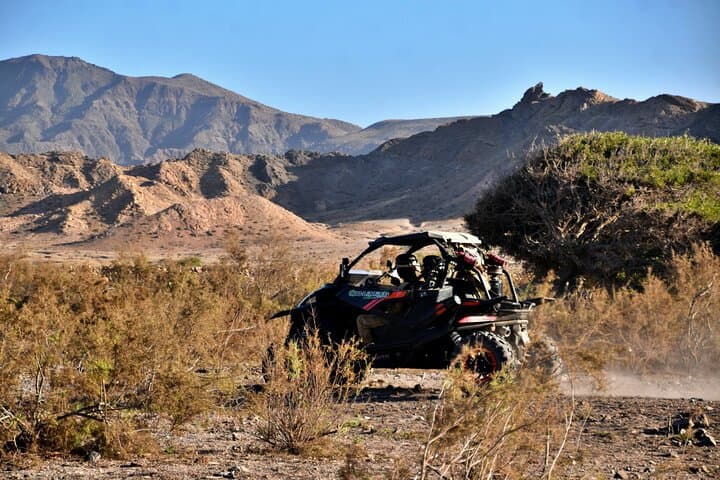
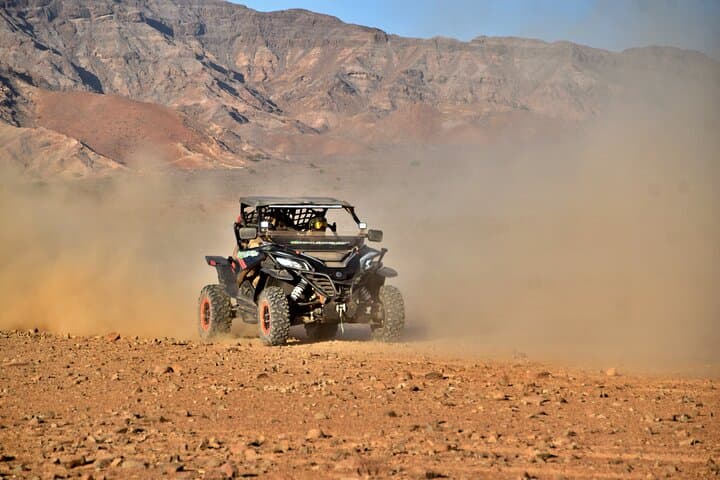
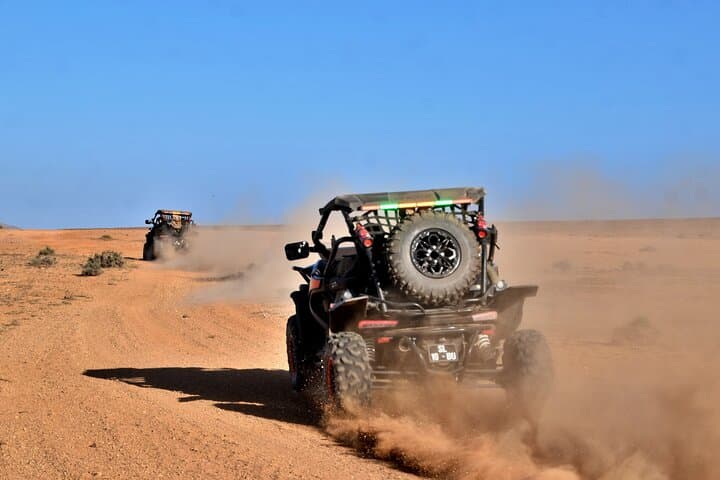
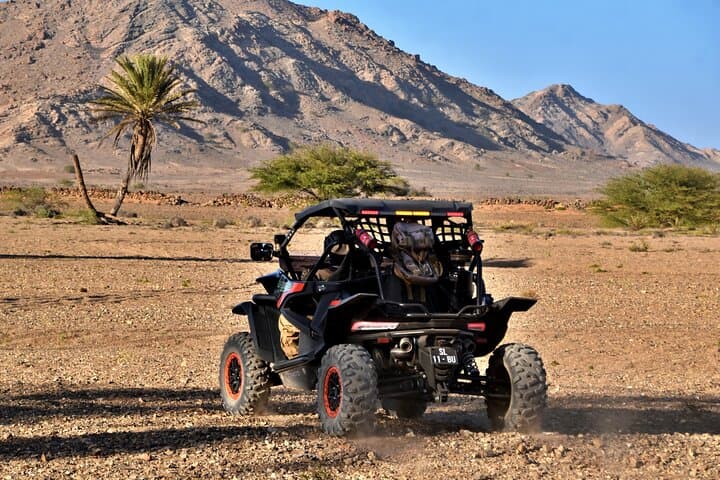
The engine thumps, dust blooms, and a hard, sunbaked plain opens ahead — this is Boa Vista’s Cape Verdean “Death Valley” seen from a 1000cc buggy. Over two hours drivers and passengers move through low dunes, salt flats and coarse desert soil, guided along a route that threads past Rabil’s ochre rooftops into a central oasis and finishes at Fonte Vicente and a lone baobab.
The engine thumps, dust blooms, and a hard, sunbaked plain opens ahead — this is Boa Vista’s Cape Verdean “Death Valley” seen from a 1000cc buggy. Over two hours drivers and passengers move through low dunes, salt flats and coarse desert soil, guided along a route that threads past Rabil’s ochre rooftops into a central oasis and finishes at Fonte Vicente and a lone baobab.
Geology here is recent volcanic and wind-sculpted sand; the flat, pale valley sits between ridges of old lava and secondary dunes. Rabil retains crafts and salt-trading echoes from the 18th–19th centuries, and a brief stop in town reveals simple stone houses and local pottery. Cultural notes: guides often point out colonial-era wells and the way the island’s arid climate shaped settlement patterns.
Expect tight, bumpy single-track and open sandy pans — the route demands vehicle control more than fitness. Operators supply helmets, goggles, fuel and bottled water; groups are small, typically up to 10. Photography windows are frequent but short; bring a secured camera or mount.
Practical guidance: book morning or late-afternoon departures to avoid midday heat; wear closed-toe shoes and eye protection, and secure loose items. Stay on the guide’s line to protect fragile dune vegetation and archaeological spots. The ride is playful and raw — dunes daring you to pick a line, the wind pushing saltlaced air across the hood — and designed to be accessible while still delivering a genuine off-road pulse.