THE ADVENTURE COLLECTIVE® · Independent discovery and booking for outdoor travel

Walk Bo-Kaap with a local voice guiding you through painted streets, mosques, and the Tana Baru Cemetery. This self-guided audio tour blends cultural history and practical routing—perfect for curious travelers who want depth at their own pace.
Walk Bo-Kaap with a local voice guiding you through painted streets, mosques, and the Tana Baru Cemetery. This self-guided audio tour blends cultural history and practical routing—perfect for curious travelers who want depth at their own pace.
You step off the tram and into a street that argues with itself—brightly painted façades on one side, old cobbles complaining underfoot on the other. A faint sea breeze from Table Bay carries the scent of cardamom and braised spices while distant calls to prayer punctuate the air; the neighbourhood feels lived-in rather than curated.
Verified experiences and guided adventures in the surrounding area.
Operated by VoiceMap Audio Tours · Cape Town, Western Cape
You step off the tram and into a street that argues with itself—brightly painted façades on one side, old cobbles complaining underfoot on the other. A faint sea breeze from Table Bay carries the scent of cardamom and braised spices while distant calls to prayer punctuate the air; the neighbourhood feels lived-in rather than curated.
Bo-Kaap sits on the lower slopes of Signal Hill and dates to the 18th century when enslaved people from the Indonesian archipelago, India and Madagascar settled here, creating the Cape Malay community and its distinct culinary and religious traditions. Stone and mortar meet city geology: small granite outcrops and narrow alleys give way to terraces and viewpoints over downtown Cape Town. The Tana Baru Cemetery and the area’s oldest mosque are anchors in a story of faith, resistance and continuity.
This VoiceMap self-guided audio tour, narrated by longtime resident Shereen Habib, threads history and local colour through a 1 km route that takes roughly 35–60 minutes depending on stops. It’s a practical way to absorb context—architecture, culinary stops, and lesser-known corners—while moving at your own pace. Download the app and offline maps, start at the Bo-Kaap Museum, keep your camera ready for strong light and geometric compositions, and be mindful that these are people’s homes. Expect uneven cobbles and short, steep pitches; mornings offer softer light and lighter crowds, afternoons bring market energy and better chances to try Cape Malay dishes. Bring charged devices, comfortable shoes and some patience—the neighbourhood rewards slow, observant walking.
easy.
35–60 minutes.
Light walking ability; suitable for most fitness levels but expect uneven surfaces and short inclines
Begin at the entrance to the Bo-Kaap Museum; the route is roughly 1 km and takes about 35–60 minutes depending on stops.
No—download the VoiceMap audio and maps in advance for offline playback and GPS triggers.
Some streets have uneven cobbles and short steep sections; parts of the route are sloped and may be difficult for some wheelchairs—contact local operators for accessibility options.
Service animals are permitted, but remember this is a residential area; keep pets under control and follow local rules.
Bo-Kaap developed in the 18th century as a home for enslaved and freed people from Southeast Asia and the Indian Ocean; its Cape Malay culture shapes the neighbourhood’s cuisine, religious life, and architecture.
Bo-Kaap faces pressures from tourism and gentrification; visitors should respect private property, support local businesses, and avoid contributing to wear in fragile historic areas.
VoiceMap Audio Tours operates guided outdoor trips and adventures with an emphasis on safety, stewardship, and memorable experiences.

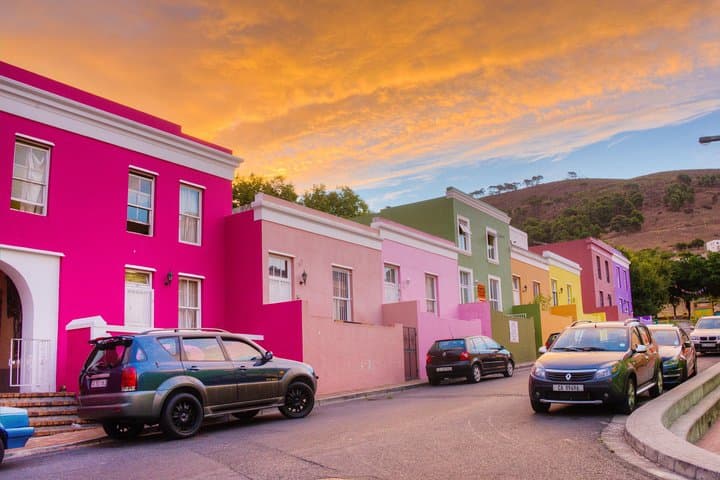
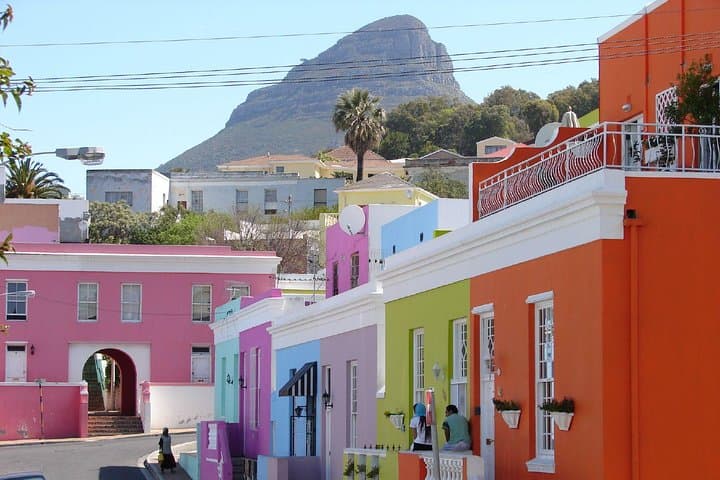
You step off the tram and into a street that argues with itself—brightly painted façades on one side, old cobbles complaining underfoot on the other. A faint sea breeze from Table Bay carries the scent of cardamom and braised spices while distant calls to prayer punctuate the air; the neighbourhood feels lived-in rather than curated.
You step off the tram and into a street that argues with itself—brightly painted façades on one side, old cobbles complaining underfoot on the other. A faint sea breeze from Table Bay carries the scent of cardamom and braised spices while distant calls to prayer punctuate the air; the neighbourhood feels lived-in rather than curated.
Bo-Kaap sits on the lower slopes of Signal Hill and dates to the 18th century when enslaved people from the Indonesian archipelago, India and Madagascar settled here, creating the Cape Malay community and its distinct culinary and religious traditions. Stone and mortar meet city geology: small granite outcrops and narrow alleys give way to terraces and viewpoints over downtown Cape Town. The Tana Baru Cemetery and the area’s oldest mosque are anchors in a story of faith, resistance and continuity.
This VoiceMap self-guided audio tour, narrated by longtime resident Shereen Habib, threads history and local colour through a 1 km route that takes roughly 35–60 minutes depending on stops. It’s a practical way to absorb context—architecture, culinary stops, and lesser-known corners—while moving at your own pace. Download the app and offline maps, start at the Bo-Kaap Museum, keep your camera ready for strong light and geometric compositions, and be mindful that these are people’s homes. Expect uneven cobbles and short, steep pitches; mornings offer softer light and lighter crowds, afternoons bring market energy and better chances to try Cape Malay dishes. Bring charged devices, comfortable shoes and some patience—the neighbourhood rewards slow, observant walking.