THE ADVENTURE COLLECTIVE® · Independent discovery and booking for outdoor travel

Spend a full day tracing the Panorama Route from Hoedspruit: sweeping canyon rims, the chiseled bowls of Bourke’s Luck, and the thunder of Lisbon Falls. This guided tour mixes geology, culture, and easy walks to deliver one of Mpumalanga’s most complete natural experiences.
Spend a full day tracing the Panorama Route from Hoedspruit: sweeping canyon rims, the chiseled bowls of Bourke’s Luck, and the thunder of Lisbon Falls. This guided tour mixes geology, culture, and easy walks to deliver one of Mpumalanga’s most complete natural experiences.
A pre-dawn minibus slides out of Hoedspruit and the world opens around you: lowveld scrub gives way to a hard-edged escarpment, and light uncovers a canyon that seems to scope the horizon with impatient hands. The Full-Day Panorama Tour moves with that same momentum—two hours at the canyon rim, another hour at tumbling Lisbon Falls, and a slow-eyed stop at Bourke’s Luck Potholes where water has been carving hollowed bowls into stone for millennia.
Verified experiences and guided adventures in the surrounding area.
Operated by MoAfrika Tours · Hoedspruit, Mpumalanga
A pre-dawn minibus slides out of Hoedspruit and the world opens around you: lowveld scrub gives way to a hard-edged escarpment, and light uncovers a canyon that seems to scope the horizon with impatient hands. The Full-Day Panorama Tour moves with that same momentum—two hours at the canyon rim, another hour at tumbling Lisbon Falls, and a slow-eyed stop at Bourke’s Luck Potholes where water has been carving hollowed bowls into stone for millennia.
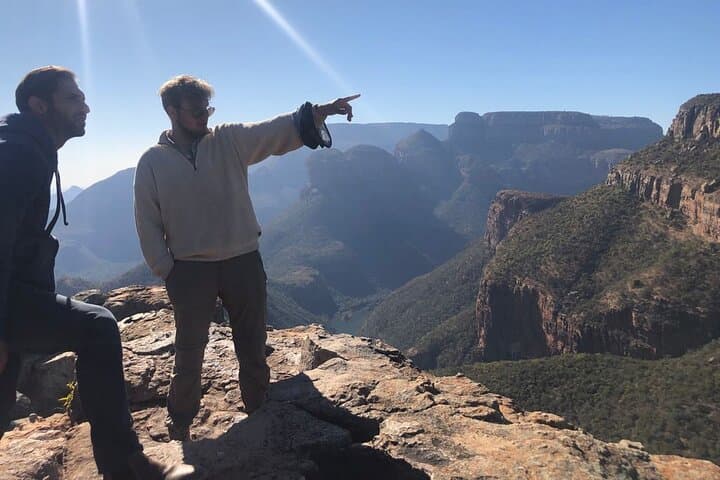
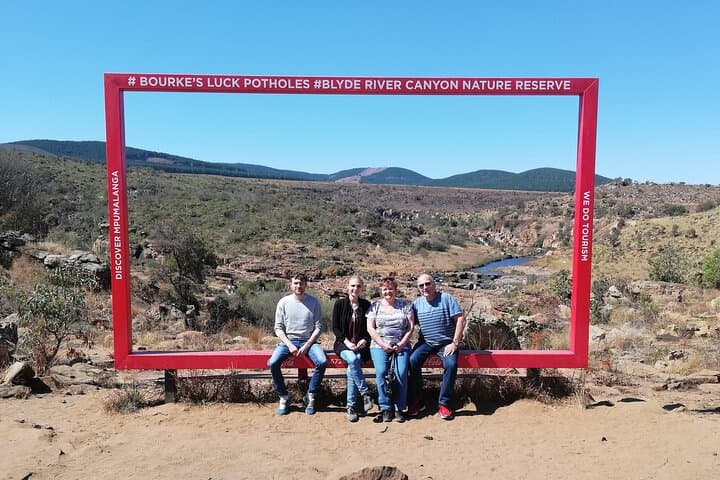
The region’s geology tells the story first: an uplifted escarpment of quartzite and shale, uplifted over millions of years, then sliced by the Blyde River into wide cliffs and dramatic overhangs. The result is one of the world’s largest green canyons, its walls layered in ochres and russets, pierced by waterfalls that insist on falling. Bourke’s Luck Potholes are more intimate—eddies and whirlpools grinding rock into cylindrical basins named for a 19th-century prospector, Tom Bourke, who chased gold here and left his name to the landscape he didn’t tame.
Culture sits quietly beside geology. Mpumalanga—literally “the place where the sun rises”—has long been home to Tsonga and Swazi communities; local guides weave stories of land use, colonial-era prospecting, and the rainforest pocket trails that shelter endemic birds and butterflies. On a clear day, the viewpoint labeled God’s Window peers out over the Lowveld, the plain receding to Mozambique like a watercolor fade.
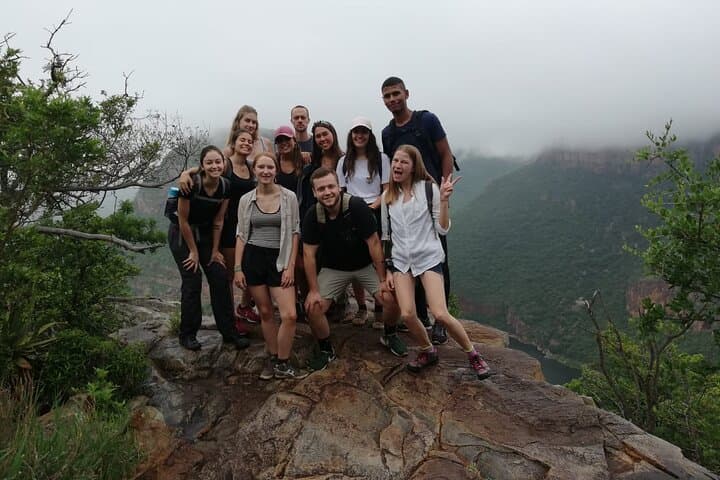
The tour is experiential more than arduous: expect short walks on uneven paths, a few steps to viewpoints, and time at roadside lookouts. Guides factor in translations, natural history, and a measured pace so you can photograph the Three Rondavels or stand quietly while a drongo inspects your hat. Practicalities matter—this is an eight-hour loop with hotel pickup, entrance fees included, and a small-group vehicle. It’s not a scramble up a peak, but it rewards sensible footwear, a water bottle, and a midday sun strategy.
For photographers, mornings give crisp air and shadowed relief across the canyon; late afternoon softens color and brings the Lowveld haze into view. For travelers, the payoff is sensory: cool mist at Lisbon Falls, the click of camera shutters at panoramic viewpoints, and the steady, patient work of rivers that have shaped the land into something that insists you stop and look.
If you go, plan to rise early for pickup, set expectations for moderate walking, and leave the sprinting to the waterfalls. Respect trail signs, carry water and insect repellent, and let the guide explain the layers—geologic and human—that make the Panorama Route a full day worth of attention.
moderate.
8 hours (full day).
Suitable for travelers with moderate fitness: able to walk unassisted on uneven terrain and climb short flights of steps.
The tour lasts about 8 hours; pickup is roughly 60 minutes before the scheduled departure and you should expect to return to your pickup location in the late afternoon.
Short walks and viewpoints are accessible for many, but travelers with significant mobility limitations should check with the operator—there are uneven surfaces and steps at some stops.
Entrance fees are included. Lunch varies by operator—confirm whether a meal is provided or if you should bring snacks or money for a local café.
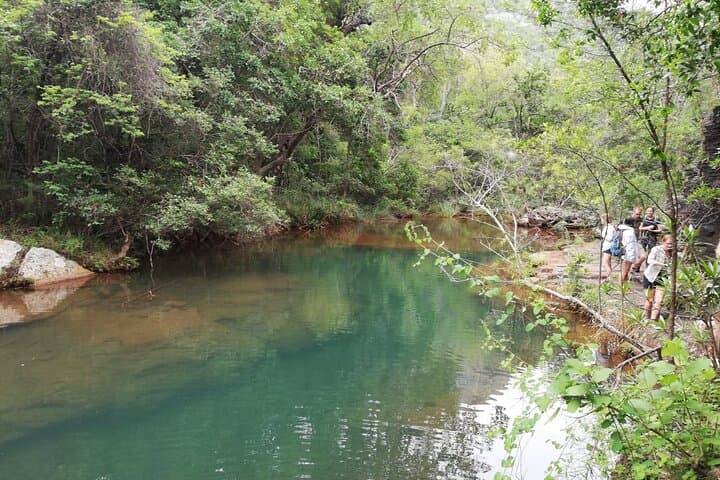
Expect birdlife (kingfishers, bee-eaters) and possibly small mammals near the rainforest trail; larger safari animals are uncommon along the Panorama Route itself.
Yes—many hotels in the surrounding area offer pickup, but this specific tour notes pickup at Kamagelo Center in Hoedspruit, so confirm pickup options when booking.
Layered clothing, closed-toe shoes, a hat, and a light waterproof are recommended—mornings can be cool, midday warm, and waterfall zones misty.
The Panorama Route was shaped by ancient uplift and erosion and touched by 19th-century prospectors like Tom Bourke; local Tsonga and Swazi communities have long histories tied to the land.
Visitor numbers are managed at key viewpoints to reduce erosion and protect riparian corridors—stick to marked paths and avoid feeding wildlife to minimize impact.
MoAfrika Tours operates guided outdoor trips and adventures with an emphasis on safety, stewardship, and memorable experiences.
A pre-dawn minibus slides out of Hoedspruit and the world opens around you: lowveld scrub gives way to a hard-edged escarpment, and light uncovers a canyon that seems to scope the horizon with impatient hands. The Full-Day Panorama Tour moves with that same momentum—two hours at the canyon rim, another hour at tumbling Lisbon Falls, and a slow-eyed stop at Bourke’s Luck Potholes where water has been carving hollowed bowls into stone for millennia.
A pre-dawn minibus slides out of Hoedspruit and the world opens around you: lowveld scrub gives way to a hard-edged escarpment, and light uncovers a canyon that seems to scope the horizon with impatient hands. The Full-Day Panorama Tour moves with that same momentum—two hours at the canyon rim, another hour at tumbling Lisbon Falls, and a slow-eyed stop at Bourke’s Luck Potholes where water has been carving hollowed bowls into stone for millennia.
The region’s geology tells the story first: an uplifted escarpment of quartzite and shale, uplifted over millions of years, then sliced by the Blyde River into wide cliffs and dramatic overhangs. The result is one of the world’s largest green canyons, its walls layered in ochres and russets, pierced by waterfalls that insist on falling. Bourke’s Luck Potholes are more intimate—eddies and whirlpools grinding rock into cylindrical basins named for a 19th-century prospector, Tom Bourke, who chased gold here and left his name to the landscape he didn’t tame.
Culture sits quietly beside geology. Mpumalanga—literally “the place where the sun rises”—has long been home to Tsonga and Swazi communities; local guides weave stories of land use, colonial-era prospecting, and the rainforest pocket trails that shelter endemic birds and butterflies. On a clear day, the viewpoint labeled God’s Window peers out over the Lowveld, the plain receding to Mozambique like a watercolor fade.
The tour is experiential more than arduous: expect short walks on uneven paths, a few steps to viewpoints, and time at roadside lookouts. Guides factor in translations, natural history, and a measured pace so you can photograph the Three Rondavels or stand quietly while a drongo inspects your hat. Practicalities matter—this is an eight-hour loop with hotel pickup, entrance fees included, and a small-group vehicle. It’s not a scramble up a peak, but it rewards sensible footwear, a water bottle, and a midday sun strategy.
For photographers, mornings give crisp air and shadowed relief across the canyon; late afternoon softens color and brings the Lowveld haze into view. For travelers, the payoff is sensory: cool mist at Lisbon Falls, the click of camera shutters at panoramic viewpoints, and the steady, patient work of rivers that have shaped the land into something that insists you stop and look.
If you go, plan to rise early for pickup, set expectations for moderate walking, and leave the sprinting to the waterfalls. Respect trail signs, carry water and insect repellent, and let the guide explain the layers—geologic and human—that make the Panorama Route a full day worth of attention.