THE ADVENTURE COLLECTIVE® · Independent discovery and booking for outdoor travel

Explore Chefchaouen’s iconic blue medina and the quieter Akchour waterfalls in a single day from Tetouan. This day trip mixes Moorish streets, local markets, and a short mountain hike to cool cascades—ideal for travelers who want culture and nature in one outing.
Explore Chefchaouen’s iconic blue medina and the quieter Akchour waterfalls in a single day from Tetouan. This day trip mixes Moorish streets, local markets, and a short mountain hike to cool cascades—ideal for travelers who want culture and nature in one outing.
You step from the van into a corridor of color: narrow alleys painted in cool blues, the air heavy with saffron and citrus from nearby stalls. Chefchaouen’s medina is compact—whitewashed walls trimmed in indigo—where voices echo off stone and old lamps hang like punctuation marks.
Verified experiences and guided adventures in the surrounding area.
Operated by Tamuda Overland · Chefchaouen, Tangier-Tetouan-Al Hoceima
You step from the van into a corridor of color: narrow alleys painted in cool blues, the air heavy with saffron and citrus from nearby stalls. Chefchaouen’s medina is compact—whitewashed walls trimmed in indigo—where voices echo off stone and old lamps hang like punctuation marks.
Founded in the 15th century as a mountain outpost, Chefchaouen reflects Andalusian and Berber threads: the kasbah tower dates to the 18th century and the mellah preserves the town’s Jewish past. Northward, the Rif Mountains rise in folded limestone and cedar-clad ridges; Akchour’s cascades carve stepping-stone pools through fractured rock, a quieter counterpoint to Morocco’s coastal bustle.
The walk through the medina is mostly flat cobbles and tight streets; plan for short uphill stretches and photo stops. At Akchour expect graded paths turning to rougher singletrack and river crossings—water dares you to get close but trails usually keep a safe margin. The waterfalls are best in late winter and spring when runoff fills pools; summer brings lower flows and clearer swimming pockets.
Practical notes: bring cash for the kasbah entrance and local snacks, wear sturdy shoes for loose rock at Akchour, and time your travel to avoid midday heat in summer. Respect dress norms in town and stay on marked trails in the Rif to protect fragile riverbanks. An eight-hour day out of Tetouan gives a balance of culture and nature—blue alleys in the morning, cool mountain water by afternoon.
moderate.
8 hours.
Moderate fitness—comfortable walking on uneven surfaces and a few short uphill stretches required
Typical drive time is about 1–1.5 hours each way depending on traffic and your exact pickup point in Tetouan.
Older children who can hike short uneven sections will be fine; rivers and rocks mean close supervision is needed near waterfalls.
Yes in summer and late spring when pools are accessible, but water flow varies—always check local conditions and avoid strong currents.
Yes—the itinerary includes free time in the medina for browsing textiles, leather goods, and local crafts; carry cash for purchases.
Chefchaouen began as a 15th-century fortified settlement with Andalusian influence; the town’s blue palette grew from Jewish and Islamic customs and practical mosquito deterrence myths.
Akchour’s riparian zones are sensitive—stay on trails, pack out waste, and avoid trampling vegetation to protect water quality and habitat.
Tamuda Overland operates guided outdoor trips and adventures with an emphasis on safety, stewardship, and memorable experiences.
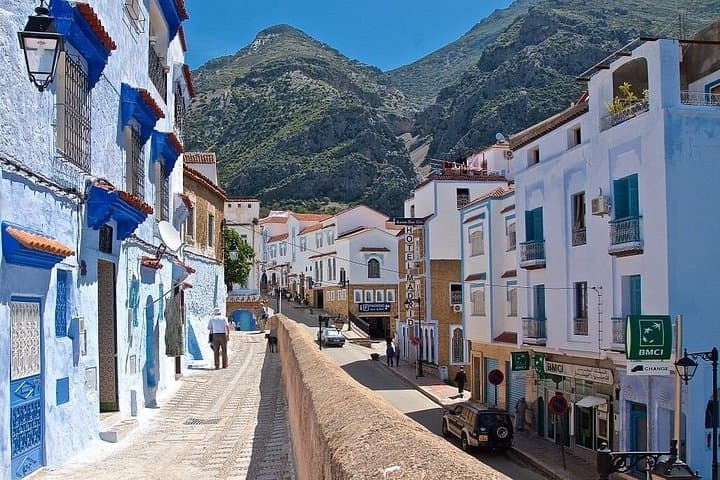
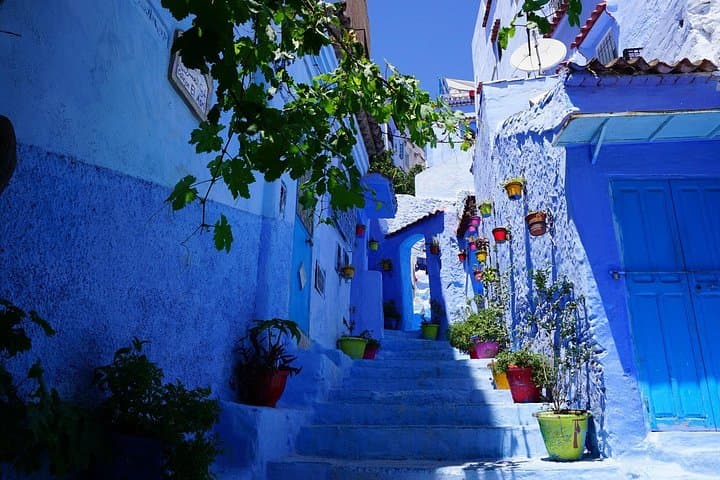
You step from the van into a corridor of color: narrow alleys painted in cool blues, the air heavy with saffron and citrus from nearby stalls. Chefchaouen’s medina is compact—whitewashed walls trimmed in indigo—where voices echo off stone and old lamps hang like punctuation marks.
You step from the van into a corridor of color: narrow alleys painted in cool blues, the air heavy with saffron and citrus from nearby stalls. Chefchaouen’s medina is compact—whitewashed walls trimmed in indigo—where voices echo off stone and old lamps hang like punctuation marks.
Founded in the 15th century as a mountain outpost, Chefchaouen reflects Andalusian and Berber threads: the kasbah tower dates to the 18th century and the mellah preserves the town’s Jewish past. Northward, the Rif Mountains rise in folded limestone and cedar-clad ridges; Akchour’s cascades carve stepping-stone pools through fractured rock, a quieter counterpoint to Morocco’s coastal bustle.
The walk through the medina is mostly flat cobbles and tight streets; plan for short uphill stretches and photo stops. At Akchour expect graded paths turning to rougher singletrack and river crossings—water dares you to get close but trails usually keep a safe margin. The waterfalls are best in late winter and spring when runoff fills pools; summer brings lower flows and clearer swimming pockets.
Practical notes: bring cash for the kasbah entrance and local snacks, wear sturdy shoes for loose rock at Akchour, and time your travel to avoid midday heat in summer. Respect dress norms in town and stay on marked trails in the Rif to protect fragile riverbanks. An eight-hour day out of Tetouan gives a balance of culture and nature—blue alleys in the morning, cool mountain water by afternoon.