THE ADVENTURE COLLECTIVE® · Independent discovery and booking for outdoor travel

A half-day expedition from Ometepe’s Biological Station combines a mossy waterfall crawl with chances to see sloths and endemic frogs along the southern slopes of Volcán Maderas. Expect steep, damp trail sections, expert local guides, and a cooling pool at the end of a roughly 2 km walk.
A half-day expedition from Ometepe’s Biological Station combines a mossy waterfall crawl with chances to see sloths and endemic frogs along the southern slopes of Volcán Maderas. Expect steep, damp trail sections, expert local guides, and a cooling pool at the end of a roughly 2 km walk.
You step out of the van and the air changes — warm, humid, heavy with green. The trailhead at the Biological Station on the southern flank of Volcán Maderas begins beneath a canopy so dense it softens sound; leaves drip like slow rainfall, and vines hang in hesitant curtains. Within minutes the jungle asserts itself: moss climbs trunks, bromeliads catch the light, and the path narrows into a series of slick rock steps that lead toward the sound of falling water.
Verified experiences and guided adventures in the surrounding area.
Operated by Nicaragua Travelling Tours · Moyogalpa, Rivas
You step out of the van and the air changes — warm, humid, heavy with green. The trailhead at the Biological Station on the southern flank of Volcán Maderas begins beneath a canopy so dense it softens sound; leaves drip like slow rainfall, and vines hang in hesitant curtains. Within minutes the jungle asserts itself: moss climbs trunks, bromeliads catch the light, and the path narrows into a series of slick rock steps that lead toward the sound of falling water.
This short expedition threads together two of Ometepe’s quietest draws: a moss-draped waterfall that tumbles into a shallow pool and the slow-moving life of the island’s mammals and amphibians. Geologically, Maderas is the older, eroded twin of Concepción; its crater holds a cloud forest and hydrological systems that feed springs and cascades down its southern slopes. The Biological Station that manages the trail is part research outpost, part community project — guides here are local and steeped in both the island’s natural history and its cultural rhythms.
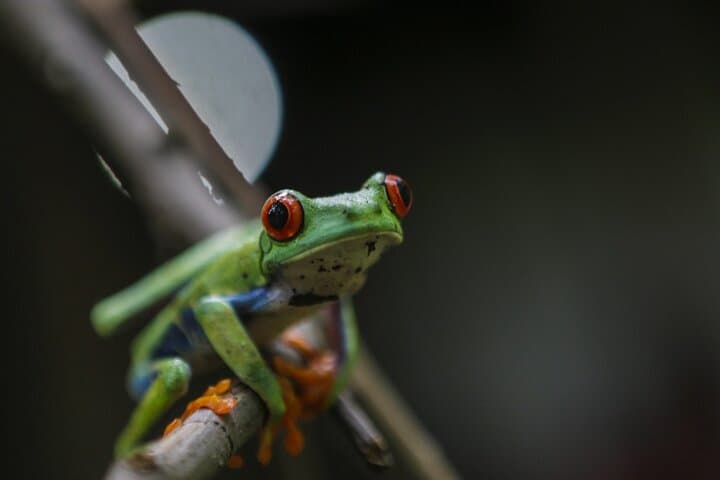
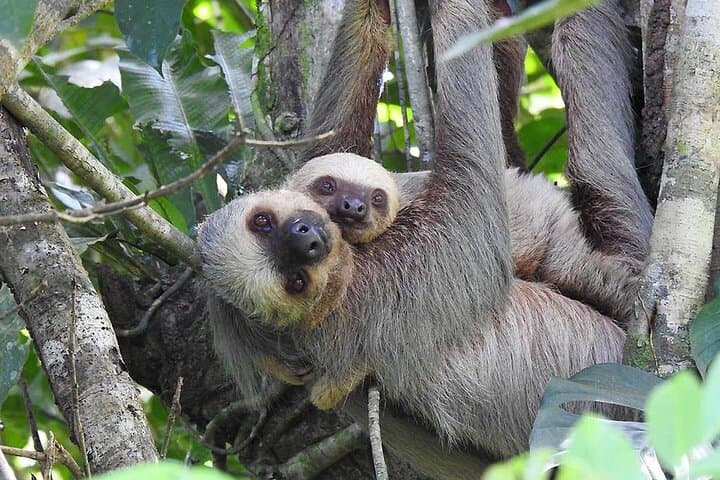
On the approach you’ll pass stands of secondary forest and relics of agricultural terraces, a reminder that Ometepe’s landscape is shaped by centuries of human stewardship as much as volcanic force. Howler monkeys announce themselves with distant, guttural calls. With patience and soft voices, a guide will point out a sloth curled in an almond branch or a tiny frog clinging to a leaf — endemic species that depend on the island’s intact corridors.
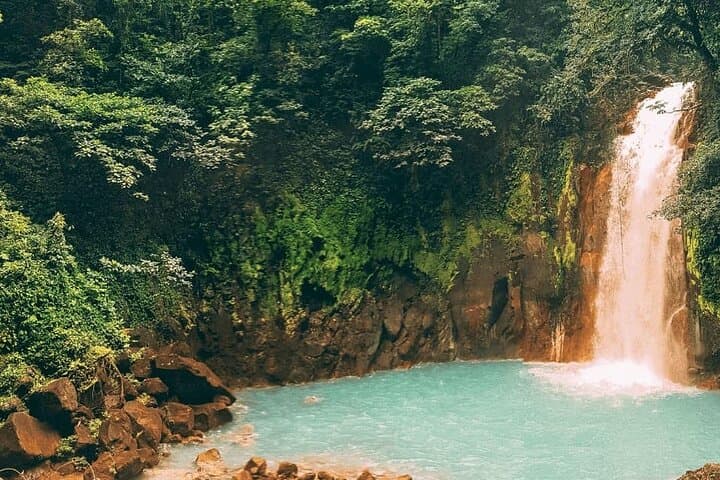
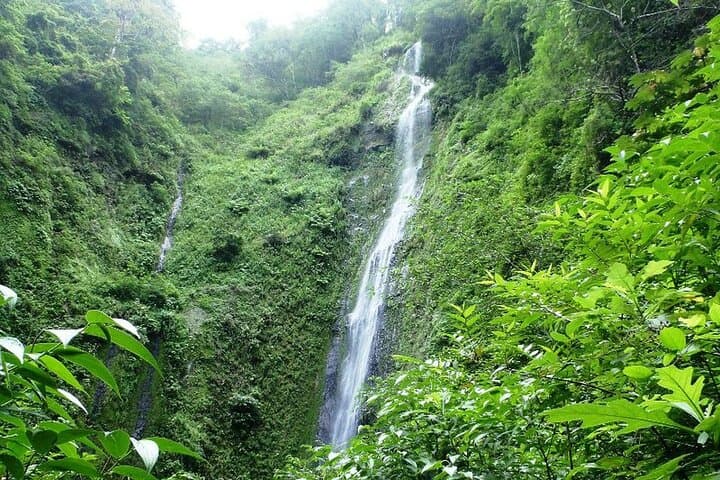
The waterfall itself is modest in height but vivid: water threads over mossy rocks into a clear, shallow pool that invites a cooling dip. In the dry season flow is reduced; in the wet season the cascade is fuller and the trail is muddier and more technical underfoot.
Practicalities are straightforward. The full experience — pickup, transport, guided walk, and lunch — takes roughly 4–6 hours. The footpath from the station to the fall is under 2 kilometers each way with intermittent, steep sections and an elevation change of around 200–300 meters; good footwear and a steady pace make the route accessible to most travelers.
Timing matters: early morning increases bird activity and the chance of spotting sloths before the heat; late afternoon softens the light for photography. Guides from the Biological Station double as naturalists and storytellers — ask them about local conservation efforts and the island’s history of farming and volcanic resilience. Hydrate, bring a lightweight rain layer when touring during the wet months, and leave no trace: fragile amphibian populations and the station’s research depend on visitors who tread lightly.
moderate.
4–6 hours.
Light to moderate fitness; able to handle short steep sections and uneven, slippery footing
The out-and-back trail from the Biological Station is under 2 kilometers each way with intermittent steep sections; expect 45–90 minutes walking time depending on stops.
Yes, the shallow pool is suitable for cooling off; assess current conditions with your guide and avoid submerging near slippery rocks.
Sightings are common but not guaranteed; guides increase your odds by choosing quieter times and scanning canopy and understory habitat.
The operator lists the activity as suitable for all fitness levels, but uneven, slippery sections may be challenging for very young children or those with mobility issues.
Bring small bills for gratuities, refreshments, or donations to the Biological Station; larger purchases may not accept cards.
Many local guides speak English and Spanish; confirm language needs when booking to ensure an English-speaking guide is available.
Ometepe’s twin volcanoes have shaped human settlement for centuries—terraced farming and archaeological sites attest to long-term island habitation and volcanic influence.
The Biological Station runs small-scale research and community education; visitors help by following trail rules, minimizing noise, and avoiding handling wildlife.
Nicaragua Travelling Tours operates guided outdoor trips and adventures with an emphasis on safety, stewardship, and memorable experiences.
You step out of the van and the air changes — warm, humid, heavy with green. The trailhead at the Biological Station on the southern flank of Volcán Maderas begins beneath a canopy so dense it softens sound; leaves drip like slow rainfall, and vines hang in hesitant curtains. Within minutes the jungle asserts itself: moss climbs trunks, bromeliads catch the light, and the path narrows into a series of slick rock steps that lead toward the sound of falling water.
You step out of the van and the air changes — warm, humid, heavy with green. The trailhead at the Biological Station on the southern flank of Volcán Maderas begins beneath a canopy so dense it softens sound; leaves drip like slow rainfall, and vines hang in hesitant curtains. Within minutes the jungle asserts itself: moss climbs trunks, bromeliads catch the light, and the path narrows into a series of slick rock steps that lead toward the sound of falling water.
This short expedition threads together two of Ometepe’s quietest draws: a moss-draped waterfall that tumbles into a shallow pool and the slow-moving life of the island’s mammals and amphibians. Geologically, Maderas is the older, eroded twin of Concepción; its crater holds a cloud forest and hydrological systems that feed springs and cascades down its southern slopes. The Biological Station that manages the trail is part research outpost, part community project — guides here are local and steeped in both the island’s natural history and its cultural rhythms.
On the approach you’ll pass stands of secondary forest and relics of agricultural terraces, a reminder that Ometepe’s landscape is shaped by centuries of human stewardship as much as volcanic force. Howler monkeys announce themselves with distant, guttural calls. With patience and soft voices, a guide will point out a sloth curled in an almond branch or a tiny frog clinging to a leaf — endemic species that depend on the island’s intact corridors.
The waterfall itself is modest in height but vivid: water threads over mossy rocks into a clear, shallow pool that invites a cooling dip. In the dry season flow is reduced; in the wet season the cascade is fuller and the trail is muddier and more technical underfoot.
Practicalities are straightforward. The full experience — pickup, transport, guided walk, and lunch — takes roughly 4–6 hours. The footpath from the station to the fall is under 2 kilometers each way with intermittent, steep sections and an elevation change of around 200–300 meters; good footwear and a steady pace make the route accessible to most travelers.
Timing matters: early morning increases bird activity and the chance of spotting sloths before the heat; late afternoon softens the light for photography. Guides from the Biological Station double as naturalists and storytellers — ask them about local conservation efforts and the island’s history of farming and volcanic resilience. Hydrate, bring a lightweight rain layer when touring during the wet months, and leave no trace: fragile amphibian populations and the station’s research depend on visitors who tread lightly.