THE ADVENTURE COLLECTIVE® · Independent discovery and booking for outdoor travel

Spend a weekend learning real-rock technique in the Blue Mountains. This two-day course from Katoomba teaches knots, belaying, anchors and controlled abseils while you climb classic sandstone routes under certified instructors.
Spend a weekend learning real-rock technique in the Blue Mountains. This two-day course from Katoomba teaches knots, belaying, anchors and controlled abseils while you climb classic sandstone routes under certified instructors.
Morning light slices across honey-colored sandstone as your guide gathers the group at the Paddy Pallin Adventure Center in Katoomba. You board a short transfer and the car winds toward cliff edges where the Blue Mountains stretch west as a layered wall of eucalypt and mist. The rock here is old, iron-streaked sandstone that creaks and cools with the breeze — it rewards careful footwork and reads your hands like a map.
Verified experiences and guided adventures in the surrounding area.
Operated by Australian School Of Mountaineering · Katoomba, New South Wales
Morning light slices across honey-colored sandstone as your guide gathers the group at the Paddy Pallin Adventure Center in Katoomba. You board a short transfer and the car winds toward cliff edges where the Blue Mountains stretch west as a layered wall of eucalypt and mist. The rock here is old, iron-streaked sandstone that creaks and cools with the breeze — it rewards careful footwork and reads your hands like a map.
This two-day weekend course pairs technical rope and belay training with graduated climbs on classic Blue Mountains faces. The range sits on lands of the Dharug and Gundungurra peoples; generations of walkers and conservationists later it’s protected inside a national park where cliff-top tracks and rock routes reflect both natural geology and a strong bushwalking culture.
Over the weekend you’ll move from knot-tying and anchor-building to guided multi-pitch practice, then spend a second day applying those skills on a variety of moderate real-rock climbs. Instructors lay out practical safety routines and local route etiquette — how to avoid fragile ledges, where to place yourself to reduce loose rock, and why timing midday heat matters.
Practical guidance: arrive well-rested with a light daypack, at least 1–2 liters of water, sturdy approach shoes, and layered clothing. Expect uneven terrain, short scrambles, and brief exposures; the course supplies helmets, ropes, harnesses and technical gear. Watch the forecast — sudden high winds or heavy rain often cancel climbs — and tell organizers about medical limits when you book.
moderate.
2 days (full days).
Moderate fitness — be comfortable with short scrambles, sustained standing, and carrying a light daypack.
No — the course is designed for beginners and indoor climbers transitioning outdoors; instructors teach knots, belaying, anchors and basic movement on real rock.
Yes — harnesses, helmets, ropes, technical hardware and usually climbing shoes are supplied; bring personal clothing and footwear.
Minimum age is 14; minors must be accompanied by an adult and meet fitness requirements.
Trips are subject to weather cancellations; heavy rain or high winds can make climbs unsafe and the operator will reschedule or refund according to their policy.
The Blue Mountains are on traditional Dharug and Gundungurra lands; European rock-climbing developed here in the 20th century alongside growing national park protections.
Routes are inside Blue Mountains National Park — stick to established approaches, pack out all waste, and avoid chalking or leaving gear on routes unless instructed by your guide.
Australian School Of Mountaineering operates guided outdoor trips and adventures with an emphasis on safety, stewardship, and memorable experiences.
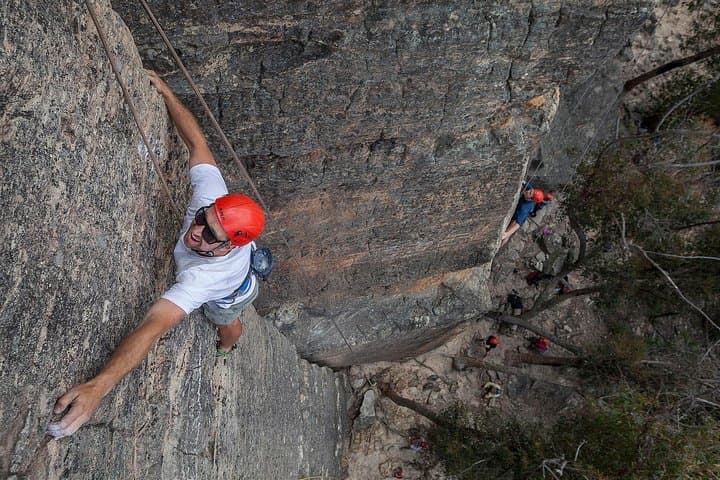
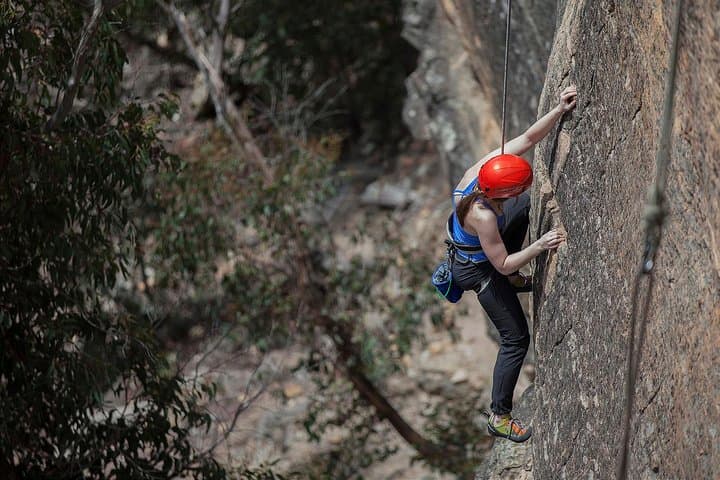
Morning light slices across honey-colored sandstone as your guide gathers the group at the Paddy Pallin Adventure Center in Katoomba. You board a short transfer and the car winds toward cliff edges where the Blue Mountains stretch west as a layered wall of eucalypt and mist. The rock here is old, iron-streaked sandstone that creaks and cools with the breeze — it rewards careful footwork and reads your hands like a map.
Morning light slices across honey-colored sandstone as your guide gathers the group at the Paddy Pallin Adventure Center in Katoomba. You board a short transfer and the car winds toward cliff edges where the Blue Mountains stretch west as a layered wall of eucalypt and mist. The rock here is old, iron-streaked sandstone that creaks and cools with the breeze — it rewards careful footwork and reads your hands like a map.
This two-day weekend course pairs technical rope and belay training with graduated climbs on classic Blue Mountains faces. The range sits on lands of the Dharug and Gundungurra peoples; generations of walkers and conservationists later it’s protected inside a national park where cliff-top tracks and rock routes reflect both natural geology and a strong bushwalking culture.
Over the weekend you’ll move from knot-tying and anchor-building to guided multi-pitch practice, then spend a second day applying those skills on a variety of moderate real-rock climbs. Instructors lay out practical safety routines and local route etiquette — how to avoid fragile ledges, where to place yourself to reduce loose rock, and why timing midday heat matters.
Practical guidance: arrive well-rested with a light daypack, at least 1–2 liters of water, sturdy approach shoes, and layered clothing. Expect uneven terrain, short scrambles, and brief exposures; the course supplies helmets, ropes, harnesses and technical gear. Watch the forecast — sudden high winds or heavy rain often cancel climbs — and tell organizers about medical limits when you book.