THE ADVENTURE COLLECTIVE® · Independent discovery and booking for outdoor travel

Drive the Sheikh Jaber Causeway to a working Kuwaiti farm, stroll irrigated beds at Blue Lake Farm, then feel the desert wind on a short camel excursion. This private half-day tour blends agritourism, coastal geology and Bedouin tradition.
Drive the Sheikh Jaber Causeway to a working Kuwaiti farm, stroll irrigated beds at Blue Lake Farm, then feel the desert wind on a short camel excursion. This private half-day tour blends agritourism, coastal geology and Bedouin tradition.
The morning light slices across the Sheikh Jaber Al-Ahmad Al-Sabah Causeway as the city falls behind and the road opens toward the northern fringe — a stitched ribbon of concrete connecting Kuwait City to a quieter landscape of farms and desert.
Verified experiences and guided adventures in the surrounding area.
Operated by Baitalkhairan Tour Operator Company · Kuwait City, Al Asimah Governorate
The morning light slices across the Sheikh Jaber Al-Ahmad Al-Sabah Causeway as the city falls behind and the road opens toward the northern fringe — a stitched ribbon of concrete connecting Kuwait City to a quieter landscape of farms and desert.
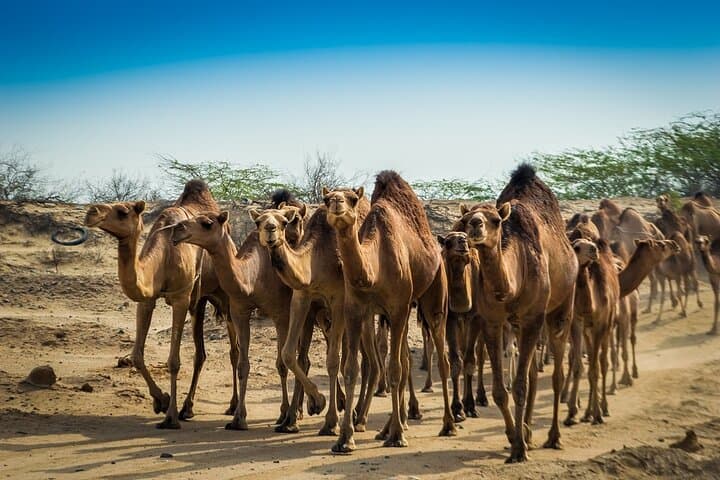
At Blue Lake Farm the scene flips: rows of vegetables and small orchards break the desert’s monotony, water channels glinting like veins. The guide explains planting cycles and the business behind a Kuwaiti agricultural brand; visitors sample crops and learn how local techniques coax produce out of sandy soils. Beyond the fields, low dunes roll toward the salt flats of Kuwait Bay and you’ll meet camels — the same animals that once carried Bedouin across this coast.
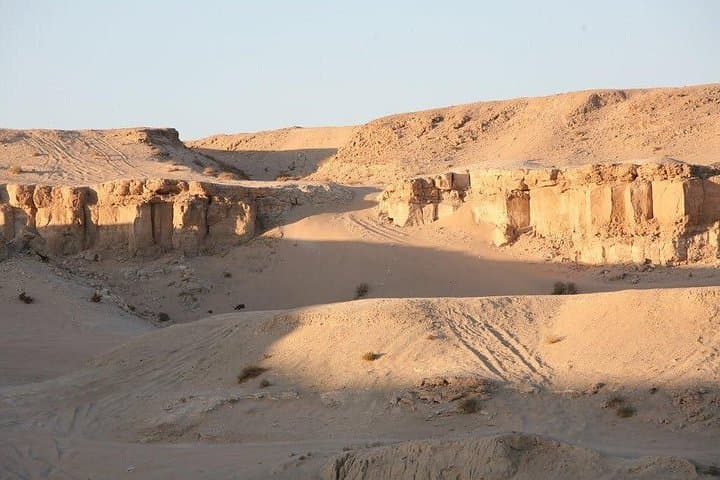
The tour threads modern infrastructure and long-standing practices. The causeway is part of Kuwait’s 2035 development plan; the northern plain around Subiya hosts reclaimed pockets and archaeological finds tied to Gulf maritime trade. Geologically, the area alternates coastal sabkha and wind-sculpted sand, where sudden gusts move the terrain and the sea shapes the horizon.
Practical guidance: trips run about 4–5 hours, normally in the cooler morning or late afternoon — avoid midday in summer. Light, breathable clothing that respects local norms, sun protection, and sturdy closed shoes for farm paths and dune sand are essential. The tour is private and small (max 5); it includes English/Arabic guiding and private transfers. Bring water, sunscreen, and a camera; expect short walks, a camel experience, and easy photo stops. Wheelchair access is advertised for most areas but check specifics for dune access. This is an approachable, educational look at Kuwait’s agricultural edge and its desert margin.
moderate.
4–5 hours.
Moderate fitness: light walking around farm plots, short uneven stretches on sand, and brief camel mounting.
The private tour lasts about 4–5 hours and includes a local English/Arabic guide, private car transfers, farm access and a camel experience; admissions are generally included as part of the itinerary.
The tour is family-friendly and lists wheelchair and stroller accessibility for many areas, though dune access may be limited; confirm specifics with the operator when booking.
Dress modestly with breathable fabrics, closed-toe shoes for walking, and sun protection; a light layer is useful in cooler months.
Tours operate year-round but are best outside peak summer heat; cancel at least 24 hours ahead for a full refund per the standard policy.
The region combines Bedouin cultural practices with modern Kuwaiti development; the Sheikh Jaber Causeway is a recent infrastructure megaproject linked to national planning for 2035.
Water use and desert reclamation are sensitive issues; responsible visits avoid waste and stick to designated paths to limit soil disturbance.
Baitalkhairan Tour Operator Company operates guided outdoor trips and adventures with an emphasis on safety, stewardship, and memorable experiences.

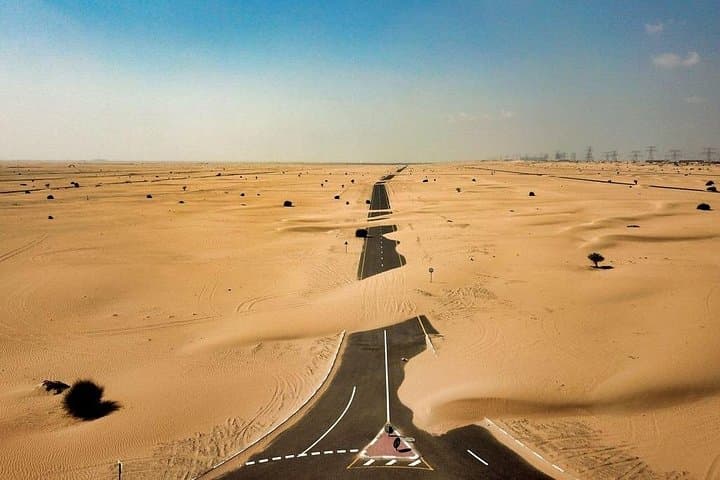
The morning light slices across the Sheikh Jaber Al-Ahmad Al-Sabah Causeway as the city falls behind and the road opens toward the northern fringe — a stitched ribbon of concrete connecting Kuwait City to a quieter landscape of farms and desert.
The morning light slices across the Sheikh Jaber Al-Ahmad Al-Sabah Causeway as the city falls behind and the road opens toward the northern fringe — a stitched ribbon of concrete connecting Kuwait City to a quieter landscape of farms and desert.
At Blue Lake Farm the scene flips: rows of vegetables and small orchards break the desert’s monotony, water channels glinting like veins. The guide explains planting cycles and the business behind a Kuwaiti agricultural brand; visitors sample crops and learn how local techniques coax produce out of sandy soils. Beyond the fields, low dunes roll toward the salt flats of Kuwait Bay and you’ll meet camels — the same animals that once carried Bedouin across this coast.
The tour threads modern infrastructure and long-standing practices. The causeway is part of Kuwait’s 2035 development plan; the northern plain around Subiya hosts reclaimed pockets and archaeological finds tied to Gulf maritime trade. Geologically, the area alternates coastal sabkha and wind-sculpted sand, where sudden gusts move the terrain and the sea shapes the horizon.
Practical guidance: trips run about 4–5 hours, normally in the cooler morning or late afternoon — avoid midday in summer. Light, breathable clothing that respects local norms, sun protection, and sturdy closed shoes for farm paths and dune sand are essential. The tour is private and small (max 5); it includes English/Arabic guiding and private transfers. Bring water, sunscreen, and a camera; expect short walks, a camel experience, and easy photo stops. Wheelchair access is advertised for most areas but check specifics for dune access. This is an approachable, educational look at Kuwait’s agricultural edge and its desert margin.